IN-DEPTH / IN-DEPTH
How a Chinese institute’s single-cell tools are helping global scientists unlock the hidden metabolism of microbiomes for a greener future
Reading life, cell by cell
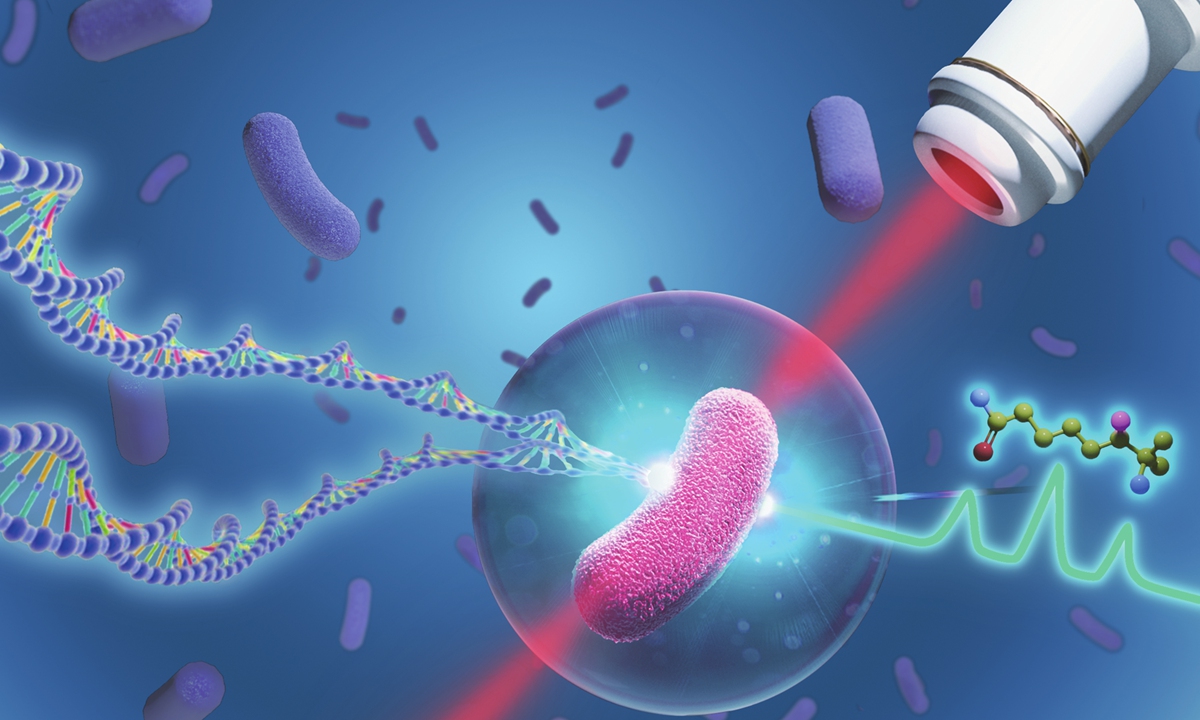
A concept illustration of iMaps Photo: Courtesy of QIBEBT
Editor's Note:As global challenges grow increasingly interconnected, technological solutions are rarely confined to a single country. Through research collaboration, open sharing of expertise and partnerships with international institutions, Chinese scientists, engineers and enterprises are engaging more deeply with the world, contributing tools and experience to problems that demand collective answers.
The Global Times launches a series of "Tech Seeds, Global Bloom," spotlighting China's achievements in advancing technology for good both domestically and internationally. By following these trajectories, the series invites readers to consider a different measure of progress: Not how advanced technology becomes, but whom it ultimately serves, and how widely its benefits can spread.
This is the seventh installment. This article examines how metaramanomics technologies developed by the Qingdao Institute of Bioenergy and Bioprocess Technology, Chinese Academy of Sciences, are entering leading laboratories in the UK and the US, supporting global scientists in decoding microbial metabolism and advancing green biomanufacturing, microbiome research and environmental sustainability.
In a laboratory at Imperial College London's Bezos Centre for Sustainable Protein, scientists are looking for something invisible to the naked eye. They are not only asking which microbes are present. They are asking what each microbial cell is actually doing.
For decades, microbiome research has largely relied on sequencing technologies to infer microbial functions from genetic information. But for scientists working on sustainable protein, green biomanufacturing, human health and environmental restoration, prediction alone is often not enough, the Global Times learned from the Qingdao Institute of Bioenergy and Bioprocess Technology (QIBEBT), Chinese Academy of Sciences (CAS).
They need to identify the cells that are truly performing a target metabolic function - whether they are producing valuable compounds, degrading environmental pollutants, fixing carbon dioxide, or showing resistance to a particular antibiotic. More importantly, they need to precisely and rapidly recover those cells alive for further cultivation, sequencing, and eventually, large-scale applications.
Behind this new way of reading microbial metabolism is a technology platform developed by QIBEBT, which is now being used by overseas partners to tackle questions in green biomanufacturing and microbiome innovation. The technology platform combines single-cell Raman spectroscopy, microfluidics and artificial intelligence-assisted phenotyping.
Unlike conventional methods that require fluorescent labels or bulk-scale measurements, the platform can read the metabolic "fingerprints" of individual microbial cells in a label-free and non-destructive manner.
From Qingdao in East China's Shandong Province to London and San Diego, the technology is now being used by leading international laboratories to explore one of the most important but still underutilized resources on Earth - the metabolic potential of microbiomes.
Mapping metabolism at single-cell resolution
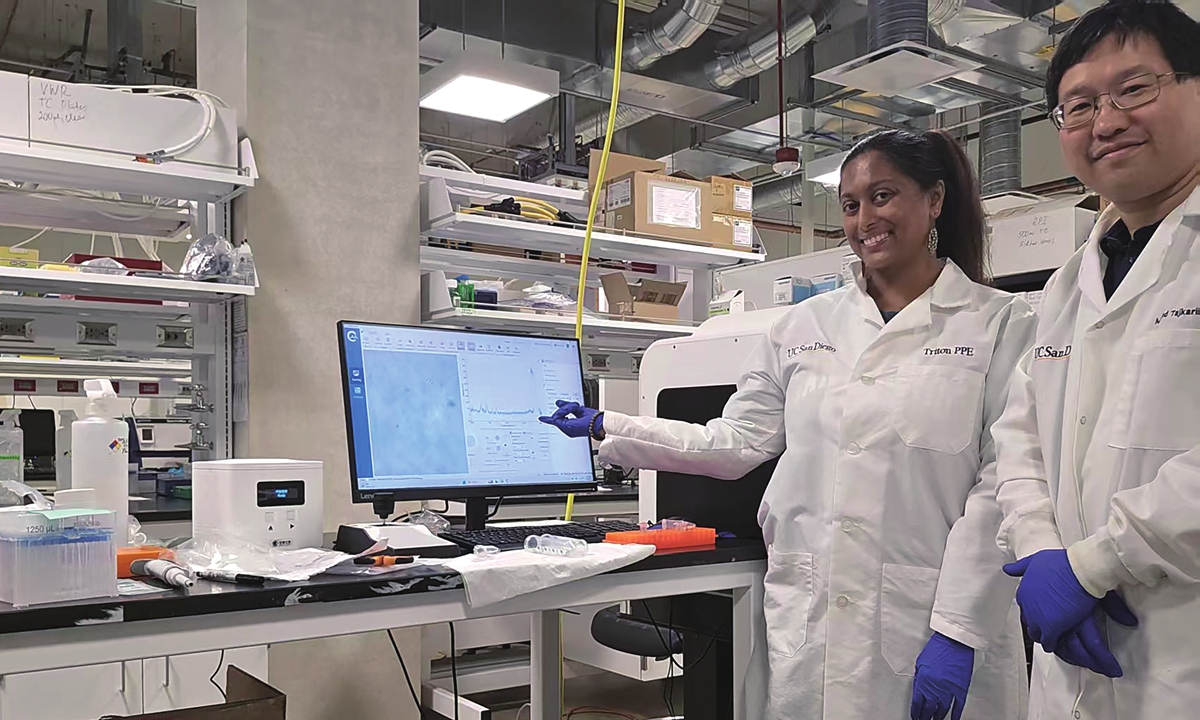
The iMAPS platform operating at UC San Diego's Center for Microbiome Innovation Photo: Courtesy of QIBEBT
The global effort is linked to iMAPS, short for In-situ Metabolic Atlas Projects @ Single-cell, an international scientific initiative launched around metaramanomics. The initiative aims to build a worldwide network of Microbiome Metabolic Observatories, or MIMO, at single-cell resolution."The core of iMAPS is to shift microbiome research from asking 'who is there?' to understanding 'what each cell is doing,'" Xu Jian, director of the Single-Cell Center at QIBEBT and the principal initiator and driving force behind the iMAPS initiative, told the Global Times.
"By combining single-cell Raman spectroscopy, microfluidics and AI-assisted analysis, we hope to provide global researchers with such 'metaramanomics' tools to identify and recover functionally active microbes from complex samples," Xu said.
At the heart of this initiative is metaramanomics, a high-throughput approach that profiles single-cell Raman spectra of microbiota and sorts cells with targeted in-situ metabolic functions for downstream cultivation or sequencing.
In other words, the approach moves microbiome research from predicting microbial functions based on genes to measuring metabolic activity directly at the single-cell level.
Each iMAPS node is envisioned as a "metabolic sensor, strain miner and ecological restorer." In practice, this means scientists can analyze complex samples - from human microbiomes to soil, ocean and industrial fermentation systems - and directly mine microbial cells that carry out specific metabolic functions, said Xu.
For green and low-carbon development, such capability is particularly relevant. Many sustainability challenges, from carbon utilization and waste conversion to sustainable food production and soil restoration, depend on the metabolic activities of microbes. The ability to detect and recover functional cells alive directly from complex communities greatly accelerates the discovery of new strains and processes for low-carbon biomanufacturing, according to Xu.
The development of this technological system was driven by a deep recognition of fundamental industry bottlenecks. "When we launched this project in 2012, we realized that for microbiome research to move from 'knowing which species are present' to 'recognizing and utilizing their functions,' we needed the ability to read live metabolic information directly at the single-cell level and quickly sort out the cell with a target function," recalled Xu.
To address questions of microbiomes at a global scale with single-cell precision, the team had to overcome two common technological bottlenecks that microbiologists worldwide have long faced: First, microbial cells are infinitesimally small, making it extremely difficult to non-destructively acquire real-time, in-situ metabolic functions at the single live-cell level.
Second, environmental microbial communities are highly complex and abundant, lacking high-throughput means for functional characterization, sorting and cultivation of massive numbers of live single cells.
Professor Ma Bo, deputy director of the Single-Cell Center at QIBEBT, elaborated on the team's breakthrough approach: "We chose to use single-cell Raman spectroscopy to resolve the metabolic phenotypes of live single cells, combined with microfluidics to achieve non-destructive sorting and parallel cultivation of target cells, thus establishing a complete pipeline from in-situ detection, functional identification and single-cell sorting to live-cell recovery."
Driving the efficient operation of this entire workflow is the deep integration of artificial intelligence (AI). Xu further elaborated on AI's critical role: "Training AI requires three core elements: data, algorithms and computing power. While computing power and general-purpose algorithms are readily accessible, high-fidelity, large-scale measured metaramanomics big data cannot be easily replicated. This constitutes the unique foundational underpinning of our entire AI system."
A global network
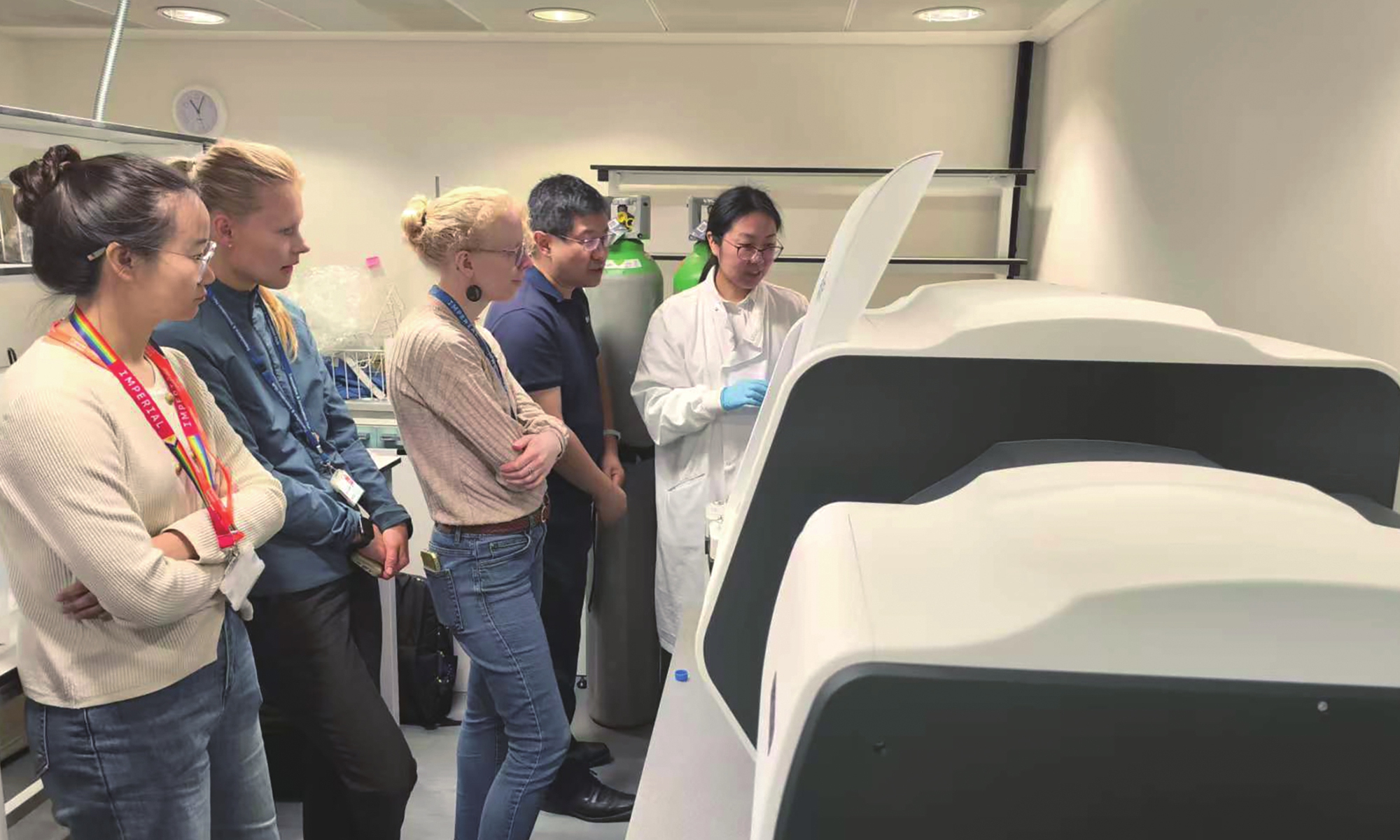
The iMAPS platform operating at Imperial College London's Bezos Centre for Sustainable Protein Photo: Courtesy of QIBEBT
IMAPS technology is building a global network.In China, the QIBEBT team used the platform for high-throughput sorting of Schizochytrium mutants, rapidly obtaining DHA-overproducing strains with a 58 percent increase in productivity compared to the wild type, a technology that has already moved toward industrialization. They also screened a genome-wide mutant library of the marine microalga of Nannochloropsis for carotenoid overproduction, and discovered a novel carotenoid regulatory pathway.
By early 2026, the iMAPS consortium had grown into a rapidly expanding network with more than 100 nodes and facilities in operation or under setup across Asia, Europe and North America.
One of the most closely watched overseas deployments is at Imperial College London's Bezos Centre for Sustainable Protein and Microbial Food Hub.
With the long-standing support and collaboration of Professor Rodrigo Ledesma-Amaro, director of the Bezos Centre for Sustainable Protein at Imperial College London, UK, the two sides are working together to build a demonstration laboratory for SynBio iMAPS, focusing on single-cell metabolic mapping in synthetic biology and sustainable protein research.
The collaboration has already yielded results that challenge a basic assumption in bioengineering.
A study published in Nature Communications by Professor Ledesma-Amaro's team found that yeast cells - even those sharing identical DNA - do not all behave the same way during production. Under certain conditions, a clonal population quietly splits into distinct metabolic subpopulations, some producing far more than others. Such differences are difficult to capture through conventional bulk measurements, but become visible when metabolism and production are examined at the single-cell level.
The researchers used single-cell Raman analysis to compare product-concentration signals directly among sorted subpopulations - linking cellular metabolic state with production performance. In strains engineered to produce lycopene, the variation between subpopulations was substantial enough to matter for yield.
The implications reach beyond yeast. If hidden heterogeneity shapes performance across microbial cell factories, then optimizing biomanufacturing may depend less on engineering the genome and more on understanding - and managing - the living variation within a population. The team showed this was possible: by adjusting the carbon source in cultivation, they could shift the population toward higher-producing phenotypes.
This is a finding that reframes the problem. The bottleneck in green biomanufacturing may not always be the strain. It may be the cell next to it.
Across the Atlantic and the Pacific, another iMAPS demonstration node is taking shape at the Center for Microbiome Innovation, or CMI, at the University of California San Diego (UC San Diego).
As part of the collaboration, a Raman-Activated Microfluidic Sorter (RAMS) has been installed in the CMI collaboratory at Franklin Antonio Hall. The instrument enables multimodal phenotypic profiling and sorting of microorganisms by combining Raman signals with morphological information to reveal the functioning mechanism of complex microbial communities.
For researchers working on microbiomes, this capability addresses a long-standing bottleneck. In complex microbial communities, most microorganisms remain difficult to cultivate, and many functionally important cells may exist only in low abundance. RAMS allows scientists to identify and sort target cells without relying on genetic modification or external labels. These recovered cells can then be used for downstream analysis, including single-cell sequencing and cultivation.
According to UC San Diego CMI, the collaboration will provide researchers with a novel tool for profiling microbiome metabolic function at single-cell resolution and for mining microbial resources for industrial and clinical applications.
Mutual gains, shared progress
In Xu's view, the overseas use of FlowRACS, RAMS and DCP illustrates a broader trend: Chinese scientific instruments and methods are now contributing original capabilities to fields where global standards are still being written. In emerging fields such as single-cell metabolic mining, Chinese teams are contributing original tools to international research networks.
This collaboration extends not only to established overseas platforms but also to capacity-building efforts for young scholars worldwide. In July, the 2026 CAS iMAPS Summer School was held in Qingdao. Twenty-seven young participants from 11 countries and regions and 21 universities and research institutions gathered for a 10-day scientific exploration.
After completing hands-on training in Qingdao, covering multiple technical procedures, the participants traveled to Beijing and Xiong'an New Area in North China's Hebei Province to visit iMAPS platforms and observe their applications in rapid functional screening of agricultural and environmental microbiomes and strain bank construction. They then proceeded to Shanghai to learn about iMAPS platform applications in human cell-based drug screening and quality control, as well as gut probiotic discovery, according to the QIBEBT website.
The Global Times learned that iMAPS is designed not as a closed platform, but as a collaborative support system. Nodes in the network are encouraged to share data, experimental protocols, technical expertise and instrument time, and to host training sessions and workshops whenever possible. This reflects the spirit of microbiomes themselves - connectivity, symbiosis and shared growth.
Such openness is important because the challenges addressed by microbiome research are inherently global. Climate change, soil degradation, antibiotic resistance, nutrition, pollution and sustainable manufacturing cannot be solved by one country or one institution alone. They require shared tools, comparable data and long-term trust among international teams.
For the scientists behind iMAPS, the most meaningful signal is not where the instruments have been installed, but what happens next.
In London, the question is whether hidden variation among yeast cells can be turned into a tool for better biomanufacturing; in San Diego, it is whether single-cell resolution can reveal what complex microbiomes are actually doing - in the human gut, in degraded soils, in coastal waters. These are not the same questions, but they share the same premise: that understanding microbial metabolism at the level of individual cells will change what is possible, Xu said. "Microbes have long been called the invisible engines of the biosphere. With metaramanomics, scientists are beginning to watch those engines run and obtain the best engines - cell by cell, and increasingly, together."
RELATED ARTICLES