Reported US tariff on polysilicon imports a protectionist move raising costs for US firms, solar industry: experts
By Published: Aug 06, 2026 03:39 PM

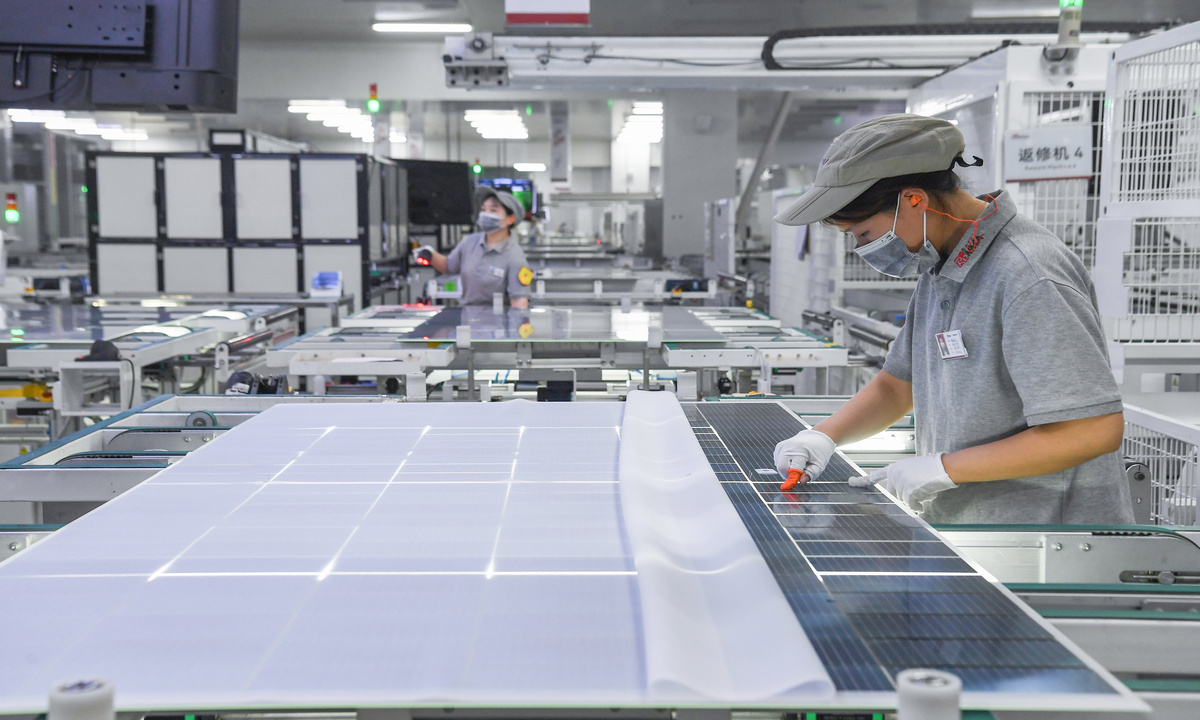
Workers assemble solar photovoltaic modules at a smart manufacturing workshop of Ronma Solar Energy Group in Jindong district of Jinhua city, East China's Zhejiang Province, on July 28, 2026. Photo: VCG
A reported US plan to levy a 15 percent tariff on polysilicon imports, interpreted as a move to counter China's strengths in the sector, is another protectionist measure that would further strain bilateral trade and economic relations if implemented, Chinese analysts and industry experts told the Global Times on Thursday. The impact on the Chinese industry will be limited, while the new move will raise costs for related US industries, including its renewable sectors, they noted.
The Trump administration will announce as soon as Thursday the 15 percent tariff and a series of price floors on products made from polysilicon, Reuters reported on Wednesday, citing multiple sources familiar with the matter.
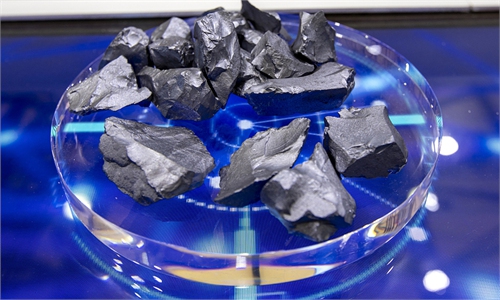
Polysilicon is the key raw material used in solar panels and semiconductors.
According to Reuters, the US move aims to protect US polysilicon factories from "growing Chinese ambitions" in the chip supply chain.
US domestic semiconductor manufacturing, which is a Trump administration priority, depends on solar because the solar industry's larger demand for polysilicon helps support production of the material required for chips, Reuters reported. The chip industry accounts for 2.4 percent of global polysilicon demand, the Semiconductor Industry Association said.
Chinese experts noted that the move, if implemented, will mark the latest escalation in US efforts to limit China's role in critical technology supply chains, following restrictions on imports of Chinese drones, routers, robots and inverters.
The US action, reported as China rolled out a slew of countermeasures against the recent escalation of US trade curbs, is a blatant protectionist trade barrier that risks further straining bilateral trade and economic ties, Huo Jianguo, vice chairperson of the China Society for World Trade Organization Studies in Beijing, told the Global Times on Thursday.
The reported US action on polysilicon is another step by the US administration to overstretch the concept of national security, Huo said, noting that the US should refrain from any new rash protectionist moves that will serve no one's interests, disrupt global industry and supply chain cooperation, and fail to enhance its own competitiveness.
Reuters reported that the Trump administration's year-long national security investigation into polysilicon by the Commerce Department has major implications for the growing domestic solar manufacturing industry at a time when federal support for renewable energy has been rolled back.
Some US businesses and industry groups have warned that the tariffs could raise the costs of solar power plants and increases price for products, including consumer electronics and automobiles, and the US solar industry could face "collateral damage" in the chip-focused trade investigation, according to Reuters.
Lü Jinbiao, an industry expert with the expert committee of the China Photovoltaic Industry Association, told the Global Times on Thursday that the reported move won't provide any substantial support for bolstering US production capacity of polysilicon. On the contrary, it will raise costs for US solar industries.
Lü also noted that the impact on the Chinese industry will be limited, as its main export destinations are India, Vietnam and some other Southeast Asian countries. However, the move marks Washington's push to extend its crackdown from solar modules and cells to upstream raw materials. The US "small yard, high wall" strategy is expanding across the entire photovoltaic industrial chain, the expert pointed out.
China firmly opposes the US' overstretching the concept of national security and abusing state power to unjustifiably suppress Chinese companies. Protectionism will not enhance US competitiveness, a spokesperson of the Chinese Embassy in the US told the Global Times on Thursday, in response to the US administration's reported plans to ban imports of new models of Chinese data center components while considering the establishment of a price floor and the imposition of tariffs on polysilicon and related products.
"What the US has done seriously impedes normal economic and trade exchanges between Chinese and American companies and serves the interests of no party, American businesses and consumers included. China will continue to firmly safeguard the lawful and legitimate rights and interests of Chinese companies," the embassy spokesperson said.
China on Wednesday announced a range of swift and decisive countermeasures, including strengthening export controls on drone-related dual-use items to the US, in response to the US continued escalation of unilateral protectionist moves targeting Chinese businesses and products. The US restrictions span industries from cotton to drones and robotic equipment under the pretexts of "forced labor" claims, national security and other groundless justifications.
China's countermeasures against the negative measures taken by the US Federal Communications Commission and US Department of Homeland Security are generally restrained, a spokesperson for China's Ministry of Commerce said on Wednesday. "If the US insists on introducing new restrictive measures against China, China will take further countermeasures," the spokesperson stated.
RELATED ARTICLES