China’s Jan-July rare-earth exports fall 10%; China Rare Earth Group sees ‘upward’ market conditions
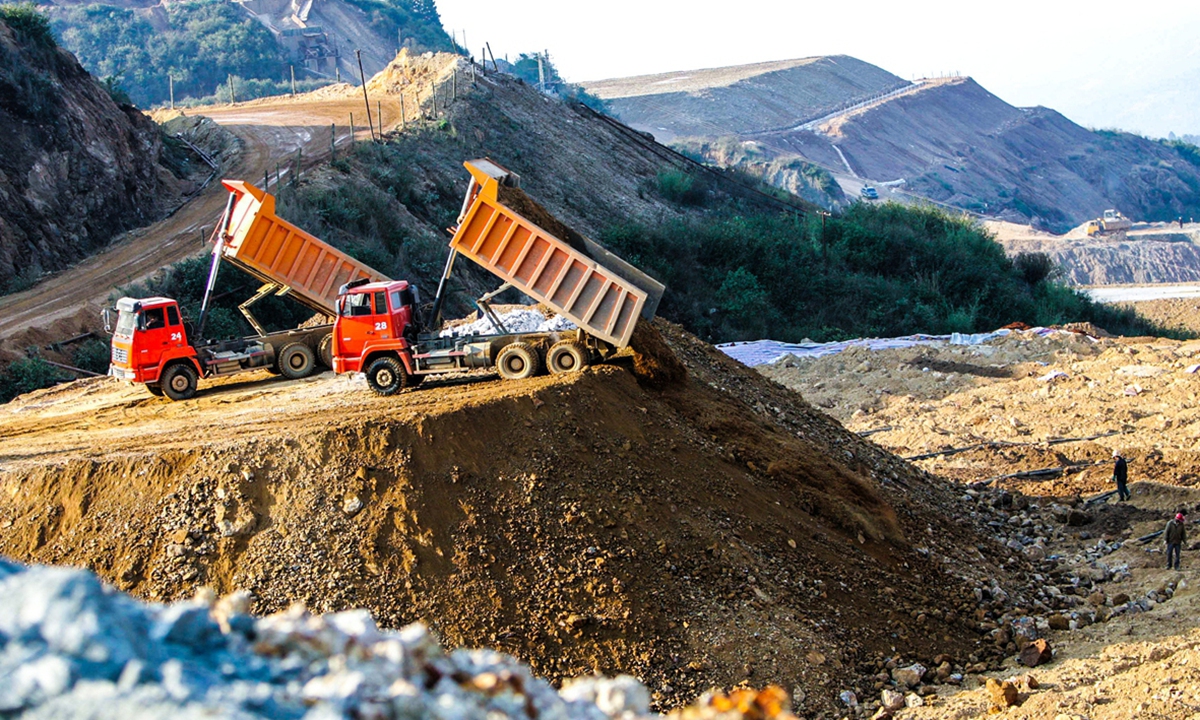
Rare earth File photo:VCG
China rare-earth exports totaled 4,223.5 tons in July, and cumulative exports reached 34,706.3 tons in the first seven months of 2026, down 10 percent year-on-year, Chinese customs data showed on Friday.
Meanwhile, China imported 9,451.3 tons of rare earths in July, bringing total imports in the first seven months of 2026 to 63,323.0 tons, down 5.5 percent year-on-year, according to the data from the General Administration of Customs (GAC).
Also on Friday, China Rare Earth Group reported revenue of 1.647 billion yuan in the first six months of 2026, down 12.19 percent year-on-year, and net profit attributable to shareholders of the listed company of 237 million yuan, up 46.53 percent year-on-year.
According to the company's semi-annual report, the supply-demand landscape in the rare-earth industry continued to adjust and improve. Driven by multiple favorable factors, including rare-earth industry policies and a boost in downstream market demand, market conditions trended upward overall, it said.
In October 2025, China's Ministry of Commerce and the GAC announced export control measures on items related to superhard materials, rare earth equipment and materials, and batteries, according to a Xinhua News Agency report.
Effective from November 8, 2025, exports of items related to superhard materials, equipment and raw materials related to rare earths, five medium and heavy rare earth elements including holmium, lithium batteries, as well as synthetic graphite anode materials, will not be permitted without approval, the Ministry of Commerce stated, per Xinhua.
The ministry said that China implements export control measures in accordance with laws and regulations, which conforms to international common practice and is in line with better safeguarding China's national security and interests, and better fulfilling its international obligations, such as its commitment to non-proliferation.
Wu Chenhui, an independent analyst specializing in the critical minerals sector, told the Global Times on Friday that rare earths are strategic mineral resources. China's move to impose export controls on rare earths is in accordance with the law and is an internationally accepted practice, as well as a necessary measure to safeguard national security and the stability of industrial and supply chains.
The relevant measures taken by China have always adhered to the principles of rationality, moderation, and prudence, Wu said, adding that they are consistent with domestic laws and regulations and fully take into account the normal needs of the global civilian sector.
A spokesperson for the Chinese Ministry of Commerce said on April 9 that China remains committed to safeguarding the security and stability of global industrial and supply chains, fully taking into account reasonable civilian needs and concerns worldwide, including those of the US, and actively promoting and facilitating compliant trade.
Export applications meeting the conditions for legitimate civilian use will be approved in accordance with the law, said the spokesperson.
"China has always approved export applications that comply with the requirements and are for legitimate civilian purposes, in accordance with laws and regulations. The relevant policies are not targeted at any specific country; rather, they aim to promote the high-quality development of the rare earth industry and maintain the safety and stability of global industrial and supply chains," Wu said.
RELATED ARTICLES