How the world reads Chinese aesthetics through a candy wrapper: Global Times editorial
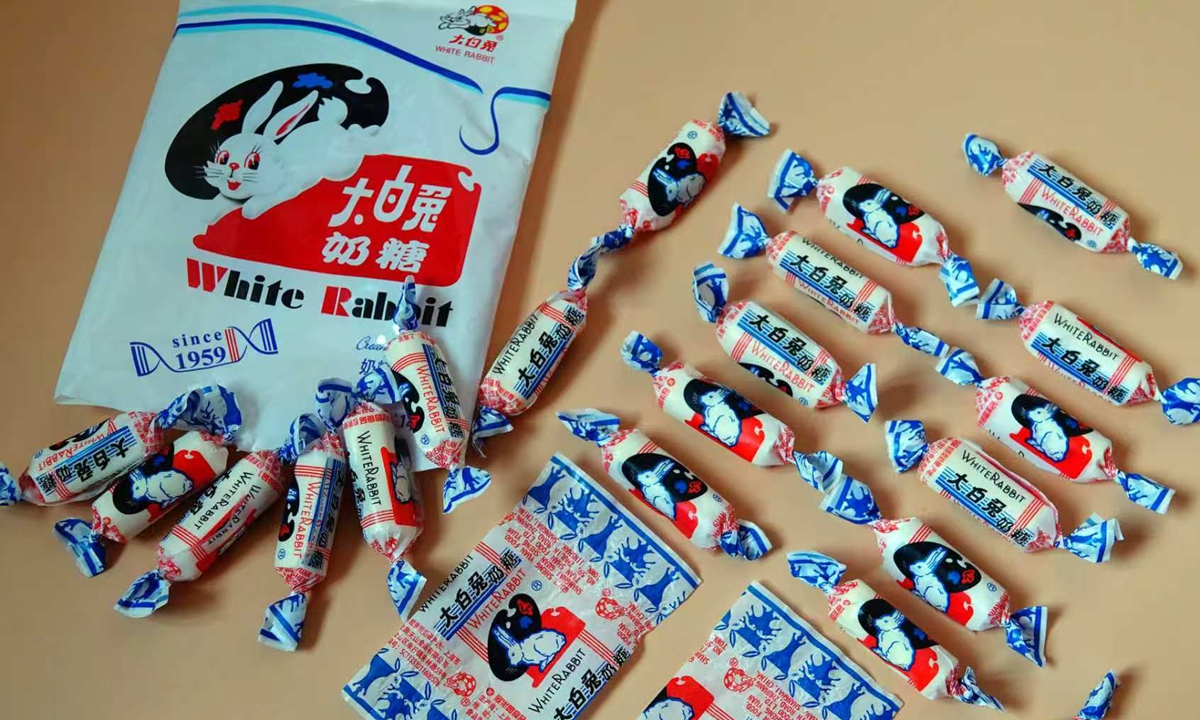
White Rabbit creamy candy wrapper Photo: VCG
When Chinese aesthetics enter the global public eye in a vibrant, everyday and contemporary way, it signifies that a more distinctive Chinese dimension has been added to the coordinates of global culture. By leveraging strong industrial capabilities and an open communication network, a piece of candy wrapper, a short video, or a poster makes aesthetics no longer abstract but integrated into daily life, quietly accepted by the world.
Recently, discussions about "Chinese aesthetics" have surged across overseas social media platforms. A White Rabbit creamy candy wrapper dating back to 1959 was posted by a user on the X platform and praised as a "masterstroke of graphic design." Within just three days, the post attracted 6 million views and 265,000 likes. Meanwhile, a 34-second AI-generated short video depicting a "Chinese-style heaven," created by an eyewear shop owner in Chengdu, went viral on overseas platforms, showcasing imagery of white jade corridors, cloud-shrouded palaces and soaring traditional rooftops. Viewers marveled, commenting that "the Heavenly Court in my imagination should look just like this" and praising its "incredibly pleasing aesthetics." In addition, the China-exclusive art poster for Spider-Man 4, which reimagines the superhero narrative with Eastern elements such as lotus flowers, shadow puppetry and auspicious clouds, was hailed by foreign netizens with the phrase: "China never misses."
The richness of global civilizations lies precisely in the fact that beauty has never taken only one form. When Chinese aesthetics enter the global public eye in a vibrant, everyday and contemporary way, it signifies that a more distinctive Chinese dimension has been added to the coordinates of global culture. This is not about one aesthetic replacing another, nor is it about imposing a "standard answer" for beauty on the world. Rather, it contributes to the diversity of civilizations. Chinese aesthetics do not seek visual saturation or shock value; instead, they pursue the profound artistic conception and lingering resonance behind beauty. They do not emphasize individual prominence or flamboyance, but rather the naturalness and harmony of the whole. The growing popularity of Chinese aesthetics lies in its ability to showcase an aesthetic tradition unique to China, one that distinguishes itself from those of other countries and cultures.
Chinese aesthetics are an integral part of Chinese civilization, characterized by enduring vitality and growing global appeal. This latest surge has emerged as China moves closer to the center of the world stage, resonating with the accelerating global outreach of its industries, innovations and ideas. With a stronger appeal than ever before, Chinese aesthetics are transcending geographical boundaries and inspiring widespread resonance among younger generations around the world. From high-speed rail and new energy vehicles to robotics, from ceramics and ancient architecture to short-form dramas, from technological achievements to everyday lifestyle aesthetics, as China's progress is increasingly experienced firsthand, people naturally begin exploring the cultural foundations behind it. The latest wave of popularity surrounding Chinese aesthetics cannot be separated from the broader context of China's growing international standing. The "Chinamaxxing" trend - a fascination with embracing aspects of Chinese life - reflects this shift in perception. Young people overseas are not only adopting habits such as drinking hot water or wearing slippers but are also developing a genuine interest in Chinese design and mythological imagery. At its core, this reflects the attention and respect earned by China's achievements in development.
The popularity of Chinese aesthetics is also due to the increasingly rich and grounded channels through which China influences the world. Chinese aesthetics do not spread through abstract concepts; instead, they naturally disseminate alongside Chinese manufacturing and services going global. The White Rabbit candy has long been exported to many countries, becoming a supermarket item accessible to numerous foreign consumers. Chinese clothing, toys, games, and blockbuster movies continually earn international acclaim, while Chinese cuisine, along with chain milk tea and coffee brands, is found all over the globe. Additionally, Chinese social media platforms, express logistics, and green modes of transportation methods have made Chinese lifestyle scenes tangible and relatable. By leveraging strong industrial capabilities and an open communication network, a piece of candy wrapper, a short video, or a poster makes aesthetics no longer abstract but integrated into daily life, quietly accepted by the world.
In the past, the international aesthetic market was predominantly led by the West, with what is termed "Chinese aesthetics" being a product often filtered through a Western lens, which specifically selected "exotic" or "backward" symbols. This not only detached these symbols from the real lives of Chinese people but also reflected a barren understanding and malicious prejudice toward China. Today, Chinese excellent traditional culture is becoming a unique resource for the continuous creation of new works. Dunhuang colors have entered modern fashion, traditional myths have gained new visual interpretations through AI technology, and Chinese aesthetics can also find their way into global pop culture IPs like Spider-Man. This new wave of Chinese aesthetics is fundamentally different from the past; it stems from the progress and creativity shared in real-time between the Chinese people and the world, as well as the global recognition, support, appreciation, and even emulation of contemporary China's development.
Understanding Chinese aesthetics through a candy wrapper reveals the cultural confidence of an ancient civilization, the open stance of a modernizing nation engaging with the world, and the powerful yet endearing spirit of a nation on the path to great rejuvenation. As Chinese aesthetics continue to amaze the world, what is seen is not just a rapidly growing China, but a China that is warm, imaginative, and full of humanity. This is a two-way journey of mutual learning and exchange among civilizations.
RELATED ARTICLES