Illustration: Xia Qing/GT
Since the American Institute in Taiwan (AIT) Director Raymond Greene claimed she wants to turn Taiwan into a "beehive" full of drones, the DPP seems to have grabbed onto a new lifeline. Not only has it intensified its technical ties with the US and Ukraine, but the ongoing "Han Kuang" military exercises have also specifically included drone drills. The New York Times followed suit, publishing an article on Sunday claiming that the Taiwan authorities are holding back a big move, and even coined the term "hellscape" - which refers to overwhelming an invading force with waves of drones, missiles and artillery, and making an amphibious assault so risky that the mainland is deterred from trying.This is what "grasshoppers jumping around" truly looks. Take drone exports as an example: Taiwan exported 120,000 drones by 2025, and the DPP claims that exports have experienced "exponential growth" this year, boasting the largest order of $50 million. On the mainland side, in 2025, civil drone exports exceeded 20 billion yuan ($2.95 billion), with the total output value reaching 176.1 billion yuan. This is just a small snippet of the stark contrast in strength across the Taiwan Straits - no matter which aspect you look at, China's overall strength is crushingly superior. That's why "seeking independence through military means" is fundamentally a dead end, and the "Han Kuang" military exercises are nothing but self-entertainment.
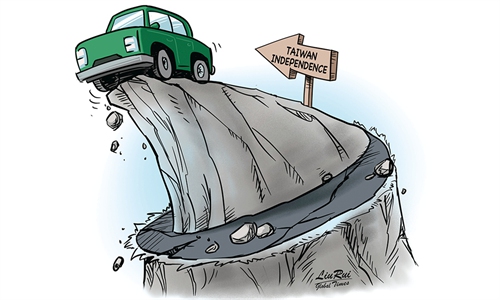
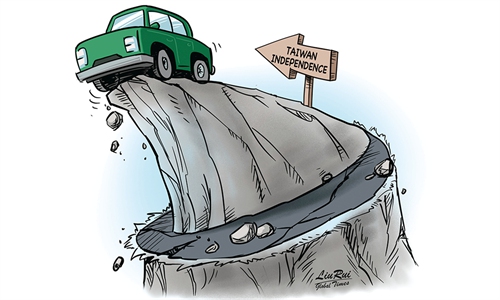
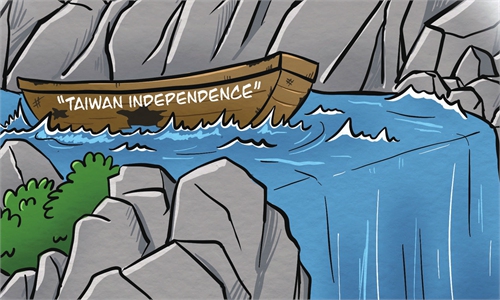
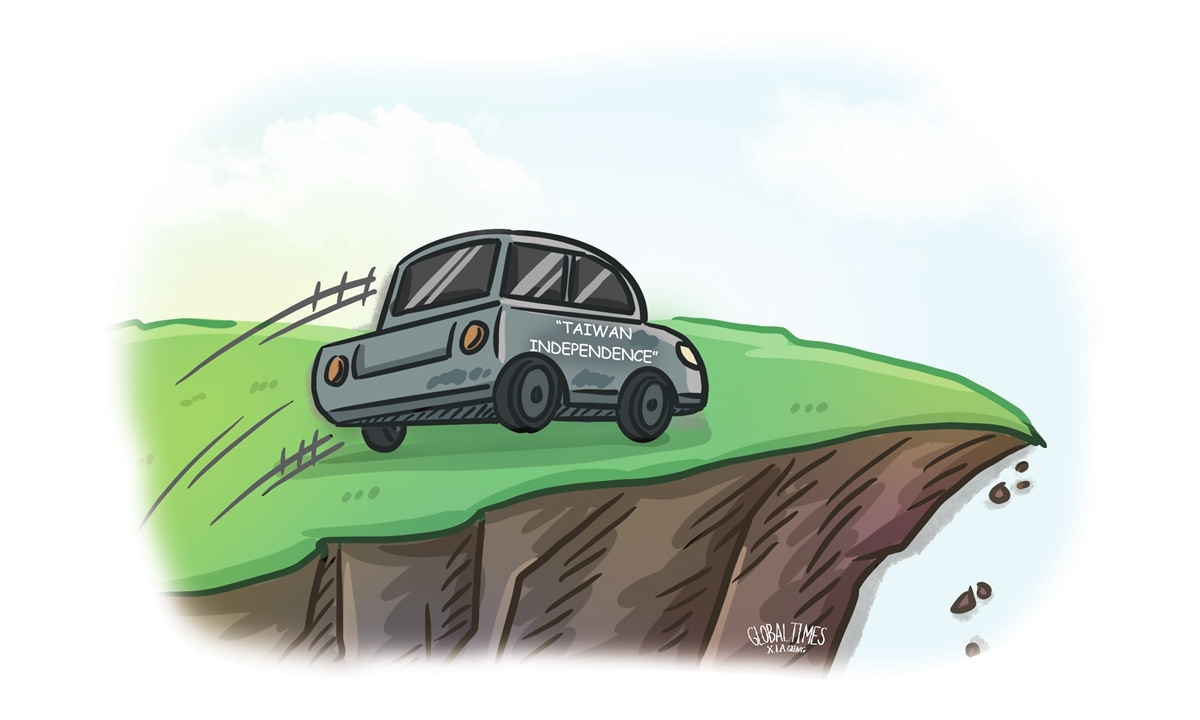
The DPP is aware that the Taiwan region's limited territory and lack of strategic depth - compounded by a severely fragmented defense industry - render it utterly incapable of sustaining a prolonged, high-intensity military confrontation. Concepts like a "beehive" full of drones or "Hellscape" are not merely fragile, empty rhetoric; they effectively push the people of Taiwan into a fiery abyss. By deliberately ignoring the vast disparity in strength and hyping up a so-called "military advantage," the DPP seeks - with the backing of external forces - to manufacture the illusion that "resisting reunification and pursuing separatism is a viable course of action."
The real risk does not lie in the few toy-like drones the DPP has in its hands. Instead, it's their blind reliance on the US for political gain, massive purchases of expensive American weapons, reckless military drills, and constant collusion with external forces to escalate tensions in the Taiwan Straits - turning the Taiwan region into an extremely risky "powder keg."
Tragically, the DPP's painstaking efforts have only resulted in US President Donald Trump saying, "we're supposed to travel 9,500 miles to fight a war. I'm not looking for that." Even when clinging tightly to Japan, Taiwan's so-called "representative" failed to make it into the diplomatic delegation at the Nagasaki Peace Memorial Ceremony. No matter how high "Taiwan independence" separatist forces jump, they cannot break through the ceiling of the one-China principle.
The advantages of the mainland's industrial system, technological talent, national defense mobilization, and geographical depth are all systemic. This is also a huge advantage for integrated cross-Straits development. But if "Taiwan independence" separatist forces stubbornly "seek independence through military means," the mainland's strengths will become their ultimate nightmare.
RELATED ARTICLES