New advances in lunar soil research offer scientific evidence to unravel mystery of moon’s 'two faces'
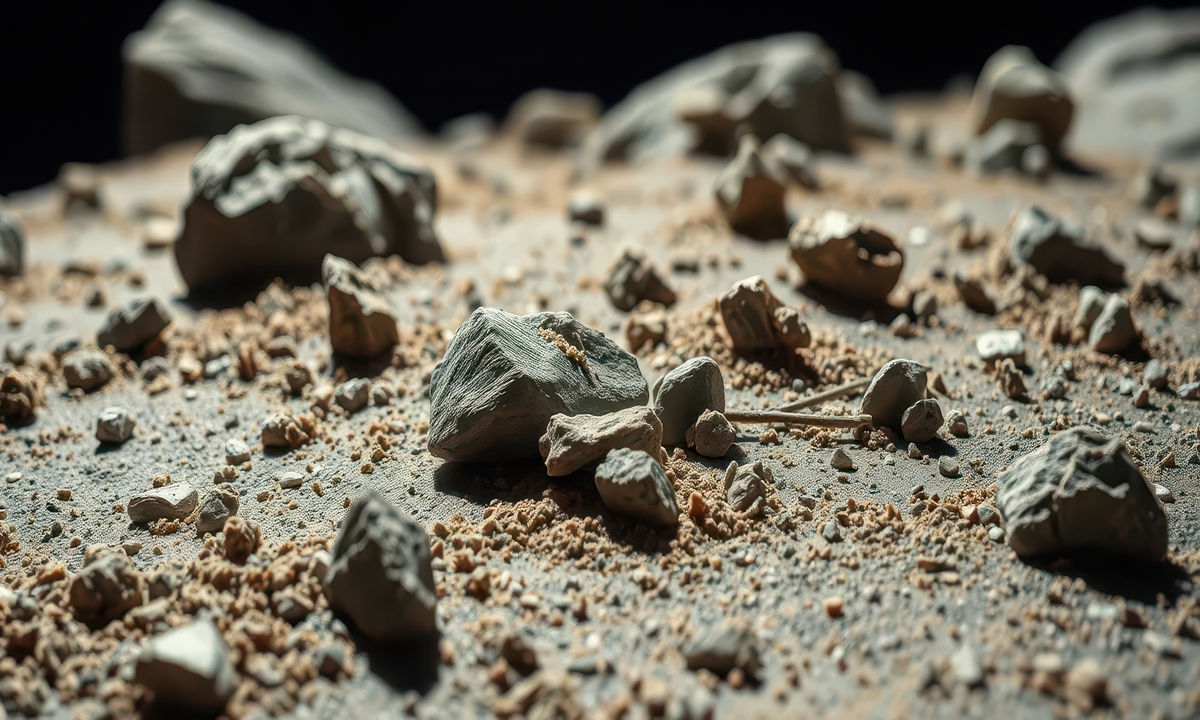
Lunar soil Photo: IC
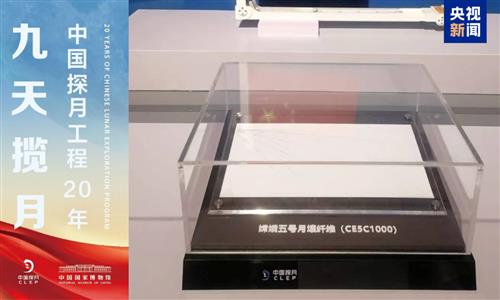
Chinese scientists have made new progress in the study of lunar soil samples returned by the Chang'e-6 mission, providing fresh evidence to the striking differences between the moon's near and far sides, which have long puzzled scientists.
Because the moon is tidally locked to Earth, its rotation period matches its orbital period, meaning the same side always faces Earth. The moon's near side features vast dark basaltic plains known as lunar maria, while its far side is dominated by bright highlands with far fewer maria, creating a striking contrast between the two sides. Why does the moon have such "two faces"?
Scientists studying the moon's early formation and evolution have long used the lunar magma ocean model as a basic framework. Under the model, the chemical and isotopic characteristics of different types of lunar magma can be explained by the mixing of different components in varying proportions after the magma ocean cooled, Guangming Daily reported on Saturday.
However, previous lunar samples were collected only from the moon's near side, while significant differences exist between the near and far sides in their topography, composition and internal structure.
Against this backdrop, the research team from Institute of Geology from Chinese Academy of Geologist Sciences studied feldspathic impact-melt rocks in lunar soil samples returned by the Chang'e-6 mission. Using China's first independently developed ion probe system, researchers conducted a comprehensive analysis to test the lunar magma ocean model and examine how large impacts reshaped reservoirs in the lunar crust and mantle.
Through high-precision analyses, the team identified key clues to the moon's evolutionary history, suggesting that the stark differences between its near and far sides may be linked to the ancient giant impact that formed the South Pole-Aitken Basin.
The study found that the massive impact continued to profoundly reshape the lunar crust and upper mantle after the lunar magma ocean had solidified, fundamentally altering the material composition of parts of the moon's far side.
The findings add to the traditional lunar magma ocean model, suggesting that the formation and preservation of the moon's crustal and mantle reservoirs may have varied significantly from region to region and cannot be fully explained by a single, uniform model of primordial magma-ocean differentiation.
The research provides new scientific evidence for understanding the differences between the moon's near and far sides, while offering fresh insights into the moon's complex evolutionary history, according to Guangming Daily.
Global Times
RELATED ARTICLES