‘Zhuque returns to the nest’: a space gift from China to the world on Qixi Festival
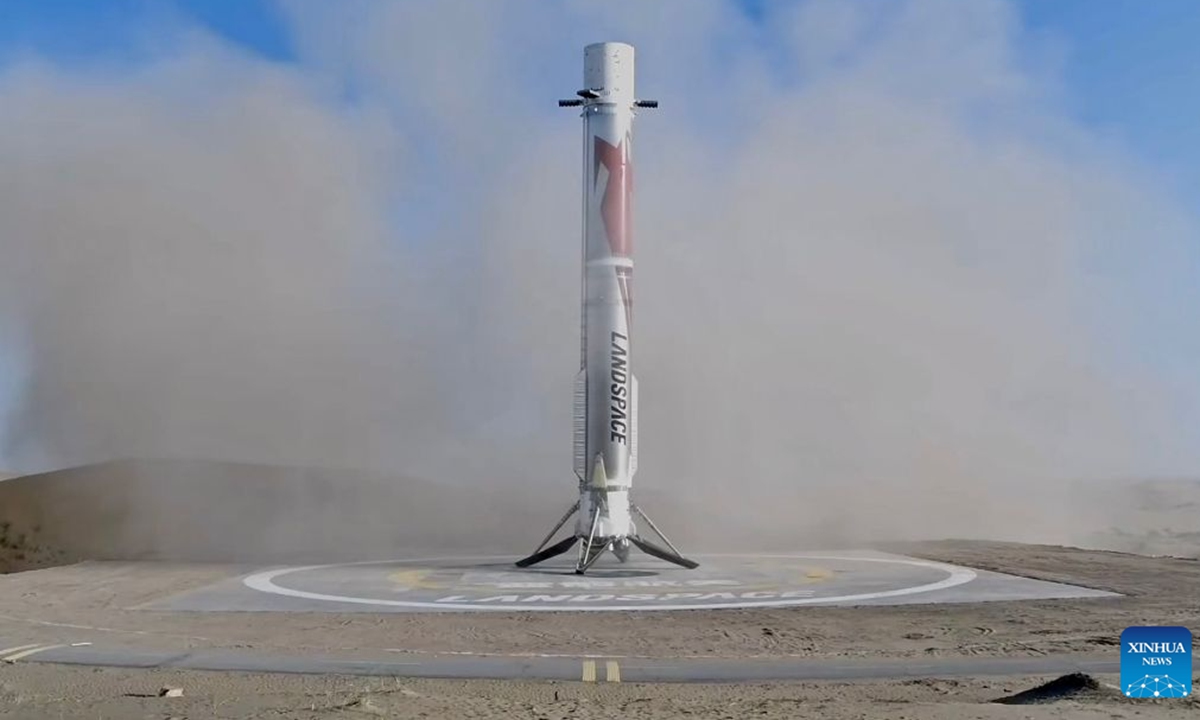
This screenshot from a video clip shows the first stage of the Zhuque-3 Y2 rocket successfully completing its land-based recovery, Aug. 19, 2026.
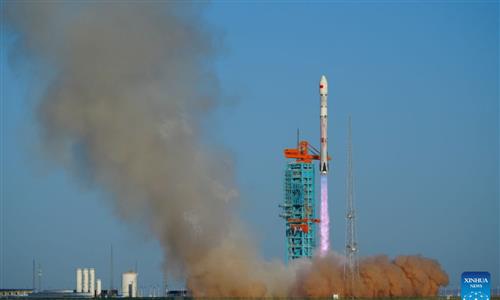
"Success!" The Zhuque-3 Y2 rocket was successfully launched on Wednesday morning. While sending the onboard satellite into preset orbit, it touched down smoothly at the designated position at the first stage. At that moment, the entire Chinese space industry was abuzz with excitement, with some on-site bursting into tears of joy. On social media platforms, cheers of "It succeeded!" echoed continuously. The pride and exhilaration contained in this moment resonate deeply with everyone who cares about China's space endeavors.
Zhuque-3's "return to the nest" has written several "firsts" in Chinese space history: It is China's first successful land-based controlled recovery of a rocket; it is the first recovery of a rocket's first stage by a Chinese commercial aerospace company; and it is the first time to use deployable landing legs. Moreover, it is approved by the China National Space Administration as a new-generation liquid oxygen-methane-powered rocket. China has entered the top tier, becoming the second country - after the US - to develop orbital-class rocket recovery capabilities. Once, countless people looked on with envy as SpaceX's Falcon 9 repeatedly achieved successful recoveries. Today, we can finally say: The Chinese made it.
Unlike traditional space launches focused solely on lifting off, reusable rockets test the entire chain of "launch, return and reuse." "Going into space" and "landing precisely" are two entirely different tasks. Zhuque-3's chief commander likened the process to making a precise parking stop while traveling at high speed. The US spent more than a decade of trial and error, experiencing numerous explosions, crashes and failed test flights before cracking the hard nut of first-stage recovery. In contrast, China has gone from initial exploration to achieving Zhuque-3's first-stage recovery within just a few years. Under conditions where no mature experience was readily available for direct copying, China has charted its own path in commercial space recovery technology.
The breakthrough in rocket recovery technology will lower global launch costs and promote the development of worldwide public space projects such as low Earth orbit internet satellites and space science. Currently, many developing countries have urgent needs for remote sensing and communication satellites but face high launch costs that hinder implementation. It is believed that once Zhuque-3 becomes commercially mature, it will help more Global South countries access space-based digital infrastructure, supporting global digital inclusion, climate monitoring and other common human challenges. "Zhuque returns to the nest" signifies not only a technological victory but also a shared opportunity for humanity.
Today is Qixi Festival, also dubbed Chinese Valentine's Day, and "Zhuque returns to the nest" is China's most romantic gift to the world. We respect the pioneers and welcome the latecomers. Space is vast enough to hold all dreams of exploration. The journey toward the boundless cosmos calls for more fellow travelers and dream chasers.
RELATED ARTICLES