GT Voice: US criticism of Canada proves appeal of China’s economic co-op approach

During an appearance in the state of Maine, US Vice President JD Vance on Monday called out Canada for being friendlier to China on trade than to the US, Fox News reported. "They treat Chinese goods more fairly than they do the goods that come from the people of Maine: It's insanity," he claimed.
At a time of escalating US-Canada trade disputes, Vance's remarks, while aimed at a traditional ally, have instead cast a spotlight on the increasing attractiveness of China's approach to international economic cooperation, an approach built on the principles of equality and mutual benefit.
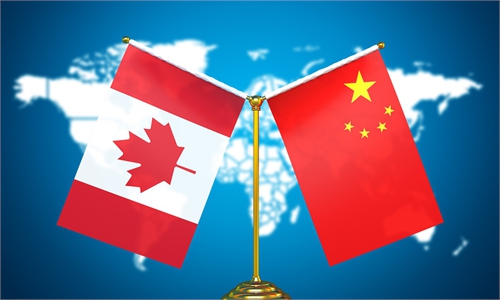
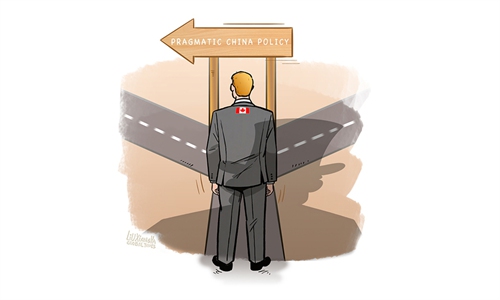
Essentially, Canada's economic and trade exchanges with China represent a normal, independent partnership between two nations, based on equality, independence, mutual benefit, and win-win outcomes. It is not a favor to any party, but a carefully weighed choice driven by Canada's long-term industrial needs in agriculture, energy, high-end manufacturing, and other key sectors. Rather than saying Canada is "friendlier" to anyone, it is more accurate to say that Canada is doing what is most beneficial to itself.
The data speaks for itself. Chinese customs statistics showed that bilateral trade between China and Canada increased by 18.7 percent year-on-year from January to July this year, with China's imports from Canada surging by 29 percent. These robust growth figures fully demonstrate the substantial, tangible benefits delivered by bilateral cooperation. Canada gains stable, large-scale market access for its premium agricultural products, clean energy supplies, and strategic mineral resources, while China's electromechanical equipment and new-energy products entered Canada's industrial and consumer markets. This two-way, mutually beneficial model has delivered concrete economic dividends to industry players and ordinary people in both countries.
At a time when global trade is full of uncertainties, China's consistent approach to foreign economic and trade cooperation demonstrates a unique appeal. The foundation of this appeal lies in China always taking equality and mutual benefit as the fundamental principles of all cooperation. Whether the partner is a developing country or a developed economy, a neighboring partner or a traditional US ally, China treats everyone as equals. It never uses normal trade as a tool to exert pressure and never forces partners to make an either-or choice between trading partners. This approach, which fully respects the sovereignty and development interests of other countries, stands in sharp contrast to the path taken by certain countries, which frequently politicize economic and trade issues and use trade as a tool to contain the development of others.
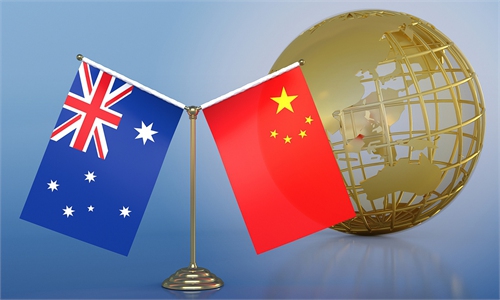
A growing number of countries are finding cooperation paths that align with their own long-term interests in trade collaboration with China. This trend is not just limited to Canada. Multiple EU member states are deepening industrial collaboration with China in new energy and high-end manufacturing, while dialogue and exchange mechanisms between China and Australia have been resumed across various fields, with practical cooperation deepening and yielding tangible results.
Meanwhile, ASEAN has remained China's largest trading partner for several years running, as dividends from the Regional Comprehensive Economic Partnership continue to unfold. These choices are essentially votes of confidence spanning diverse regions across the globe, demonstrating that China's cooperative model offers a stable, predictable, and mutually beneficial option for countries at different stages of development and with varying political systems.
In a world marked by rising trade protectionism and mounting risks of industrial chain fragmentation, countries are searching for reliable anchors of cooperation amid growing uncertainty. It is precisely this non-exclusive, non-confrontational principle that is entirely based on mutual benefit that has made China the preferred partner for more and more countries to proactively deepen cooperation, because they have clearly seen the long-term value of this cooperation model from solid trade growth to industrial dividends and livelihood improvements.
At a time of escalating US-Canada trade disputes, Vance's remarks, while aimed at a traditional ally, have instead cast a spotlight on the increasing attractiveness of China's approach to international economic cooperation, an approach built on the principles of equality and mutual benefit.
Essentially, Canada's economic and trade exchanges with China represent a normal, independent partnership between two nations, based on equality, independence, mutual benefit, and win-win outcomes. It is not a favor to any party, but a carefully weighed choice driven by Canada's long-term industrial needs in agriculture, energy, high-end manufacturing, and other key sectors. Rather than saying Canada is "friendlier" to anyone, it is more accurate to say that Canada is doing what is most beneficial to itself.
The data speaks for itself. Chinese customs statistics showed that bilateral trade between China and Canada increased by 18.7 percent year-on-year from January to July this year, with China's imports from Canada surging by 29 percent. These robust growth figures fully demonstrate the substantial, tangible benefits delivered by bilateral cooperation. Canada gains stable, large-scale market access for its premium agricultural products, clean energy supplies, and strategic mineral resources, while China's electromechanical equipment and new-energy products entered Canada's industrial and consumer markets. This two-way, mutually beneficial model has delivered concrete economic dividends to industry players and ordinary people in both countries.
At a time when global trade is full of uncertainties, China's consistent approach to foreign economic and trade cooperation demonstrates a unique appeal. The foundation of this appeal lies in China always taking equality and mutual benefit as the fundamental principles of all cooperation. Whether the partner is a developing country or a developed economy, a neighboring partner or a traditional US ally, China treats everyone as equals. It never uses normal trade as a tool to exert pressure and never forces partners to make an either-or choice between trading partners. This approach, which fully respects the sovereignty and development interests of other countries, stands in sharp contrast to the path taken by certain countries, which frequently politicize economic and trade issues and use trade as a tool to contain the development of others.
A growing number of countries are finding cooperation paths that align with their own long-term interests in trade collaboration with China. This trend is not just limited to Canada. Multiple EU member states are deepening industrial collaboration with China in new energy and high-end manufacturing, while dialogue and exchange mechanisms between China and Australia have been resumed across various fields, with practical cooperation deepening and yielding tangible results.
Meanwhile, ASEAN has remained China's largest trading partner for several years running, as dividends from the Regional Comprehensive Economic Partnership continue to unfold. These choices are essentially votes of confidence spanning diverse regions across the globe, demonstrating that China's cooperative model offers a stable, predictable, and mutually beneficial option for countries at different stages of development and with varying political systems.
In a world marked by rising trade protectionism and mounting risks of industrial chain fragmentation, countries are searching for reliable anchors of cooperation amid growing uncertainty. It is precisely this non-exclusive, non-confrontational principle that is entirely based on mutual benefit that has made China the preferred partner for more and more countries to proactively deepen cooperation, because they have clearly seen the long-term value of this cooperation model from solid trade growth to industrial dividends and livelihood improvements.
RELATED ARTICLES