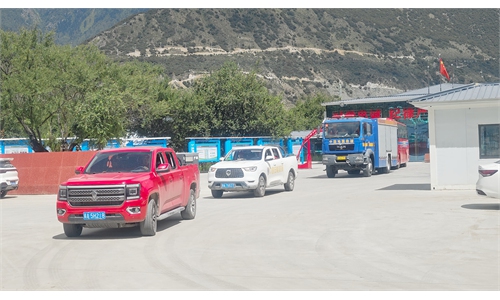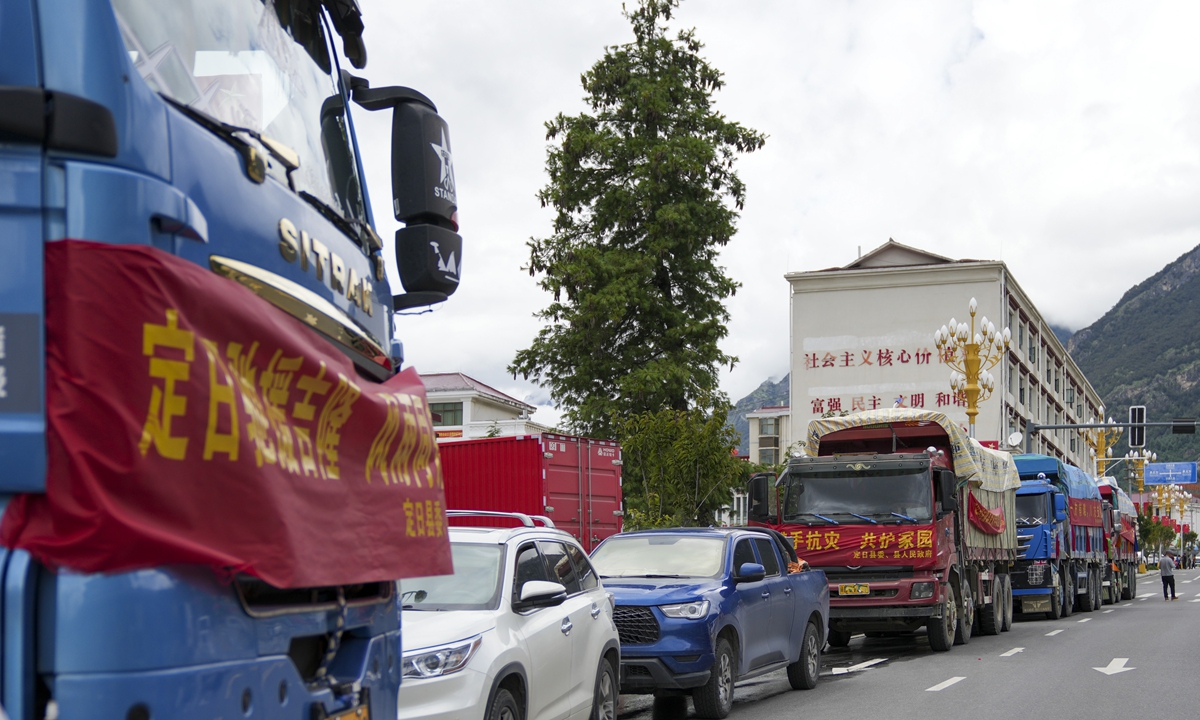
At 2 pm on August 27, 2026, six trucks carrying disaster relief supplies from Tingri County in Xigaze City arrived safely in Gyirong Township. Loaded with daily necessities including instant noodles, rice, flour and bottled water, the trucks set out from Tingri County at 7 am for Gyirong Township. Relief supplies from across China are now continuously arriving at Gyirong Township, providing support for emergency rescue and the resettlement of affected residents. Photo: Xinhua
A high-altitude Mi-171 helicopter reached the disaster area, rescue personnel assembled before dawn for urgent deployment, while an advance engineering team arrived with portable satellite stations, drones and 3D laser scanners to assess hazards upstream. As daylight broke over the high-altitude border region, more rescuers, aircraft and equipment were still racing toward the scene.
The large-scale mobilization came as rescuers raced to find hundreds of people missing after a devastating mudslide originating on the Nepalese side of the China-Nepal border struck Gyirong Port in Southwest China's Xizang Autonomous Region.
Emergency responders, the People's Liberation Army officers, engineering teams, telecom operators and relief organizations have joined the operation, even as continued rainfall, unstable mountain slopes, an upstream barrier lake and the region's narrow high-mountain terrain pose mounting risks of secondary disasters.
As of Thursday morning, three people had been confirmed dead, two rescued and 558 remained missing, including 260 foreign nationals.
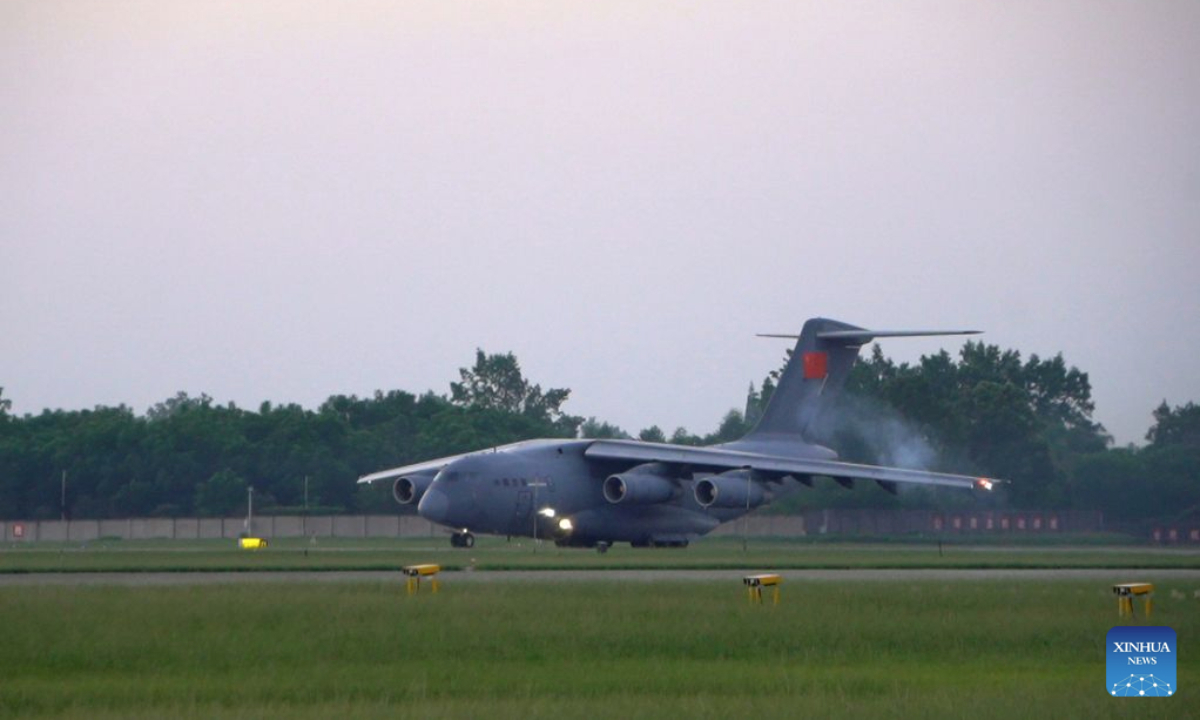
A Y-20 transport aircraft of the western theater command takes off at an airport in southwest China on Aug. 27, 2026. A directing group from the Western Theater Command of the Chinese People's Liberation Army (PLA) has been dispatched to the Xizang Autonomous Region in southwest China on Thursday morning to coordinate joint rescue operations by military personnel in mudslide-hit Gyirong County. Carried by the Y-20 transport aircraft of the western theater command, the group will organize military forces to assist in disaster relief efforts. (Photo by Song Zhengsheng/Xinhua)
Racing to rescueChinese Premier Li Qiang arrived at Gyirong Township on Thursday afternoon.
Li, also a member of the Standing Committee of the Political Bureau of the Communist Party of China (CPC) Central Committee, is entrusted by Xi Jinping, general secretary of the CPC Central Committee, to lead a group of senior officials from relevant departments to the disaster-hit area, the Xinhua News Agency reported.
They will supervise rescue and relief operations, and visit rescue and relief personnel and people affected by the disaster, Xinhua said.
Xinhua updated on Thursday that following the mudslide disaster, the Ministry of Emergency Management immediately mobilized emergency rescue forces to the region for rescue and relief operations. As of around 8 am on Thursday, the first group of 141 rescuers had arrived at Gyirong Port, while a Mi-171 helicopter specially adapted for high-altitude operations had reached the disaster-hit area.
The ministry also coordinated a chartered civil aviation flight carrying 111 members of the search and rescue team, along with equipment and supplies for reconnaissance and detection, lifesaving, demolition, communications and logistical support, according to Xinhua.
Meanwhile, a total of 300 personnel from the ministry's natural disaster engineering rescue bases in Lhasa and Chengdu, as well as the Chongqing rescue team of China Anneng, were heading to the site with 120 sets of equipment.
At around 10:30 am on Thursday, a directing group from the PLA Western Theater Command arrived at a high-altitude airport in Xizang aboard a Y-20 military transport aircraft. The team then proceeded to the disaster area by motorized transport to reinforce on-site command and coordination.
The team dispatched will assume unified command over PLA and Armed Police Force rescue units, with aviation, medical, transportation, and engineering corps fully prepared for timely operations when they are needed, according to Xinhua earlier report.
At around noon on Thursday, an army aviation brigade under the Xizang Military Command dispatched another two helicopters to carry out search and rescue operations, carrying medical and rescue equipment on board. The first two helicopters dispatched earlier have already arrived over the disaster-hit area, China Military Bugle reported.
Also, the Red Cross Society of China has activated an emergency response and dispatched a working team to the disaster-hit area in Xigaze on Wednesday evening to carry out relief operations. It also urgently allocated 2,500 items or sets of relief supplies to the affected area, including single-person tents, family relief kits, hygiene kits, quilts, folding beds and outdoor jackets, Xinhua said.
The Chinese Red Cross Foundation provided more than 5,500 boxes and items of bottled water, instant noodles, sausages and milk to support the evacuation and resettlement of affected residents, as well as disaster relief efforts.
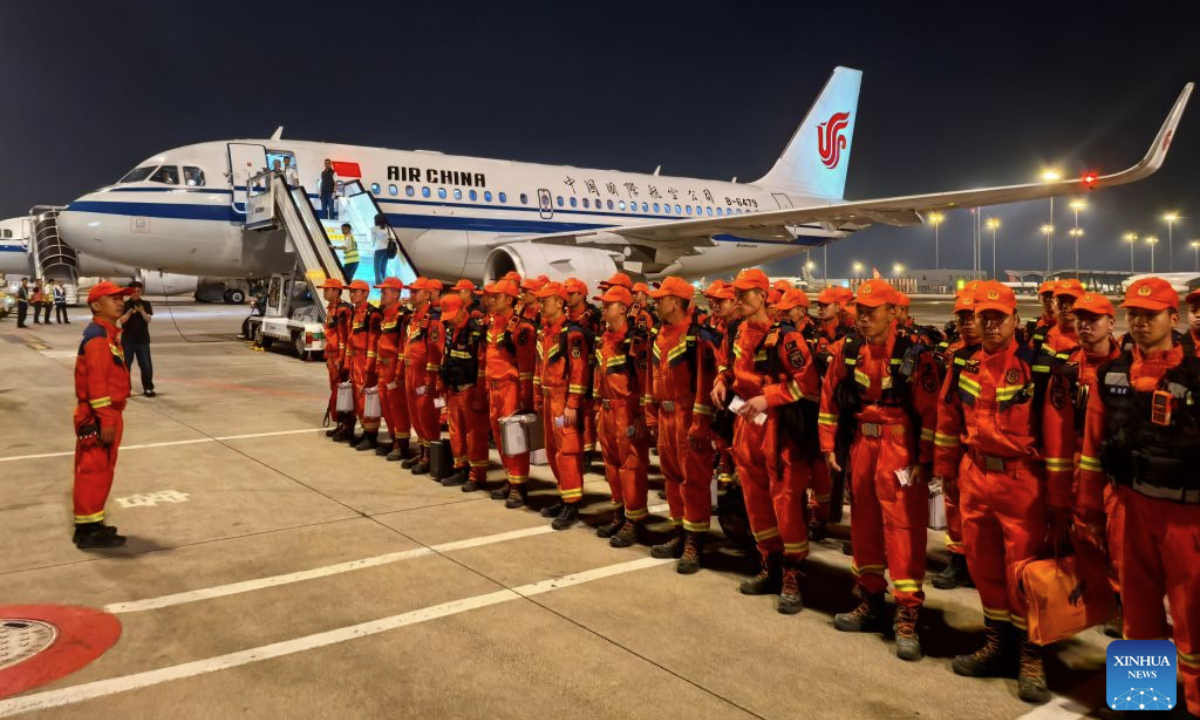
Rescuers with rescue and relief supplies prepare before heading to the mudslide-stricken Gyirong Port, at the Chengdu Shuangliu International Airport in Chengdu, southwest China's Sichuan Province, Aug. 27, 2026. Rescue teams are racing to the mudslide-stricken Gyirong Port in southwest China's Xizang Autonomous Region after the disaster caused significant casualties across the China-Nepal border on Wednesday. The mudslide occurred on Wednesday morning in Nepal, resulting in three people dead and 265 missing at Gyirong Port as of 8 pm, according to initial estimates. (Ministry of Emergency Management/Handout via Xinhua)
New challenges
A Wing Loong emergency communications unmanned aerial vehicle dispatched from Sichuan Province meanwhile reached the airspace above the disaster area at around 2 am on Thursday and began providing emergency communications support. The drone is equipped with high-definition cameras for aerial reconnaissance, as well as mobile base stations operated by China's three major telecom carriers and a satellite communications system, according to CMG.
The operation comes as rescuers face difficult weather and terrain conditions. A barrier lake has been detected in the direction of Gyirong Port, while rain continued to fall in the area on Thursday morning, according to a report from the Xigaze military sub-command cited by CMG.
The sub-command has mobilized 158 personnel, four pieces of engineering machinery and more than 20 vehicles, together with life-detection devices and other rescue equipment. The edge of the mudslide is about 2.5 kilometers from Gyirong Port and deposits there are nearly 1.5 meters thick, making further rescue operations more difficult. Observation posts will be deployed to assess the risk of secondary disasters, according to the report.
By early Thursday, 601 firefighters with 113 vehicles had been mobilized, while 325 personnel from engineering rescue teams, including China Anneng and PowerChina, had also been dispatched, according to Xinhua. The central government has sent 30,000 disaster-relief items including tents, heating stoves, clothing, quilts, folding beds and moisture-proof mats to Xizang.
The Ministry of Finance and Ministry of Emergency Management have allocated 120 million yuan ($16.8 million) from central disaster-relief funds, while the National Development and Reform Commission arranged another 100 million yuan for emergency restoration of infrastructure.
Communication facilities were also affected. Five mobile communications base stations in the disaster area went offline, according to information released by the Ministry of Industry and Information Technology. Telecommunications operators mobilized emergency repair personnel, vehicles, generators, satellite phones, emergency fiber-optic cables and portable satellite communications equipment to restore connectivity.
China's Ministry of Water Resources said that a significant barrier lake has formed near the confluence of the Chhochen Khola and Purepu Tsangpo rivers in Nepal, with its water volume estimated at 2 million cubic meters as of Thursday morning and the lake already overflowing. Another 3 million cubic meters of water is expected to flow into the lake over the next three days, posing a high risk of a breach, China Central Television reported Thursday.
The ministry is closely monitoring the lake's developments and conducting flood simulations and analyses to prepare for a potential breach and provide support for emergency rescue efforts.
Chen Hongqi, a senior engineer with the Ministry of Natural Resources' technical guidance center for geological disaster prevention and response, told CCTV News on Thursday that imagery of the disaster area showed extremely complex terrain and hydrological conditions.
According to Chen, an analysis of imagery from the disaster area showed that the local terrain and hydrological conditions are extremely complex. The disaster occurred where a main gully intersects with a tributary gully, with an elevation difference of more than 3,000 meters across the surrounding mountains. Glaciers and glacial lakes are also present near the mountaintops.
Chen noted that rescue operations face major difficulties in four areas. First, the stability of the damaged mountain area at the source of the disaster remains unclear, complicating efforts to prevent secondary disasters. Second, water conditions in the tributary gully and upstream sections of the main gully are not yet fully known, nor is it clear whether they are stable. Third, the area consists of high mountains and deep valleys where runoff is concentrated, making rainfall a major factor affecting rescue operations. Fourth, the terrain is narrow, meaning access routes into and out of the disaster area must be closely monitored for risks from slope collapses, landslides and rockfalls.
An expert from China's Ministry of Natural Resource's geological disaster investigation and monitoring center explained that the disaster was triggered by a high-altitude ice avalanche in Nepal where the ice avalanche from a high-altitude glacier rapidly traveled downhill, picking up glacial debris along its path and developing into a high-speed debris flow. The flow then entered the Donglin Tsangpo River , eventually striking infrastructure at Gyirong Port before continuing downstream toward Nepal.

Rescue vehicles head to the mudslide-stricken Gyirong Port in Gyirong County, southwest China's Xizang Autonomous Region, Aug. 27, 2026. Rescue teams are racing to the mudslide-stricken Gyirong Port in southwest China's Xizang Autonomous Region after the disaster caused significant casualties across the China-Nepal border on Wednesday. The mudslide occurred on Wednesday morning in Nepal, resulting in three people dead and 265 missing at Gyirong Port as of 8 p.m., according to initial estimates. (Xinhua/Yue Yuewei)
International attentionIn Nepal, the death toll from Wednesday's devastating flood has risen to 359, with bodies recovered from eight districts as of 5 pm on Thursday, the Kathmandu Post reported, citing the local police.
According to the agency, that figure includes security forces, tourists and the general public.
UN Secretary-General Antonio Guterres said through his post on X on Thursday that he was deeply saddened by the severe flooding in China and Nepal, extended condolences to the families of the victims and wished the injured a swift recovery.
German Chancellor Friedrich Merz also expressed condolences over the loss of life in China and Nepal and paid tribute to rescuers working at the disaster sites, saying that Germany stands ready to support, in a post on X on Thursday.
China is maintaining close communication and coordination with Nepal and working together with the Nepalese side on search and rescue operations. Preliminary information released by local authorities showed that 260 foreign nationals were currently missing in the disaster-hit area, while further details were still being verified.
Nearly 100 Chinese nationals were missing in the affected area on the Nepalese side, and the Chinese Embassy in Nepal is further verifying the information with Nepalese authorities, Chinese Foreign Ministry spokesperson Lin Jian said at a regular press conference on Thursday.
During the same event, when commenting on a question on foreign nationals affected by the mudslide disaster, Lin said that according to preliminary information currently available, the people concerned included both tourists and pilgrims.
Due to the impact of the disaster, more detailed information was still being verified, the spokesperson added.