Australian media shows ‘ambivalence’ over new Chinese ambassador; Canberra urged to drop strategic prejudices
By Published: Aug 27, 2026 08:27 PM

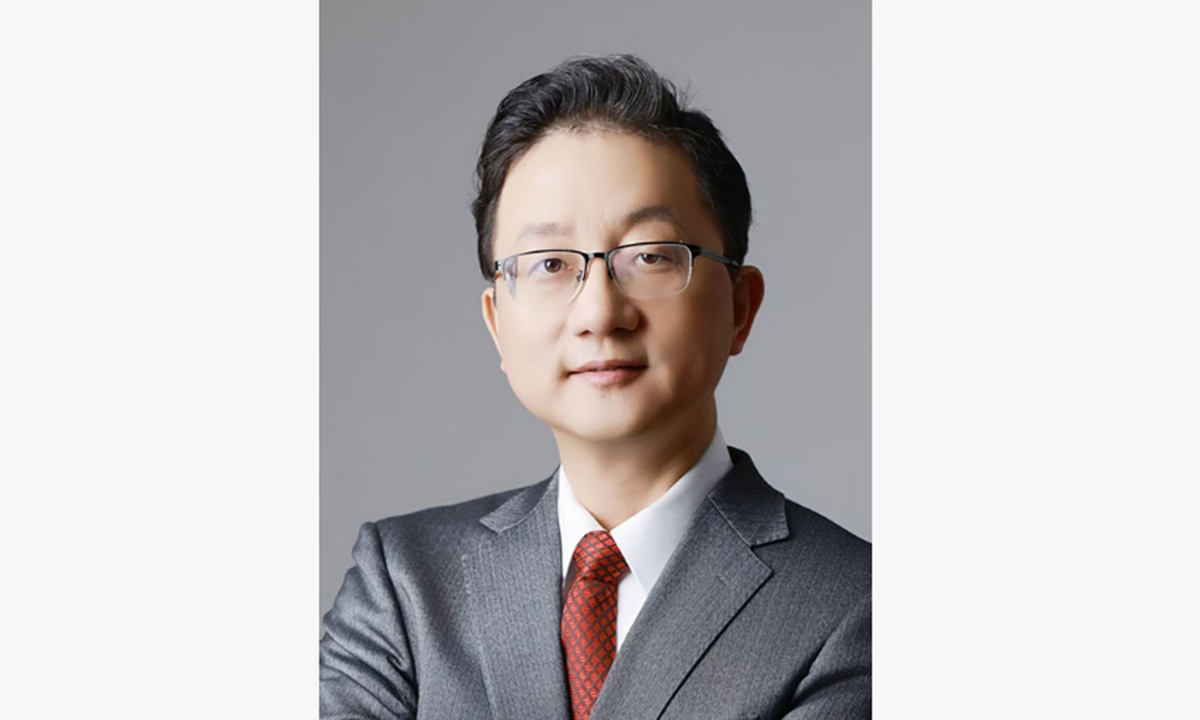
(File) China's new Ambassador to Australia Liu Jinsong Photo: official website of Chinese Embassy in Australia
Against a backdrop of stabilizing China‑Australia ties despite differences remaining, Liu Jinsong, China's new ambassador to Australia, arrived in the country this week to take up his post. As observed by Global Times reporter, Australian media picked up positive and pragmatic undertones in his maiden remarks made public, while some outlets seized on his previous Japan‑related experience to label him hawkish and amplify bilateral differences. Analysts note that China has sent clear signals for steady bilateral growth and Canberra should set aside strategic prejudices and meet Beijing halfway.
According to a release from the Chinese Embassy in Australia, Liu arrived in Australia on Monday. In written remarks upon arrival, Liu said Australia is an important country, adding that he will serve as a "steadfast guardian and promoter" of the China-Australia Comprehensive Strategic Partnership.
"We are bound by highly complementary economies and mutually enriching cultures. Our prospects for cooperation are bright, while properly managing our differences and aligning expectations is equally - and truly - of paramount significance," Liu noted in the written remarks.
In a report upon Liu's arrival in Canberra, Australian Broadcasting Corporation (ABC) News described Liu's statement as "positive and upbeat", as Liu noted there are "no historical grievances" and "no fundamental conflicts of interests" between China and Australia.
Quite a few Australian media outlets, including ABC News and The Nightly, also noticed that Liu mentioned he travelled from Sydney to Canberra by bus rather than by plane or car, "chatting and enjoying myself with ordinary Australians," adding that "Good relations between countries depend on the affinity between their people."
However, reporters found that several Australian outlets labelled Liu an "Asia enforcer." AUSTV News went further to portray Liu as "China's toughest diplomat." Such depictions stemmed from footage showing the head of Japan's Asian and Oceanian Affairs Bureau Masaaki Kanai "bowing" to Liu, then director general of the Chinese Foreign Ministry's Department of Asian Affairs, following their talks after provocative remarks on China's Taiwan made by Japan's prime minister last year.
Citing diplomatic sources, News Wire said that the latest appointment "could signal an aggressive shift" in Beijing.
Australian Institute of International Affairs chief executive Bryce Wakefield cautioned against labelling him a "wolf warrior" because "that may be too simplistic." However, he highlighted the two countries' disputes over Taiwan island, AUKUS, the Pacific, critical minerals and the Port of Darwin.
The Nightly, citing diplomat figures, said Liu is likely to keep the same trajectory in diplomatic relations as his predecessor. The report singled out Liu's arrival remarks in which he "urged Australia to respect his country's core interests and major concerns". It claimed the envoy's arrival comes amid "renewed tensions over Beijing's military activity" across the region.
Chen Hong, director of the Australian Studies Center of East China Normal University, told the Global Times that Australian media coverage of the new envoy's arrival mirrors Australia's ambivalence in managing China‑Australia relations.
"While noting steady, positive bilateral signals, certain outlets push cautious, wary narratives, exaggerating geopolitical competition and differences on security, alliances and regional matters to the detriment of bilateral ties," he explained.
Chen said the envoy's arrival sends a clear signal that China is ready to look ahead and foster more substantial and stable China‑Australia relations. "China consistently pursues mutual respect and non‑infringement of each other's core interests, and calls for unlocking greater cooperation potential across trade, people‑to‑people exchanges, science‑education and regional governance."
Australia should not embrace China's goodwill while viewing ties through biased lenses and using a magnifying glass to hunt for alleged "tough stances", said Chen. "For diplomats, firmly upholding national core interests does not contradict efforts to advance bilateral exchanges and cooperation."
Notably, beyond formal diplomatic discourse, Stephen Dziedzic, foreign affairs reporter for ABC News, excerpted a passage from Liu's written remarks upon arrival in an X post published August 24, describing them as "rather upbeat and lyrical."
"Time awaits no one, and neither does history. Once our course has been set, we must pull hard on the oars and press forward - without hesitation, without deviation, and without turning back," reads Liu's remarks.
Opportunities for China‑Australia cooperation are real and tangible, and the crux lies in Canberra's willingness to move past strategic prejudices, said Chen.
"China‑Australia relations have climbed out of their previous low to enter a phase of steady recovery and recalibration. The bilateral relationship can ill afford another man‑made slowdown and setback," he added.
RELATED ARTICLES