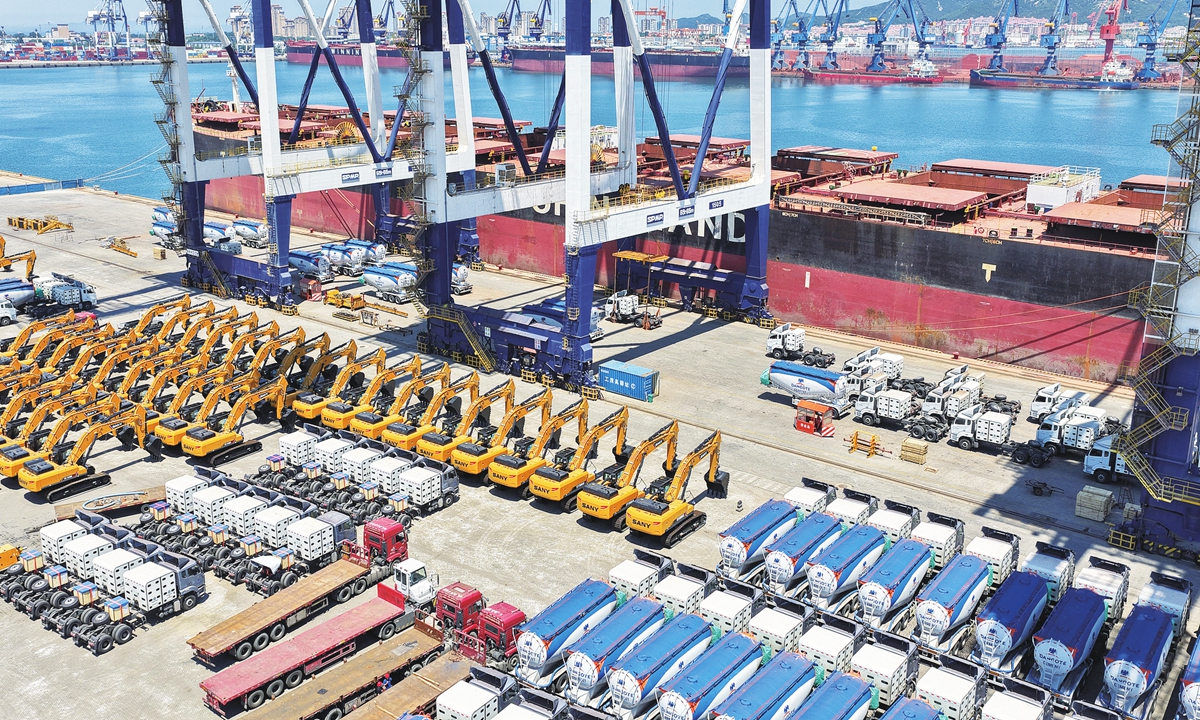
Chinese trucks bound for Africa are loaded onto a China-Africa freight vessel at Yantai Port in East China's Shandong Province on June 11, 2026. China's vehicle exports reached 4.059 million units in the first five months of 2026 Photo:VCG
Editor's note:
The 7th Forum on China‑Africa Media Cooperation was held in Beijing on August 19-21, drawing media practitioners from both sides. In an exclusive interview, Zimbabwe's Minister of Information, Publicity and Broadcasting Services Zhemu Soda (Soda) told Global Times (GT) reporter Zhang Ao that Chinese development wisdom offers valuable lessons, and that China-Africa media cooperation must dismantle long-standing, biased narratives. "We must tell our own stories," he stressed, underscoring the need to deliver balanced, positive portrayal of Africa's progress and its cooperation with China, rather than parroting the talking points from Western-dominated media outlets.
GT: You have long championed Zimbabwe's media sector to advance national industrialization and the Vision 2030 agenda. In your view, what critical support can deeper China-Africa media collaboration deliver for Africa's pursuit of self-determined development? How can media cooperation move beyond information-sharing toward tangible development-empowerment?
Soda: Zimbabwe is pushing forward with its Vision 2030, under which we aim to build an upper-middle-income society. The media has a pivotal role to play in turning this vision into reality.
As to how China‑Zimbabwe friendship and cooperation can advance this objective, one priority lies in upgrading our media‑sector technology - an area where China can offer meaningful support. We need to modernize and transform our technical infrastructure for media production, distribution and public outreach.
China can also deliver much‑needed capacity‑building support for Zimbabwe's media practitioners. As we have noted, some training opportunities have already been offered to Zimbabwean media professionals. Beyond technical skills, we stand to draw valuable insights from China's own economic‑development journey.
China stands as a compelling model of self-determined development. It has achieved progress by believing in its own people, home‑grown technologies and indigenous capabilities. We view China‑Zimbabwe relations as an exemplary partnership rooted in mutual experience‑sharing. By learning from partners like China, we can chart our own distinct development path and fulfil our national‑development aspirations.
GT: You have repeatedly acknowledged that Zimbabwe can draw valuable lessons from China's development experience. Based on your firsthand visits and observations, what core development logic and governance lessons from China resonate most with African nations? How can these insights be adapted to Zimbabwe's national realities?
Soda: We have learned many important lessons from China's development trajectory. China has built a robust, innovation‑driven economy and successfully advanced its industrialization. These are valuable sources of inspiration for Zimbabwe as we pursue our ambition of attaining upper‑middle‑income status.
China's accomplishments today are rooted in perseverance, discipline and forward‑looking planning. The country overcame immense hardships to arrive at its current level of development, and these lessons hold great relevance for Zimbabwe.
We also have much to learn from China's innovation ecosystem, as well as its approach to integrating young people into mainstream economic and development activities. China also offers an important reference when it comes to attracting investment. We are witnessing rising Chinese investment in Zimbabwe's mining sector. Beyond infrastructure‑building, Chinese partners are engaging in mineral beneficiation and value‑addition activities, which is crucial as we work to deliver on our Vision 2030 objectives.
Chinese investment has diversified across agriculture, mining and energy. Most recently, Chinese‑backed financing has supported one of our power stations, adding 600 megawatts of new power‑generation capacity. This has greatly boosted our economic performance, given that energy underpins virtually every segment of the economy: agriculture, manufacturing, tourism and all development‑related activities. China has played a pivotal role in strengthening Zimbabwe's economy and will continue to contribute to further improvements.
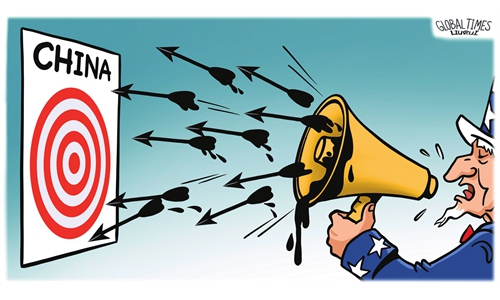
GT: Some Western media frame China as a "neocolonial power" in Africa and peddle the "resource‑plunder" narrative. As an African media official with direct hands‑on experience in China‑Africa cooperation, how do you assess such narratives? And how do they depart from the reality on the ground, which you have witnessed firsthand?
Soda: Such narratives are factually flawed. The allegation that China acts as a "neocolonial power" in Africa simply does not stand up to scrutiny. Take China‑Zimbabwe cooperation as an example: It is a win‑win partnership that delivers benefits to both sides. We appreciate the fact that China respects the sovereignty of other nations. Cooperation between China and Zimbabwe is never imposed; it arises from our own free will. Both countries gain from this relationship.
The negative claim that China is in Africa to "plunder our resources" is equally misplaced. Ours is reciprocal cooperation that generates broad‑based benefits. In the mining sector, China brings advanced technology and substantial investment. Chinese practices align with our national policies on mineral beneficiation and value addition, which has created large numbers of local jobs and helped raise the value of our mineral resources. That alone discredits claims of resource plunder.
As I mentioned, investment from China in the energy sector has expanded power‑generation capacity and improved livelihoods. Chinese‑supported initiatives have also yielded tangible benefits in education and healthcare across many areas. It is therefore misleading to imply that China's presence in Africa serves only its own interests. This remains a mutually beneficial partnership, from which both China and Zimbabwe stand to benefit.
GT: Global narratives remain largely shaped by Western media. How can Chinese and African media and relevant organizations work together to present objective, grounded and authentic portrayals of China‑Africa cooperation for global audiences, while dismantling long‑held stereotypes?
Soda: Our very presence here in China serves to deepen media‑sector cooperation and experience‑sharing between Africa and China, and this, in my view, represents one of the key ways to reshape global narratives. We need to draw global attention to home‑grown development: progress unfolding in Africa, as well as joint achievements of China‑Africa cooperation.
This calls for capacity‑building for African journalists, who ought to prioritize documenting our shared development achievements. Challenges will always exist, yet we must also tell positive stories of progress, resilience, innovation and industrialization. I believe this can help shift biased public perceptions.
GT: Building on China‑Africa media‑cooperation platforms, how should Chinese and African media jointly craft narratives for Africa and the Global South, in order to convey Africa's achievements, partnerships and development aspirations to a global audience?
Soda: Fundamentally, we must tell our own stories. We need to produce documentaries rooted in our cultural perspectives, development journeys and hard‑won accomplishments. This, I believe, is how we can reshape the dominant external narratives. Our journalists must remain committed to factual reporting. Our voices need to deliver balanced, positive portrayals of our progress and innovation, rather than the talking points from Western-dominated media outlets.
RELATED ARTICLES