China’s perfumes seeking global appeal: Homegrown labels finding new ways
China’s perfumes seeking global appeal
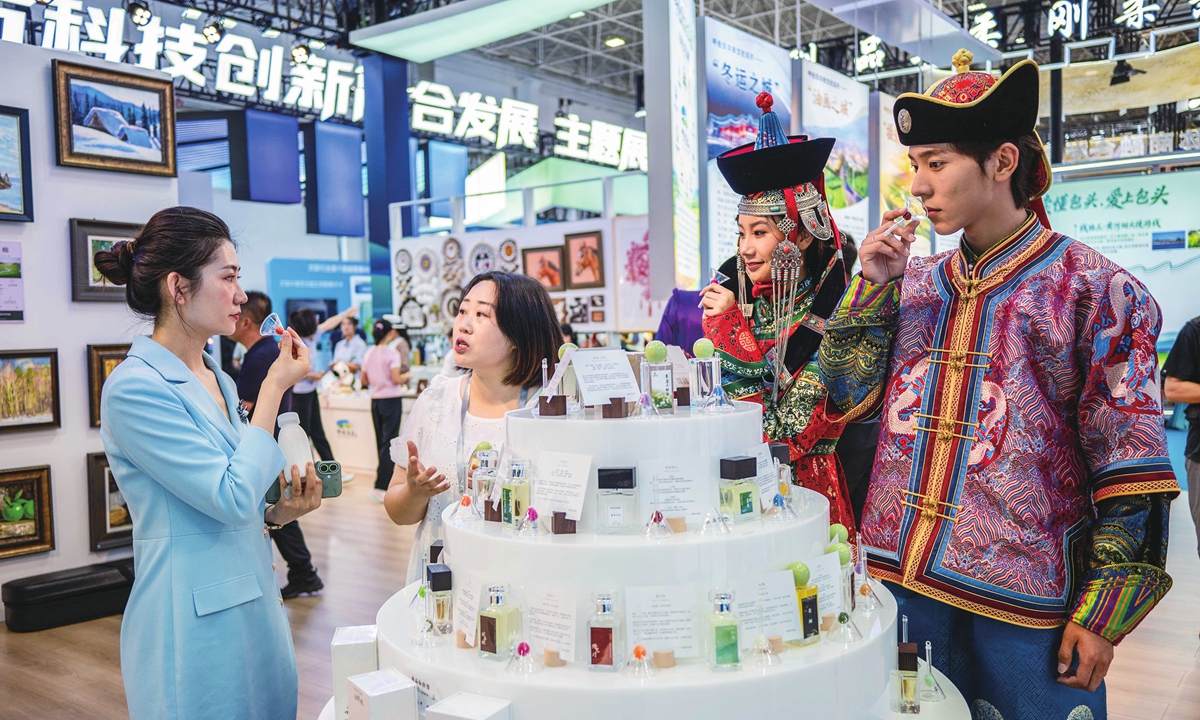
Visitors try perfumes at an exhibition booth at the 10th Inner Mongolia Autonomous Region Cultural Industries Expo Fair in Hohhot, North China's Inner Mongolia Autonomous Region, on August 27, 2026. Photos: VCG
This enthusiastic comment from a netizen overseas on X may sound like a small moment in the vast world of social media, but it captures a much bigger shift: Chinese perfume brands are increasingly moving from simply being seen overseas to being wanted.
At the Esxence perfume fair in Milan this summer, the air around several Chinese booths carried notes of tea, osmanthus and agarwood. Visitors stopped to take in the scents, ask questions and browse products from Chinese brands seeking to make their mark in one of the world's most influential perfume markets.
The scene would have been hard to imagine only a few years ago.
In September 2025, more than 20 Chinese homegrown perfume brands made a collective appearance at the Paris-Shanghai Perfume Exhibition, putting Chinese brands in the spotlight in the heartland of the global fragrance industry.
Yet being noticed is only the first step. The harder question is whether a scent created in China can cross cultural boundaries and become something meaningful to consumers thousands of kilometers away.
Finding emotional resonance
In China, scents such as jasmine and gardenia have long carried associations with elegance and refinement. However, when introduced to consumers from different cultural backgrounds, those associations cannot always be automatically carried over.
Simply placing cultural symbols such as osmanthus, bamboo or tea at the center of a fragrance does not necessarily make its cultural meaning transferable, industry insiders noted. At the same time, challenges remain in areas such as access to high-end natural fragrance ingredients and the cultivation of professional perfumers.
Some Chinese brands, however, are beginning to find a different way forward: Rather than asking overseas consumers to first understand a cultural reference, they seek to trigger emotions that can be recognized across cultures.
One example came from Liu Xiao, a young member of a Beijing-based beauty products export team. Thinking about the icy, refreshing taste of Arctic Ocean, a popular orange soda brand from her childhood, she had an idea: What if that childhood memory could be bottled as a perfume?
The resulting "Summer Juice," built around notes of orange and blood orange, does not require overseas consumers to know anything about Arctic Ocean soda. On TikTok and other social media platforms, the fragrance attracted attention among European consumers, many of whom focused simply on its fresh citrus character and the summer memories it evoked.
They may not know the cultural story behind Arctic Ocean, but they understand the feeling of a cold, sparkling drink on a hot summer day.
That experience points to a broader change in the way Chinese fragrance brands approach international markets: The goal is not to explain culture, but to create an emotional experience that allows culture to be discovered naturally, experts noted.
Some brands continue to explore distinctly Chinese olfactory elements, including tea, agarwood and osmanthus, using sophisticated compositions to convey the restraint and elegance associated with traditional Chinese aesthetics. Others are looking for more universal emotional touchpoints.
The two approaches are not necessarily contradictory. Both seek to establish a dialogue with global consumers rather than simply adapting Chinese products to overseas tastes.
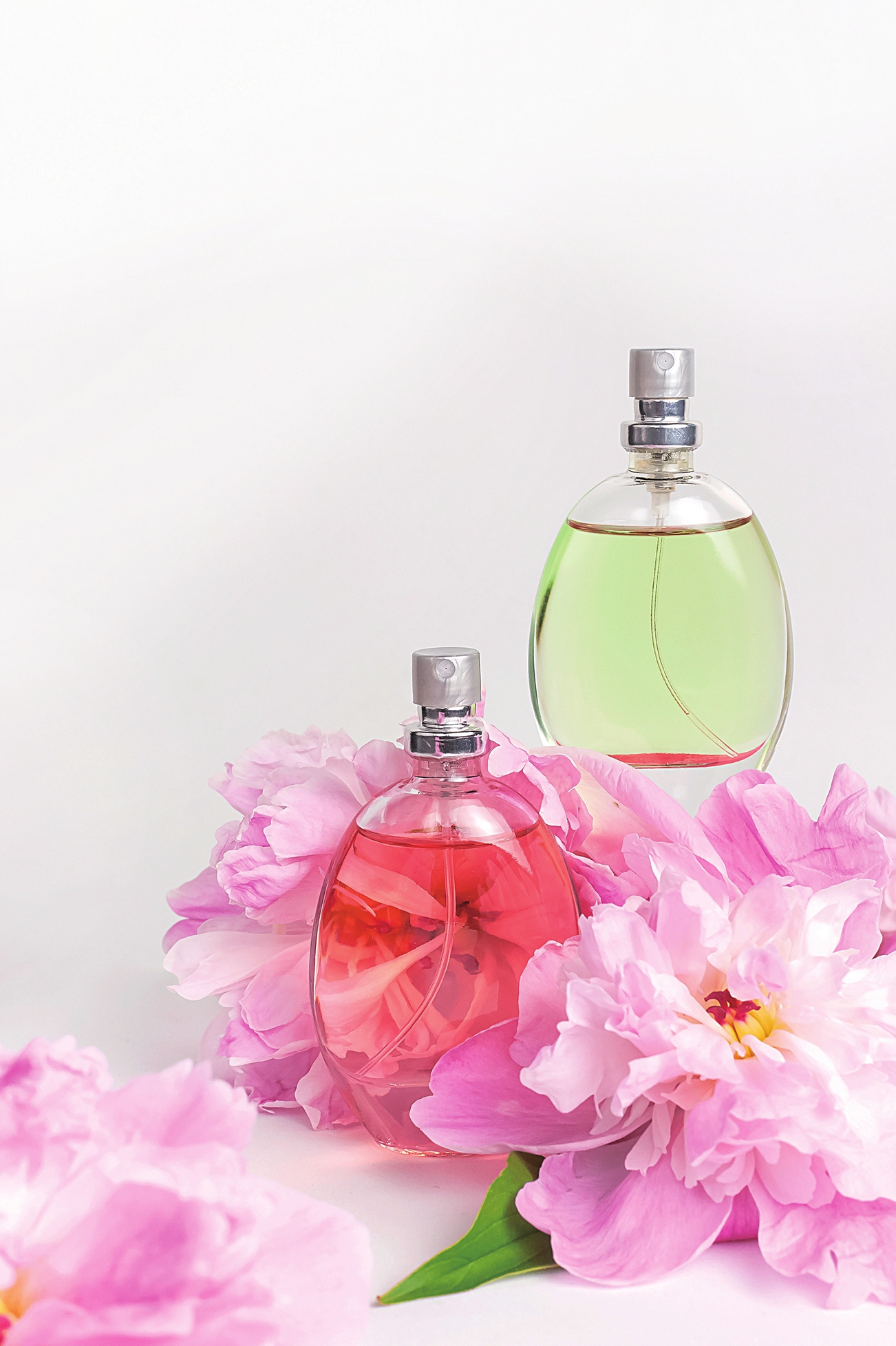
A collection of perfume products
Rapidly expanding export marketThe shift is reflected in trade data.
According to data from the General Administration of Customs, China's export of perfumes and toilet water reached 2.502 billion yuan ($349 million) in the first half of 2026, up 31.05 percent year-on-year.
In 2025, exports reached 4.577 billion yuan, up 26.22 percent year-on-year. Over the past five years, China's perfume export has surged from about $140 million in 2020 to $640 million in 2025, representing a compound annual growth rate of more than 34 percent.
The broader beauty industry is also expanding overseas. In the first half of 2026, China exported 932,300 tons of beauty, cosmetics and washing products, up 33.1 percent year-on-year, while export value rose from 28.4 percent to $4.577 billion.
The broader beauty industry is also expanding rapidly overseas. In the first half of 2026, China exported 932,300 tons of beauty, cosmetics and washing products, up 33.1 percent year-on-year, with the export value rising from 28.4 percent to $4.577 billion.
For Yan Jiangying, chairwoman of the China Association of Fragrance Flavor and Cosmetic Industries, the momentum reflects the convergence of three forces: cultural confidence, industrial innovation and the rising value of Oriental fragrance notes, the Securities Daily reported.
Zhang Yi, CEO and chief analyst at iMedia Research, told the Global Times that expanding markets in Southeast Asia, Brazil and the Middle East, together with China's complete supply chain and growing global influence, have created favorable conditions for Chinese brands.
But he stressed that brands should not simply try to replace established overseas products.
"We cannot simply make substitutes for overseas products," Zhang said, going on to call for greater differentiation, higher quality and more focus on niche markets.
For the next stage, he highlighted originality and cultural expression.
"Don't copy, don't imitate. More importantly, we need to take Chinese fragrance notes to the world," he said.
He also noted that brands need to comply with regulations in different markets and make better use of social media and other emerging channels.
The shift is ultimately about more than exporting perfume.
It is about creating fragrances that can speak across cultures - sometimes through the distinctiveness of tea, osmanthus or agarwood, and sometimes through something as simple as the memory of a cold orange drink on a hot summer day.
RELATED ARTICLES