ARTS / CULTURE & LEISURE
China’s frequent rocket launches fuel ‘rocket chasing’ trend in China
Niche pursuit becoming popular across China
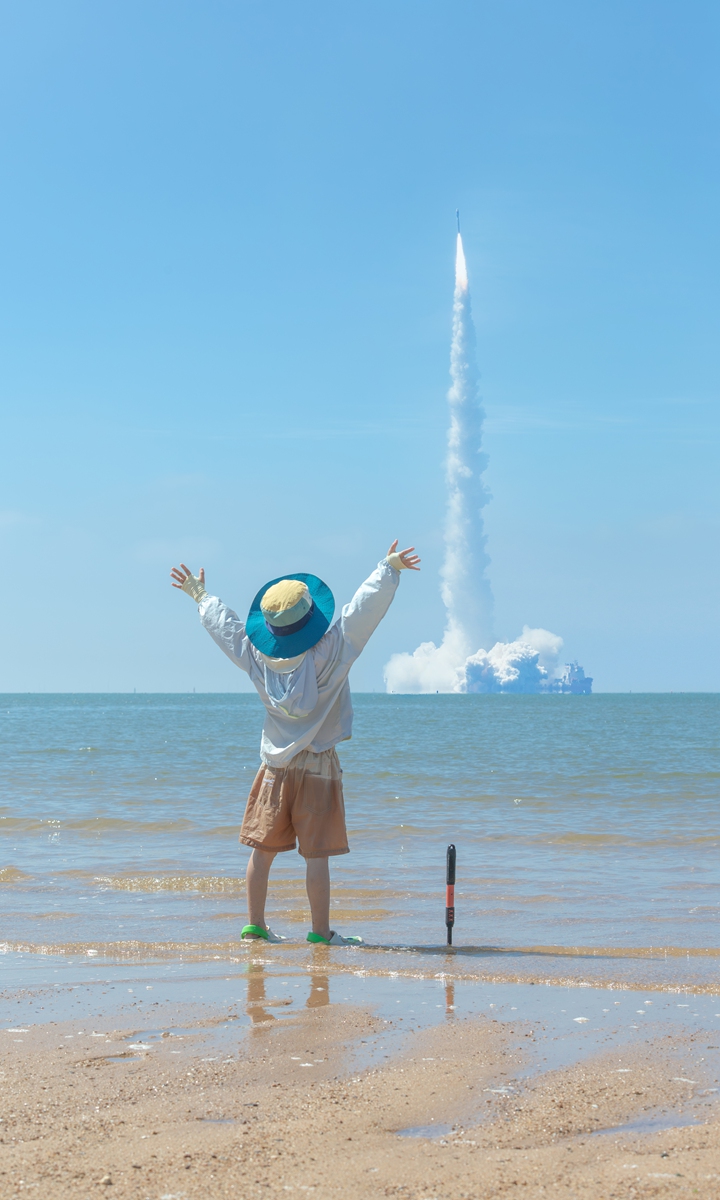
Photo: VCG
The recent successful launch of a Long March 6C carrier rocket carrying seven satellites has once again drawn space enthusiasts to the Taiyuan Satellite Launch Center in North China's Shanxi Province. The mission marked the 665th flight of the Long March rocket family, while for many, the appeal lies in experiencing the liftoff in person rather than watching it on a screen."Rocket chasing," once a niche pursuit among space enthusiasts, is gradually becoming a new form of travel for some young people. On Douyin, the Chinese version of TikTok, hashtags related to "rocket chasing" have garnered millions of views. Some now plan their trips around launch schedules, turning a rocket launch into a reason to visit a city to which they might not otherwise have traveled.
Zhang Yiyang, a staff member at Jiangsu Deep Blue Aerospace, told the Global Times that watching a rocket launch in person offers more than simply "seeing a rocket." From the countdown onward, spectators share the anticipation, tension and excitement with space enthusiasts and workers from across the country. "That emotional journey is something you can never experience through a screen," he said.
That firsthand experience, Zhang noted, can also turn first-time spectators into frequent "rocket chasers," with some continuing to follow subsequent missions and even planning future trips around launch schedules.
"Travel used to mean choosing a destination first and then deciding what to do. Now it can work the other way around: People first check when a rocket will launch, and then decide where to go, how long to stay and what else to do," he said.
Travel centered on rocket launches is also expanding beyond watching the liftoff to include science education and local experiences. On August 5, more than 50,000 space enthusiasts gathered in Haiyang, East China's Shandong Province, for the sea launch of the Smart Dragon-3 rocket, many visitors arrived two days or more in advance, according to a report by the People's Daily.
Besides watching the launch, they visited aerospace science museums, took part in rocket-model workshops and explored local beaches, cuisine and intangible cultural heritage. During the launch period, occupancy rates at major local hotels reached 95 percent, while tourism-related consumption rose 40 percent year-on-year, said the report.
Liu Bao, a brand founder who was among the visitors, took his child to Haiyang that day and included aerospace museums and educational activities in their itinerary.
"If we had only come to watch the launch, it would have been over in just a few dozen seconds, so we arranged visits to a science museum and educational activities as well," Liu told the Global Times.
"For children, seeing the rocket lift off in person and then learning about the technology behind it made the experience much more engaging than simply visiting a tourist attraction," he added.
The growing demand for more than just a few minutes of viewing is also prompting cities near launch sites to develop new tourism offerings. Wenchang in South China's Hainan Province, for example, has attracted more foreign tourists, overseas space enthusiasts and international travel bloggers who come specifically to "chase rockets."
The city has developed a tiered viewing system, with free public beaches offering unobstructed views and paid sites providing closer vantage points. Aerospace science activities, space simulations and space-themed cultural products have also made rocket watching more accessible and engaging, according to the China News Service.
Luo Yunxin, a Wenchang-based astronomy enthusiast, told the Global Times that the city has its own appeal as a destination for "rocket chasers."
"As China's only coastal, low-latitude space launch site, Wenchang has advantages in launch efficiency, while its open viewing arrangements make it easier for ordinary visitors to get close to the experience," he said.
For Luo, this is what makes "rocket chasing" different from simply going to watch a sporting event or visit a tourist attraction.
"You come for the launch, but what stays with you is the whole experience of the city and the feeling that space technology is no longer that far away," he said.
For many, a rocket launch is becoming a new reason to set off on a journey. The trip may begin with a countdown, but it can end with a deeper look at the city, its culture and its connection to China's growing space industry.
RELATED ARTICLES