ARTS / CULTURE & LEISURE
China-Egypt team uncovers important relics at 5,000-year-old Memphis archaeological site
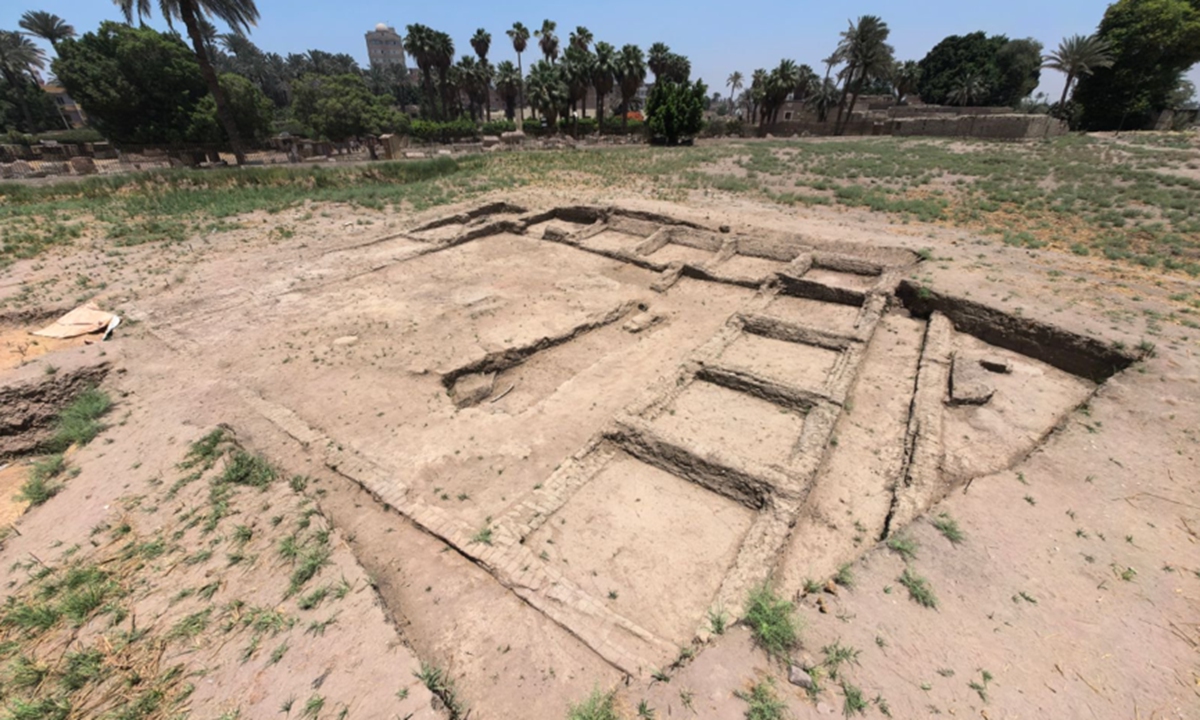
A China-Egypt joint archaeological team uncovers important relics and archaeological remains at the Sekhmet Temple in Memphis, Egypt. Photo: Courtesy of Shanghai Museum
A joint Chinese-Egyptian archaeological team has completed the first large-scale systematic excavation of the Sekhmet Temple and its surroundings in the ancient city of Memphis, clearing most of the above-ground remains and revealing new details about the temple's structure, later reuse and the everyday life that continued around it for centuries.
Hisham El-Leithy, secretary-general of Egypt's Supreme Council of Antiquities, told the Global Times on Tuesday that the Sekhmet Temple formed an important part of the larger Ptah Temple complex that stood at the heart of Memphis. The team's work in clearing and documenting the site will help deepen understanding of its structure and historical development.
The ancient city of Memphis was built around 3100 BC and served as the capital of ancient Egypt during the Old Kingdom period. Located in the core area of Memphis, the Sekhmet Temple was part of the temple complex dedicated to Ptah, the city's principal deity. The site was first discovered in 1959, according to the Xinhua News Agency.
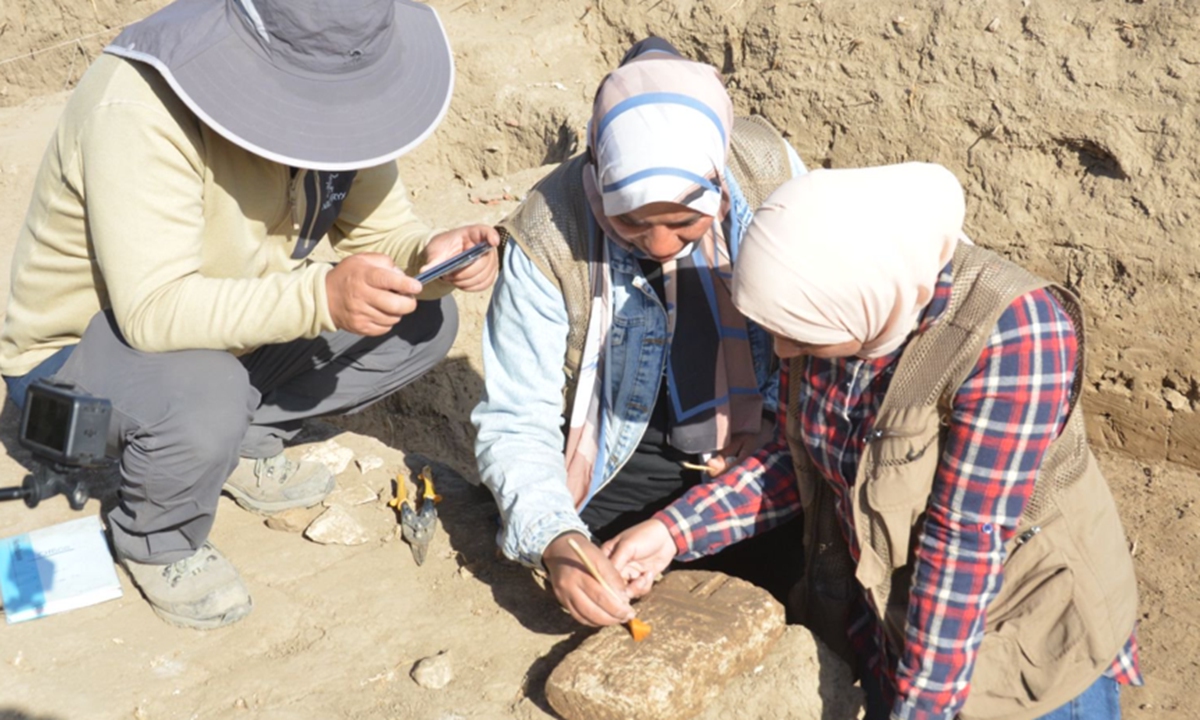
A China-Egypt joint archaeological team uncovers important relics and archaeological remains at the Sekhmet Temple in Memphis, Egypt. Photo: Courtesy of Shanghai Museum
The Global Times learned from the joint archaeological team that the latest project marks the first large-scale systematic excavation of the temple and its surrounding areas since archaeological work conducted in 1961 and 1962.
During excavations in 2025 and 2026, the joint team cleared most of the above-ground remains of the temple, revealing its basic layout and internal structure. The rectangular temple was mainly built with limestone, and some stone components bearing ancient Egyptian hieroglyphs were also discovered, providing important clues for identifying the temple's function, according to the team.
Chen Jie, deputy director of the Shanghai Museum and Chinese project leader of the excavation, told the Global Times on Tuesday that beyond the temple itself, archaeologists uncovered the remains of a mudbrick residential area nearby, consisting of multiple houses and courtyards. They also found a large number of stone architectural components and statue fragments in later layers that disturbed the original structures, some of which are believed to have come from the Ptah Temple.
According to Chen, the team also discovered a limestone structure east of the temple. After grape seeds were found at its base, the structure was preliminarily identified as a facility that may have been used for pressing grapes for wine production. Large quantities of discarded faience fragments also suggest that the area may have once contained a craft workshop.
"These discoveries reflect the reuse of the temple and surrounding areas, showing the continuity of human settlement and diverse activities in the region," Chen said.
The excavation also yielded a wide range of artifacts, including stone components, inscribed steles and statue fragments, most dating to the New Kingdom (1550 BC-1069 BC) period. Other discoveries, including pottery, amulets, molds and beads, date from the late New Kingdom period to the Greco-Roman Period (around 332 BC-640 AD), according to the team.
Mohamed Abdel-Badie, head of the Egyptian Antiquities Sector at the Supreme Council of Antiquities, said that even after the Sekhmet Temple declined as a major religious center, life in ancient Memphis continued, with the area gradually transforming into a residential zone.
According to Chen, China and Egypt will continue archaeological surveys and excavations at the Sekhmet Temple and surrounding areas to further explore the architectural layout, construction process, use history and evolution of Memphis.
The team plans to introduce additional technologies and support to advance the excavation, aiming to further reveal the development of one of ancient Egypt's most important cities, according to the team.
RELATED ARTICLES