Is the Chinese market no longer the 'dream destination' for US companies?: Global Times editorial
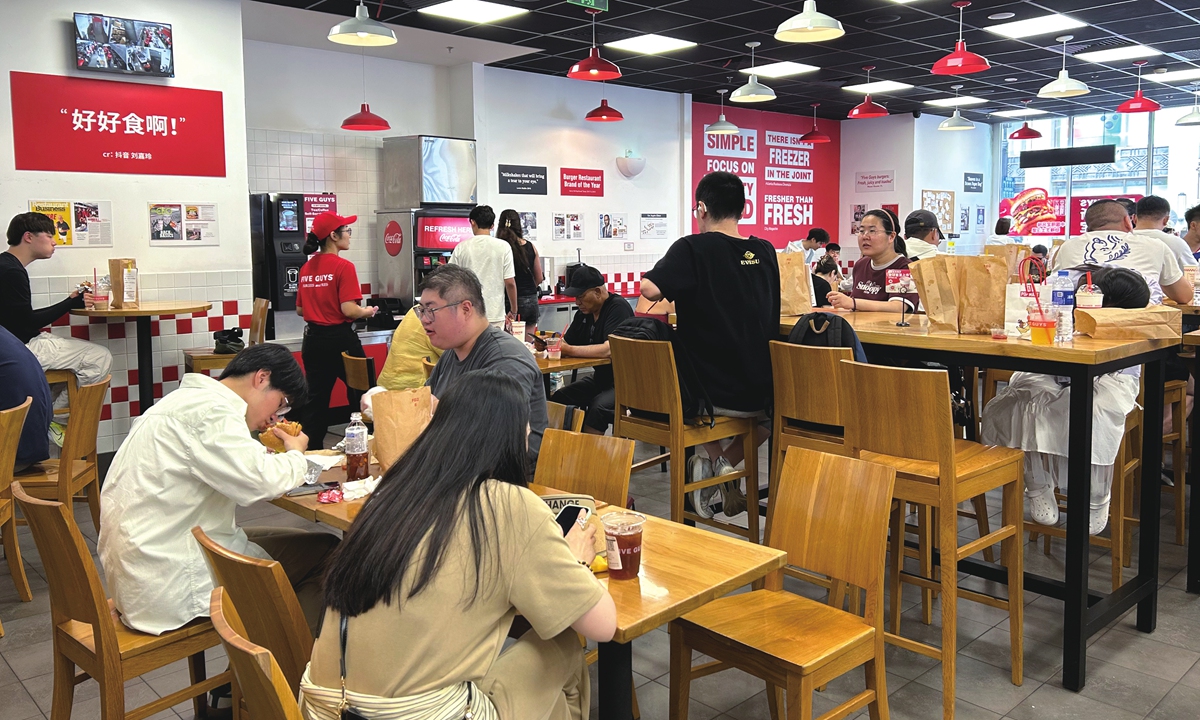
Customers dine at a Five Guys restaurant in a shopping mall in Shanghai on July 14, 2026. Photo: Qi Xijia/GT
Editor's Note:Currently, China's economy is steadily advancing along the path of high-quality development, even as domestic and international circumstances become increasingly complex. Some Western media, due to misunderstanding or bias, have repeatedly questioned or even distorted China's economic development. Accordingly, the Global Times launches the "Q&A on China's Economy" column to publish opinion pieces to present facts and clarify perceptions.
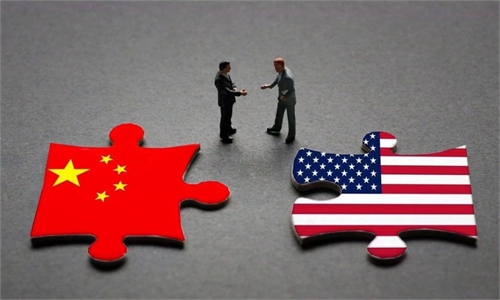
CNBC recently cited Nike, Starbucks and General Motors as examples of firms that have all seen their China businesses shrink and that consumer brands have begun to "see the tide turn." The report then concluded that "American companies have lost ground in the region that once offered fuel for growth." Is the Chinese market no longer the "dream destination" for US companies?
The answer is a definite no. Recently, media outlets such as Reuters reported that US burger brands are "racing to grab a bite" of China's massive market. Take Five Guys, which is currently drawing huge, relentless queues in Beijing, as an example. When this American burger chain opened a store in the Chinese capital in August, scalpers were even selling spots in the queue for over 100 yuan ($14.88).
Having tasted success, Five Guys plans to further expand into the Chinese mainland market. Wendy's, often mentioned alongside McDonald's and KFC as one of the "Big Three" burger chains, has also announced plans to enter the Chinese market. On Friday, the American fried chicken brand Texas Chicken (known as Church's Texas Chicken in the US) opened its first store in Shanghai. That day, customers waited in line for over an hour, and the system even shut down temporarily. The brand plans to open more than 600 stores in China. These developments indicate that many US companies still view China's massive market as a growth area where they must increase their investment.
So, are the "headaches" faced by Nike, Starbucks and General Motors real? To a certain extent, they are a "natural reaction" to changes in the Chinese market. However, these "headaches" are not decisive factors in the decision of "whether to exit the Chinese market." Rather, they prompt companies to consider how to gain a more long-term competitive advantage in China amid fierce competition.
Take the three companies cited by CNBC as examples: Against the backdrop of China's sports apparel market more than doubling in size over the past decade, Nike has been consolidating resources and reorganizing its operations with the specific goal of regaining a competitive edge in the Chinese market. General Motors, which in August extended its joint venture with SAIC Motor by 20 years through 2047, has also recognized the "upgrading" opportunities that Chinese innovation brings to its own industrial competitiveness. Facing fierce competition from local Chinese brands, Starbucks is planning to expand its store count in China from approximately 8,000 to 20,000.
From another perspective, as domestic Chinese brands rise, it is inevitable that the aura of foreign brands will fade. The old notion that "anything from the US is superior" is now a thing of the past. Chinese domestic brands have made leapfrog advancements in R&D, product quality, supply chain efficiency and adaptability to specific usage scenarios. The growing appeal of the national trend has provided domestic consumers with more cost-effective options that better meet their needs.
Competition is the very fabric of a market economy, and the day Chinese domestic brands and Western brands engage in fierce market competition was bound to come sooner or later. In fact, Chinese consumers' overall positive attitude toward Western brands has not fundamentally changed; the key lies in whether a product works well and is good value for money. In this regard, Western media also need to set aside their arrogance, move beyond the narrow win-or-lose mind-set, and objectively view the market norm of Chinese and foreign brands competing on an equal footing and growing together.
Is the Chinese market no longer the "dream destination" for US companies? Quite the opposite - its appeal has only grown. Looking around the world, it is difficult to find another high-quality market like China that combines market size, consumer dynamism, innovation capacity, and industrial strengths.
In addition to consumer brands, US companies in sectors such as pharmaceuticals and technology are also deepening their presence in China. Pfizer continues to establish R&D centers and innovation hubs, leveraging China's well-developed industrial ecosystem and vast consumer base to explore new avenues for innovation. Eli Lilly, the US pharmaceutical giant, plans to invest a cumulative total of $3 billion in China over the next decade to build a local production and supply system for oral solid dosage forms. The 2026 China Business Environment Survey released by the US-China Business Council shows that 80 percent of surveyed US companies consider the Chinese market "very important" or "important" to their global competitiveness.
Therefore, the strategic adjustments made by companies such as General Motors and Starbucks are not a "retreat," but rather a proactive transformation to align with the high-quality development of the Chinese market. This is a sign of market maturity and an inevitable choice for sustainable corporate development. Such healthy competition not only compels US companies to iterate and upgrade, but also drives the overall improvement in quality and efficiency of China's consumer market, ultimately benefiting a broad base of consumers.
The Chinese market has never closed its doors, but Chinese consumers will no longer pay a premium simply for a "foreign label." Foreign brands that take root in the local market and respect consumers will still be able to continue "reaping the rewards." The Chinese economy is an ocean, and the Chinese market is also "the world's toughest gym." To learn how to ride the waves and build strength in the face of competition, come and see the Chinese market for yourself.
RELATED ARTICLES