China holds commemorative activities to mark WWII victory; FM sends solemn message to Japanese right-wing forces
By Sun Langchen and Published: Sep 03, 2026 10:17 PM

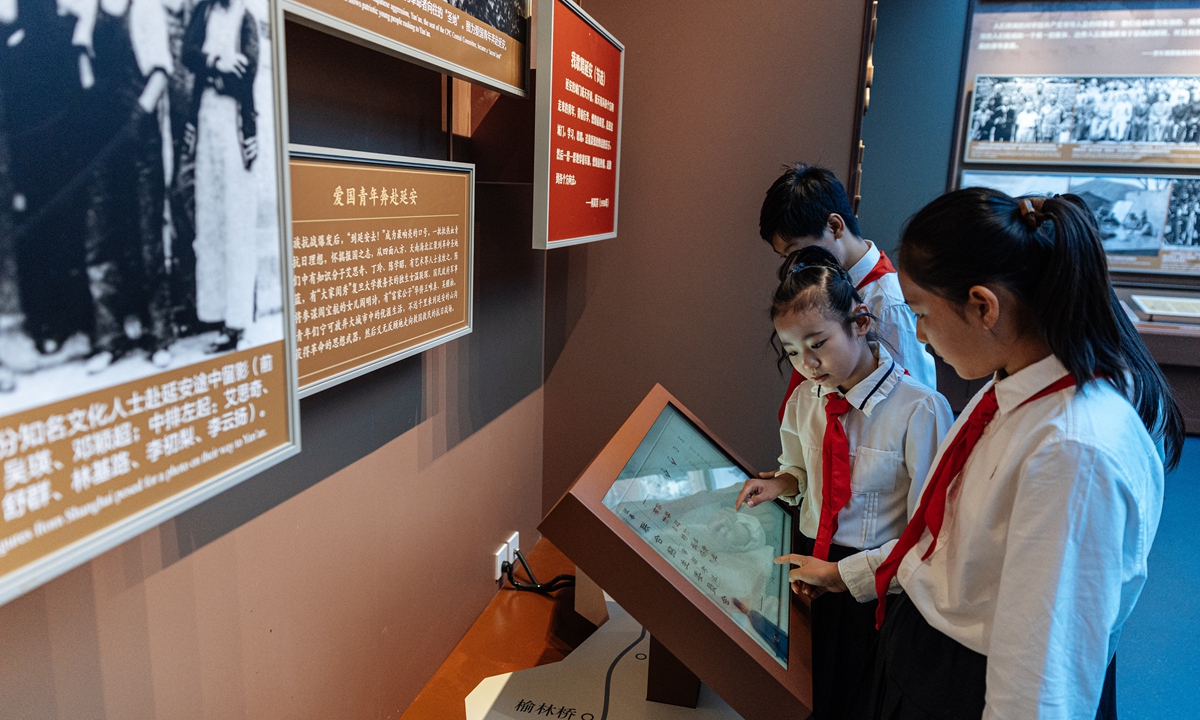
Students learn about relevant historical facts using electronic devices at an educational event jointly held by the Museum of the War of Chinese People's Resistance Against Japanese Aggression and the Lugouqiao Cultural Development Center in Beijing on September 3, 2026. Photo: Li Hao/GT
At 9:30 am on Thursday, stirring songs and powerful poetry recitations echoed through the hall of the Museum of the War of the Chinese People's Resistance Against Japanese Aggression in Beijing. Visitors stopped to listen, many spontaneously keeping time with the music and singing along with deep emotion.
The scene was part of a series of educational events held by the museum to commemorate the 81st anniversary of victory in the Chinese People's War of Resistance Against Japanese Aggression and the World Anti-Fascist War on September 3, the Victory Day. Apart from Beijing, commemorative activities were held across the country.
Students holding flowers were seen outside the Shanghai Songhu Memorial Hall for the War of Resistance Against Japanese Aggression, paying tribute to the martyrs. Northeast Agricultural University also held commemorative events. In China's Hong Kong Special Administrative Region, Chief Executive John Lee Ka-chiu and senior officials attended an official ceremony of commemoration, according to Sing Tao Daily.
"I believe history is the best textbook. Only by remembering history can we create the future," Liu Jia, a volunteer guide who participated in the commemorative activities in Beijing, told the Global Times on Thursday. She said that participants used their most sincere emotions to recite poems and recount the history, adding that the event also allowed her to see China's future.
Global Times reporters observed that visitors taking part in the event in Beijing included various age groups. Many appeared particularly attentive when viewing sections of the exhibition depicting Japan's surrender and China's celebrations of victory.
As many places in China hold commemorations, Japan has stepped up efforts to expand its military capabilities. Earlier, Japan's defense ministry released its 2026 defense white paper, a report that places greater emphasis on "new ways of warfare" and "defense production and technology bases," Xinhua reported. It also submitted a record budget request of 8.89 trillion yen ($56 billion) for fiscal 2027, according to Mainichi Shimbun.
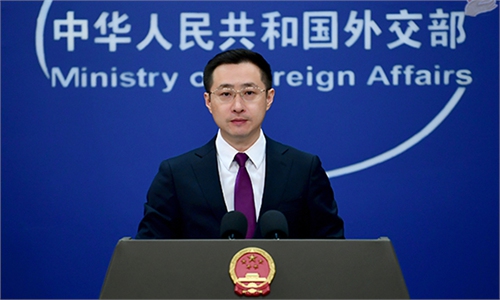
In response to a Global Times question about whether Japan's moves challenge the outcome of World War II and about China's response, Chinese Foreign Ministry (FM) spokesperson Guo Jiakun said on Thursday that the designation of the Victory Day of the Chinese People's War of Resistance Against Japanese Aggression is to remember the profound suffering that Japanese militarist aggression imposed on the people of China and the rest of the world, to remind the public not to forget history, and to uphold the outcomes of WWII victory and postwar international order.
"Over the years, Japanese right-wing forces have tried to turn the verdict on the history of aggression, and break free from the postwar international arrangements and their international obligations," Guo said. "Our solemn message to Japanese right-wing forces: the right way forward for Japan is to fulfill its international obligations, fully remove the pernicious influence of militarism, and keep to peaceful development."
Analysts said that Japan is accelerating efforts to shake off the constraints of the postwar peace framework, moving away from its long-standing policy of exclusively defense-oriented security toward seeking more provocative offensive capabilities.
While Japan continues to break through postwar military constraints, it has never shown the kind of serious reflection on historical issues, and its military buildup is posing threat to regional security, Lü Chao, an expert at the Liaoning Academy of Social Sciences, told the Global Times on Thursday.
"Japan is no longer merely expanding its military; it is building a broader 'war-fighting ecosystem' that links the military, industry, technology and society, risk deepening the very security dilemma they claim to address," he added.
Japan's increasingly frequent moves to expand its military capabilities has also drawn criticism within the country. Japanese newspaper Shimbun Akahata commented that Japan's 2026 defense white paper is an approach that would "only create a vicious cycle with no way out, in which military buildup is met with further military buildup. It can never safeguard peace."
Lü noted that Japan is moving further down a dangerous path toward militarism, and the "gray rhino" of Japan's neo-militarism is charging toward us, posing a threat to peace and stability in the Asia Pacific.
Guo, the FM spokesperson, also stated that China will stand together with peace-loving countries in the world to firmly hold back the malevolent emergence of Japanese neo-militarism under the pretext of making Japan a "normal country," and prevent it from wreaking havoc to the region and beyond.
RELATED ARTICLES