Widening US trade deficit exposes clear limits of tariff strategy as AI boom underscores need for global cooperation, not confrontation: expert
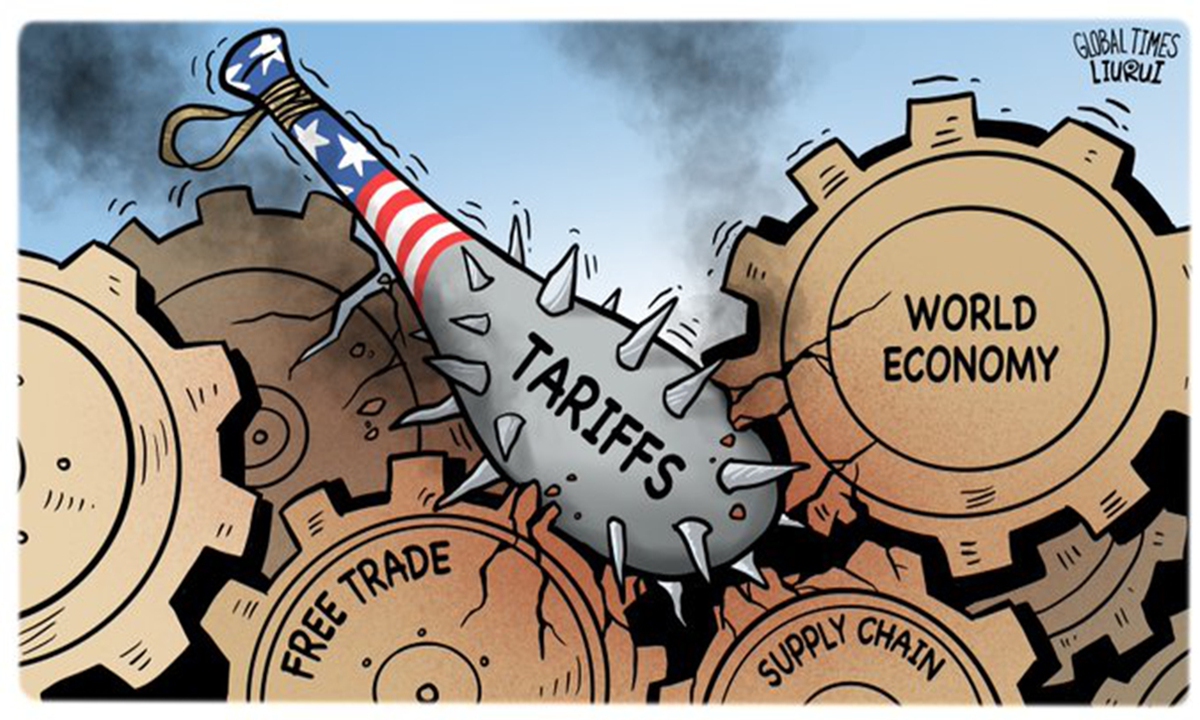
US tariff Illustration: Liu Rui/GT
The US trade deficit widened sharply in July to its highest level in 16 months, driven in part by surging imports of computers, computer accessories and semiconductors amid the country's AI investment boom, foreign media reported.
The US is seeking to reduce its reliance on foreign manufacturing at a time when the AI industry increasingly relies on global supply chains and cross-border collaboration to meet rapidly growing demand for computing infrastructure, Chinese experts said.
The latest US trade figures also raise questions over Washington's push for broader semiconductor-related tariffs, the experts said, noting that when domestic production cannot provide sufficient substitutes for imported products, additional tariffs may do little to curb demand and instead raise costs for US technology companies and consumers.
AI drives imports
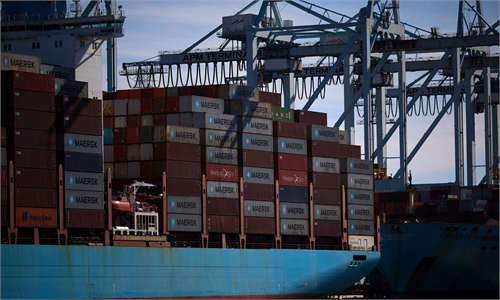
The US goods and services trade deficit surged 24.4 percent month-on-month to $88.6 billion in July, up $17.4 billion from a revised $71.2 billion in June, data released by the US Census Bureau and Bureau of Economic Analysis showed on Thursday.
The July trade deficit was the widest since March 2025, when importers stocked up ahead of Trump's "Liberation Day" on April 2 of that year, US media outlet AOL reported.
Specifically, imports increased 2.8 percent to $399.3 billion, while exports fell 2.1 percent to $310.7 billion. The goods trade deficit widened 17.3 percent to $119.6 billion in July, according to media reports.
Reuters reported on Thursday that "Domestic demand soared in the second quarter, a combination of both strong consumer spending and business investment in artificial intelligence. Demand is, however, being satiated with imports, helping to widen the trade deficit."
The AI investment boom stood out among the figures. Imports of capital goods jumped $14.4 billion to a record high $140.3 billion, reflecting strong increases in computers, computer accessories and semiconductors, likely related to the AI buildout, according to Reuters.
Bloomberg also reported, citing data from the Commerce Department, that the report showed an 11.4 percent surge in imports of capital goods — a category that includes computers and accessories, semiconductors and telecommunications equipment but excludes autos — the largest advance since 1993.
Moreover, data from global professional services firm KPMG suggested similar outcomes. Capital goods surged to a new record high, rising $14.4 billion. Both computers and computer accessories rose more than $6.6 billion. If these were removed, broader import growth would have been negative. Demand outside of AI is muted, according to KPMG.
These latest figures show how the massive investment required to build AI infrastructure in the US is creating fresh demand for overseas-made technology products at a time when Washington is seeking to reduce US dependence on foreign manufacturing, Huo Jianguo, former head of the Chinese Academy of International Trade and Economic Cooperation under the Ministry of Commerce, told the Global Times on Friday.
"The AI investment boom is creating enormous demand for computing infrastructure, but the US cannot meet all of that demand through domestic production," Huo said.
Asia, with its strong technological capabilities and complete industrial chains, has emerged as a key driver of the global AI computing revolution over the past two years.
For example, Chinese firms claim seven spots among the world's top 10 optical module vendors, with their combined market share exceeding 60 percent globally, according to LightCounting, a research firm. In the first four months of 2026, China exported 117 billion integrated circuits worth $103.5 billion, up 83.7 percent in value year-on-year. Export orders for optical modules have stretched into 2028, the Xinhua News Agency reported.
Chip production depends not simply on the location of an individual factory but on a complex industrial ecosystem involving suppliers, skilled engineers, infrastructure, logistics and production capacity built up over decades, Xiang Ligang, director-general of the Zhongguancun Modern Information Consumer Application Industry Technology Alliance, a telecom industry association, told the Global Times.
Xiang further noted that what ultimately determines where companies manufacture is efficiency, cost, talent and the surrounding industrial ecosystem - not tariffs alone.
Meanwhile, other Asian economies also play important roles in meeting growing US demand for AI-related hardware. South Korea, for example, is home to Samsung Electronics and SK Hynix, two of the world's major memory-chip manufacturers, whose products are increasingly sought after as US technology companies expand AI infrastructure, according to media reports.
Despite Washington's reshoring push, the surge in technology imports shows that the US still relies on global suppliers in key areas, as its rapidly expanding AI industry requires cross-border collaboration to meet growing demand for computing infrastructure, Chinese experts said.
Tariffs fall short
The widening deficit comes as the Trump administration continues to use tariffs as a key instrument to reduce imports and encourage companies to shift manufacturing to the US.
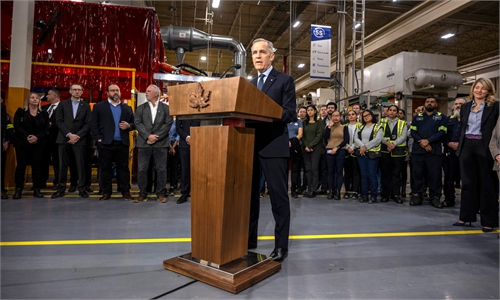
US Commerce Secretary Howard Lutnick said this week that Washington was planning a "targeted, thoughtful tariff policy" on semiconductor imports, Reuters reported on Friday.
Lutnick cast tariff relief for domestic manufacturing as a way to encourage US investment and offset some of the added tariff costs, Bloomberg reported on Wednesday.
However, the latest figures raise questions about how far tariffs can achieve those goals.
Reuters noted that despite aggressive tariffs on imports, the US posted record goods trade deficits with several countries and regions, including Mexico, Vietnam and South Korea.
The July trade deficit figure alone may not be enough to conclude that US tariff policy as a whole has failed, but it does expose its increasingly clear limitations, Huo said.
"Tariffs might change where US companies source their products from, but they cannot eliminate structural import demand when the US itself does not have sufficient production capacity," the expert said.
An analysis released by KPMG on Thursday reached a similar conclusion, saying: "Tariffs and geopolitical events are reshaping, not reducing, trade flows."
"As the US pours more investment into AI while considering higher tariffs on semiconductors and technology products, Washington risks raising the cost of the very technological expansion it is seeking to accelerate, ultimately affecting its own businesses and consumers," Xiang said.
China has repeatedly voiced opposition to Washington's protectionist measures targeting Chinese technology companies and products.
Responding to a media inquiry for comment about reported US plans to ban imports of certain Chinese optical transceiver modules and impose tariffs on polysilicon and related products, Chinese Foreign Ministry (FM) spokesperson Lin Jian said at the regular press conference on August 5 that China firmly opposes the US overstretching the concept of national security, and abusing state power to go after Chinese businesses.
Protectionism will not make the US more competitive. The US move seriously disrupts normal trade and economic exchanges between Chinese and US businesses, and is not in the interest of US businesses and consumers or anyone else for that matter. China will continue firmly protecting our businesses' legitimate and lawful rights and interests, the FM spokesperson said.
RELATED ARTICLES