IN-DEPTH / IN-DEPTH
Once trapped in poverty, these 'zan jin' women found a way out in Northwest China's Hongsibu
A new beginning
By , Xue Ke in Hongsibu and Ni Hao in Beijing Published: Sep 04, 2026 11:14 PM

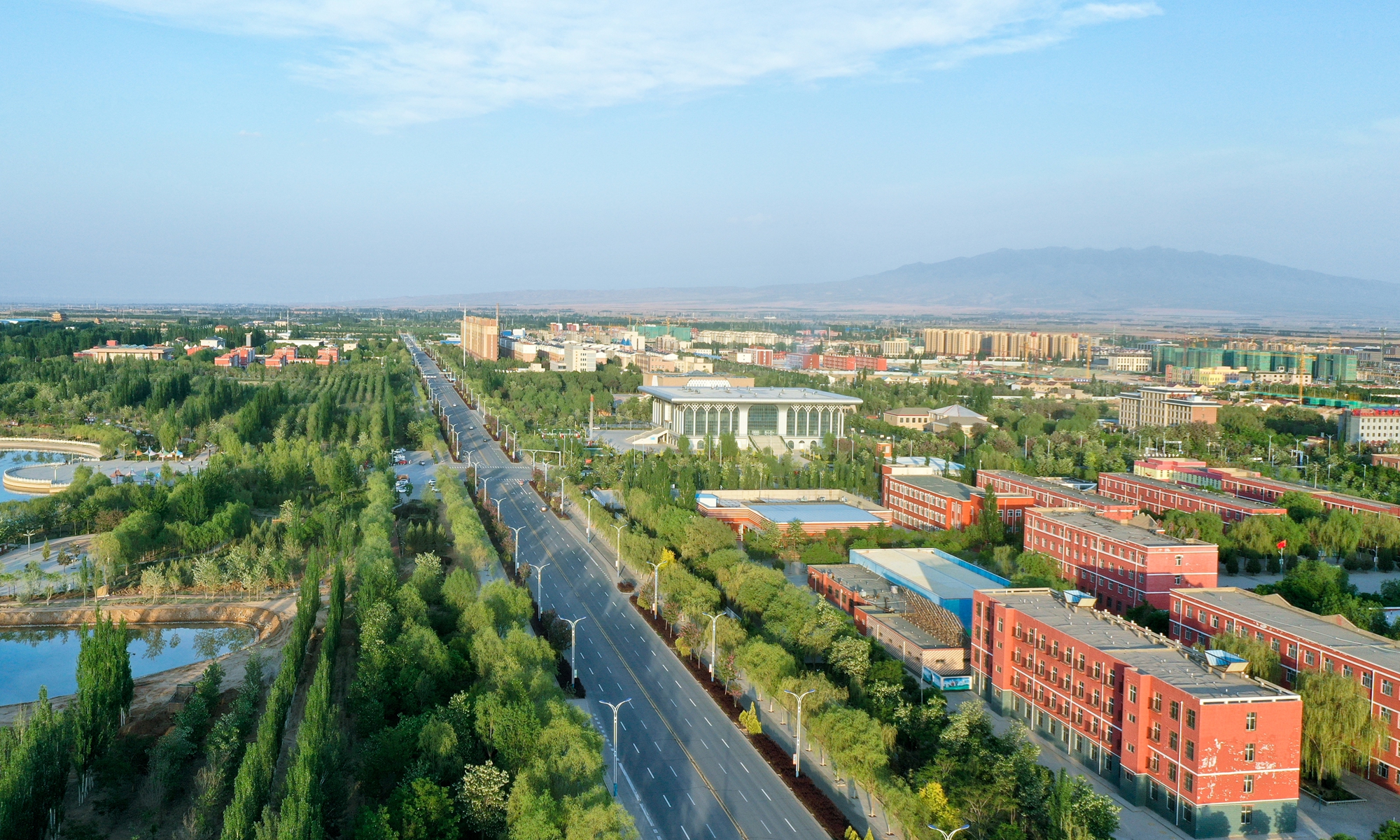
A view of Hongsibu District of Wuzhong City, Northwest China's Ningxia Hui Autonomous Region Photo: Xue Ke/GT
Editor's Note:An international metropolis on the shores of the East China Sea, a new migrant city rising from the Gobi Desert... China's cities embody a remarkable range of forms and efforts etched across a diverse range of landscapes, all of which is reflected in the everyday lives of ordinary people.
No two cities look alike, yet the standard by which we measure a city's warmth is familiar: Is there a place to rest safely? Is there a hot, decent meal to eat? Is there a corner where even the most vulnerable are treated with care and dignity? These seemingly small details are, in fact, what make a city truly moving.
The Global Times is launching a new series, "China City Talk." In this series, we explore cities across China, focusing on the everyday rhythms of life shaped by the human warmth of public policy and the quiet ways urban governance transforms individual lives. These stories offer one of the clearest windows into contemporary China.
Twenty-four years ago, Ma Huijuan was a young woman trapped in the dry, cracked earth of Xihaigu, one of China's driest and poorest regions in Northwest China's Ningxia Hui Autonomous Region, believing she would never escape the mountains. "Black Eye Valley [her hometown] was parched," she wrote later, "and hope had dried up along with it."
In desperation, she gathered every letter and scrap of writing she had ever composed and burned them all before her marriage. No more dreaming. No more longing for a world beyond the hills. But fate, as it turned out, had other plans.
In 2000, Ma and her family joined a monumental migration. The government's "diaozhuang" relocation program, which moves people out of places where natural resources are unable to support local people to places suitable for development, was moving hundreds of thousands out of Xihaigu, a region so arid that the United Nations had declared it one of the least habitable places on Earth.
Their destination: Hongsibu in Ningxia, a vast stretch of sand and scrubland 200 kilometers to the north that had one critical advantage: It lay just 60 kilometers from the Yellow River.
A path forward
In 1998, after years of planning, the Yanghuang Irrigation Project - a massive four-level pumping system - finally lifted the Yellow River 300 meters up onto the parched plateau, transforming barren desert into farmland and giving birth to the country's largest centralized ecological resettlement area, where the river's arrival would forever change the fate of 230,000 people.
Ma still remembers the day her family heard the news of the relocation. "We didn't hesitate for a second," she told the Global Times. But the early days in Hongsibu, were brutal. "The wind was so fierce you couldn't see the person standing right in front of you. We'd build a single-wall shelter, and by morning, the wind and sand had blown it away."
Local officials worked door to door, solving every small problem, soothing every anxious newcomer. They planted trees alongside the migrants, and somehow, from a desolate wasteland, they built a city.
Today, Ma has become a well-known writer with 13 published books to her name. Fans affectionately call her the "Thumb Writer" - because in her early years, while working odd jobs, she typed out novels on old phones with her thumb and posted them online, gradually building a following. She has chronicled the lives of her fellow migrants - their struggles, their triumphs, their transformation from subsistence farmers to builders of a new world. Since 2018, she has served two consecutive terms as a deputy to the National People's Congress.
Ma was among the early wave of immigration. Two years later, Wang Hangdi arrived from another parched Xihaigu county, carrying little more than a willingness to work and a desire to find a new way to make a living.
Wang's first live-streaming sales session left her paralyzed with fear. "My palms were sweating," she admitted. "Every time someone entered the live-streaming room, I turned away and stared at the goji berry bushes because I was really shy." Then she learned about a 70-year-old woman in Shaanxi Province who had sold over 200,000-yuan ($29,700) worth of apricots online. "If she can do it, why can't I? Ningxia goji berries are the best in China," Wang said.
She never looked back. By 2025, her farm's revenue had exceeded 6 million yuan. Her modern demonstration farm - integrating planting, processing, and e-commerce - employs over 3,000 people annually, directly boosting the incomes of more than 200 households.
"I used to think I had no education, no beauty," Wang told the Global Times. "But Hongsibu taught me something: If you're willing to learn and willing to work, life will show you the way."
Like Ma and Wang, Li Yaomei also came to Hongsibu to remake her life and find a new path forward.
Now 62, Li Yaomei arrived in Hongsibu at age 48 - already widowed, already scarred by illness and a car accident, carrying nothing but her daughter and 300,000 yuan in debt. In Xihaigu, she had been told her place was to wait for a man to provide. "But now," she told the Global Times, brandishing a broom she had woven from local reeds, "if someone says a man can earn 150 yuan a day, I can say a woman like me can earn 200."
She started by making brooms by hand - 40 a day at best. Then she uses machines to automate the process, producing 500 daily. Today, her cooperative employs dozens of locals, and she has been honored nationwide for her work lifting others out of poverty.
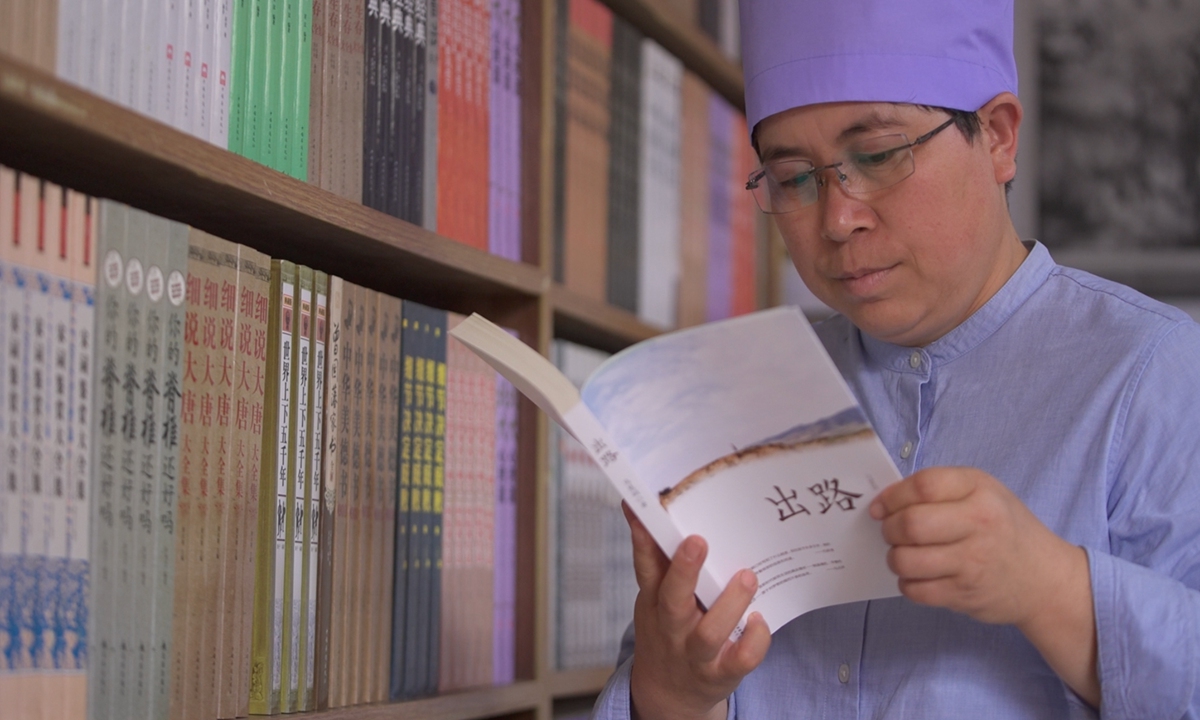
Ma Huijuan and her book The Way Out Photo: Courtesy of Ma
A fire that never dies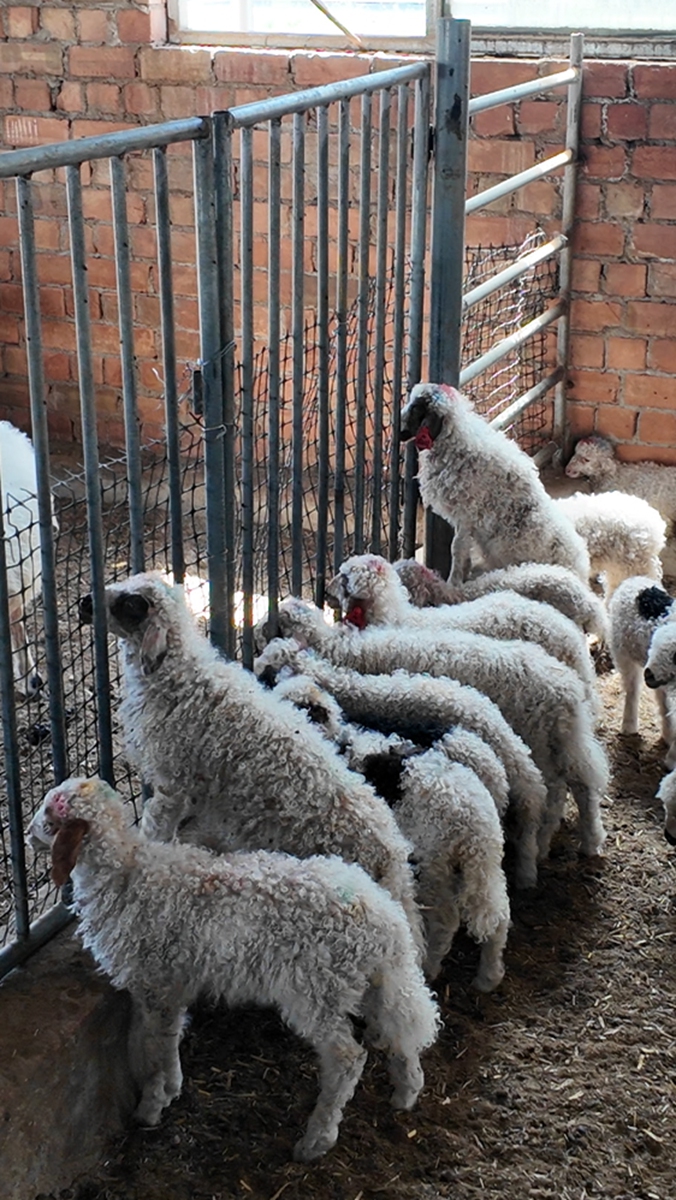
Tan sheep at Tianyuan Improved?sheep Breeding Company founded by Kou Qifang Photo: Xue Ke/GT
Kou Qifang is known as the "Tan Sheep Mother." A veterinary science graduate from the 1980s, she relocated to Hongsibu in 2003, where she poured herself into breeding tan sheep, one of Ningxia's prized specialties.There was just one problem. Tan sheep grow slowly and produce few lambs.
Kou spent the next decade traveling across China, consulting experts and collaborating with universities. Hundreds of experiments failed. But she kept going.
Finally, she succeeded in tan sheep that can produce multiple lambs per pregnancy through her team's breeding and genetic improvement techniques. The largest, most comprehensive tan sheep breeding system in China is now located in Hongsibu, and Kou has lifted out of poverty more than 3,150 impoverished households across 11 counties through her industry.
In early 2024, Kou broke her ankle. At nearly 60 years old, with a cast on her leg, she still hobbled through her farms.
Her daughter, Niu Xiaoyu, had been studying in Australia and working in Melbourne as a financial analyst. When she saw her mother struggling, she made a choice: She came home to help.
"My mother is normally quiet, even shy," Niu told the Global Times. "But when she talks about her sheep, she glows. She's almost 60, and she still burns with a fire inside. She charges forward without hesitation - over every ditch and every ridge. I think she embodies that pioneering, inquisitive spirit of Hongsibu women." It was this very spirit that convinced Niu to leave Australia behind and return home to carry on her mother's legacy. One resilient woman is passing the torch to another.
In the local dialect, women like these are called "zan jin" - a term that means capable, tough, and unwilling to lose. In Hongsibu, it has become a badge of honor.
A spirit beyond gender
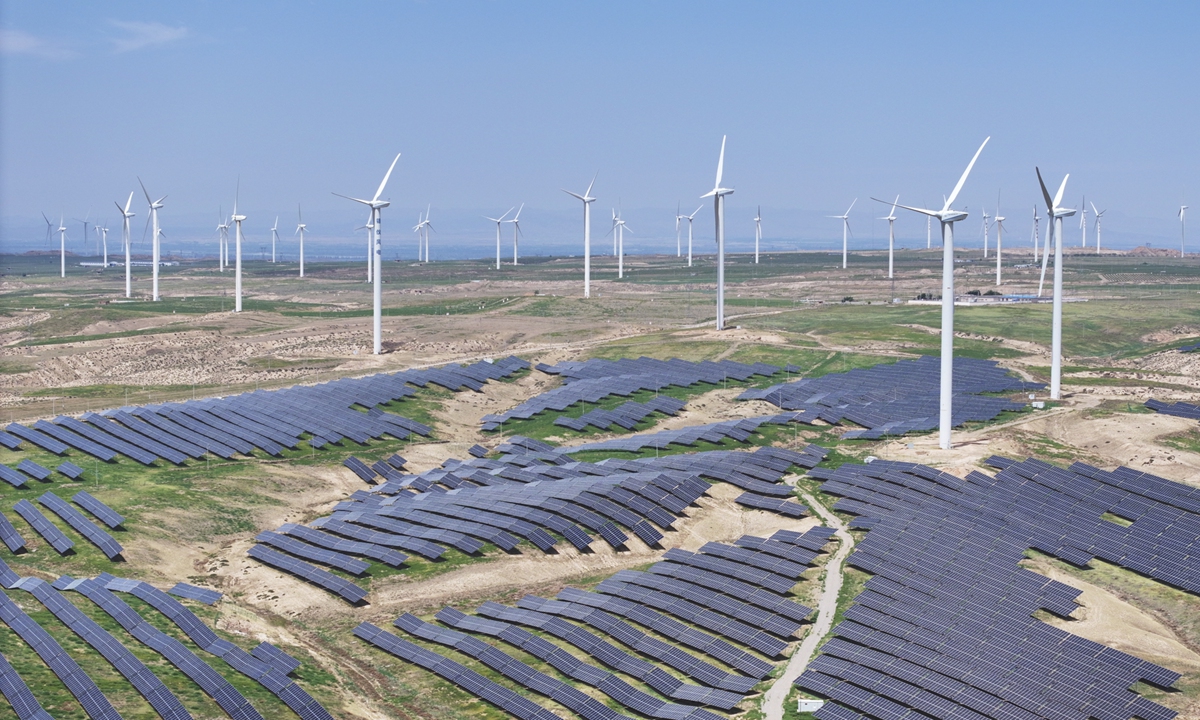
Photovoltaic panels and wind-power generation installations in Hongsibu District Photo: IC
The word "zan jin" had been passed down for a thousand years in the northwestern dialect. Now it has found its moment.But for Ma Huijuan, the word goes beyond gender. To her, it represents something broader: the very spirit of Hongsibu itself. "It's a force, a spirit," she said. "Every immigrant here is extraordinary - they have an unyielding tenacity, an unrelenting work ethic, an indomitable drive."
Once a barren wasteland, Hongsibu is now a thriving oasis of canals, vineyards, livestock farms, and green fields. It has emerged as Ningxia's youngest urban district, a model of how relocation, economic development, and ecological restoration can work together.
And the women who built it are not stopping.
Li Yaomei is now pioneering the construction of Hongsibu's first standardized greenhouse facility, betting on high-efficiency vegetable farming to create new income streams for her village.
Niu Xiaoyu is looking even further ahead. In the second half of 2026, she will launch an automated feeding and monitoring system for the family farm, eventually incorporating robots that track sheep activity and body temperature in real time. "We want to turn my mother's decades of experience into a digital system," she said. Her vision: a tan sheep that grows fast, produces multiple lambs, and requires less labor all to lower costs and increase profits for local farmers.
By the end of 2025, Hongsibu had 235,000 immigrants who have worked hard to build a better life. The per capita disposable income in rural areas has increased from 500 yuan before resettlement to 15,258 yuan. Today, nearly 90 percent of the residents who have received national and provincial honors in Hongsibu are women, according to a People's Daily report.
As the Global Times left Hongsibu, we couldn't help but wonder: "Who truly changed this land and the destiny of its people?"
Perhaps the answer lies in the hands of the five women we met - and the hundreds of thousands more like them, who refused to surrender to poverty, to despair, to a life defined by what they lacked.
"Life hasn't let me off easy," Ma laughed as she bid us goodbye, "and I still have to keep going."
Her story, like Hongsibu itself, is far from finished. The best days are still ahead.
RELATED ARTICLES