IN-DEPTH / IN-DEPTH
Tech, culture and unexpected friendships: what international teens found in Shanghai
New friends, closer China
By in Shanghai Published: Jul 29, 2026 10:28 PM

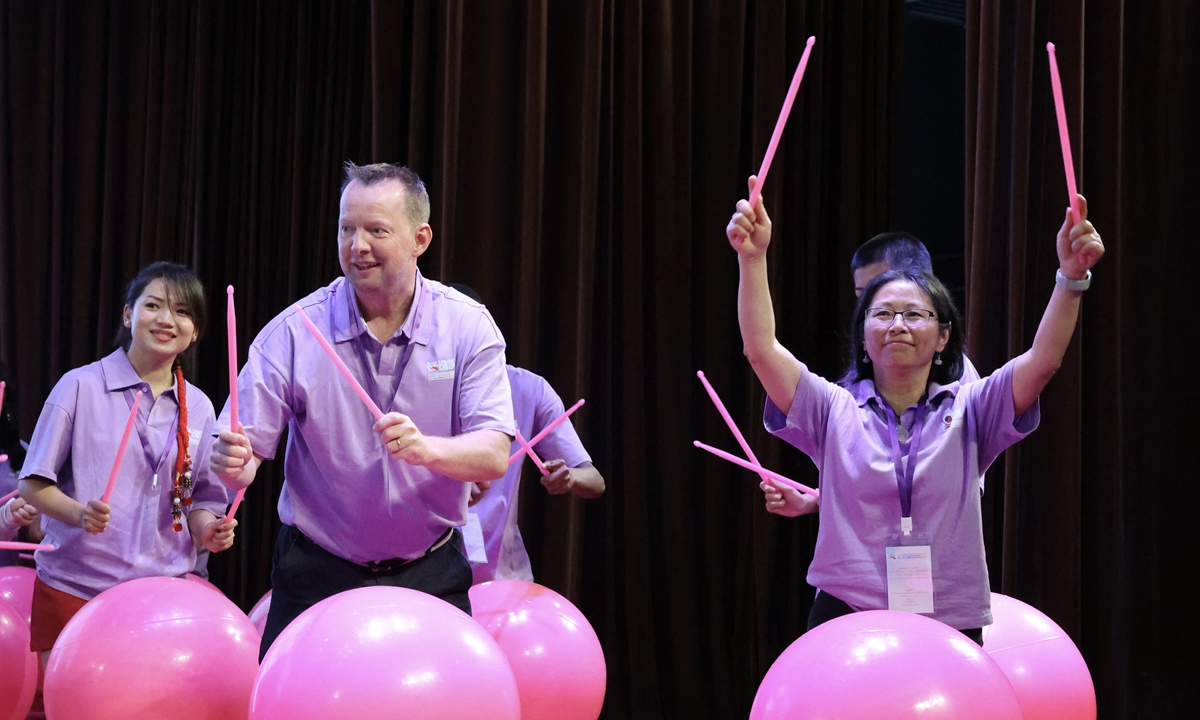
Some participants of the Shanghai International Youth Interactive Friendship Camp perform at the camp's opening ceremony on July 13, 2026. Photo: Chen Xia/GT
Editor's Note:"No mountain or ocean can distance people who have shared aspirations." This powerful message underscores the force of friendship and cooperation in bridging hearts across nations, cultures and civilizations.
People from diverse backgrounds and fields, united by common goals and dreams, traverse mountains and oceans to connect with each other. Through letters, face-to-face dialogues and vibrant cultural events, they are collectively weaving a magnificent tapestry of building a community with a shared future for humanity.
The Global Times presents "Intertwined Destinies, Shared Paths," a series spotlighting the touching stories written by these "friendship ambassadors." They are scholars pushing the boundaries of research, diplomats advocating for deeper cooperation on the global stage, artists igniting imaginations with their creations and ordinary people extending heartfelt love beyond national borders driven by their genuine sincerity.
Their stories illuminate the spark of cultural exchanges, the driving force of technological innovation, the bountiful harvest of economic cooperation and the enduring warmth of human connection - all contributing to a more peaceful, prosperous and open world. This is the 15th installment of the series.
In the quiet hours before dawn, the campus lay still. Yet a multipurpose hall in the international dormitory building was still lit, its glow spilling into the dark.
Dozens of teenagers from different countries sat or lay scattered across the room, clutching pillows and wrapped in blankets, their eyes fixed on the giant screen. The World Cup final had gone into extra time. Then, just after 6 am, as the first blush of dawn colored the sky, Spain finally scored the winning goal. The hall erupted in cheers. Some students hugged each other; some flung their pillows into the air.
At the hall, Li Kunyang rubbed his sleep-deprived eyes and smiled. As a volunteer, the Shanghai native was taking part for the fifth time in this camp, an event that comes almost once a year and brings together teenagers from around the world.
"More people were rooting for Spain, but overall there wasn't much of a bias - everyone was just there to enjoy the game," Li recalled.
That sense of simply enjoying the moment also seemed to define the teens' experience on this trip. Jointly hosted by the Shanghai People's Association for Friendship with Foreign Countries (SPAFFC) and the Shanghai Youth Federation, the Shanghai International Youth Interactive Friendship Camp marked its 20th edition this year. From July 12 to 22, 107 secondary school students and teachers from 17 countries spent some 10 days living, learning and traveling side by side with Chinese students.
One day during the camp, Global Times reporter spoke with several young foreign participants as they prepared for an urban orienteering activity that afternoon. They shared some of the most memorable moments from their journey.
"This is my first time traveling away from home, and also my first time in China," said Matilda Whiteway, a 16-year-old from Australia. "It's really fun and exciting."
A modern China exceeding expectations
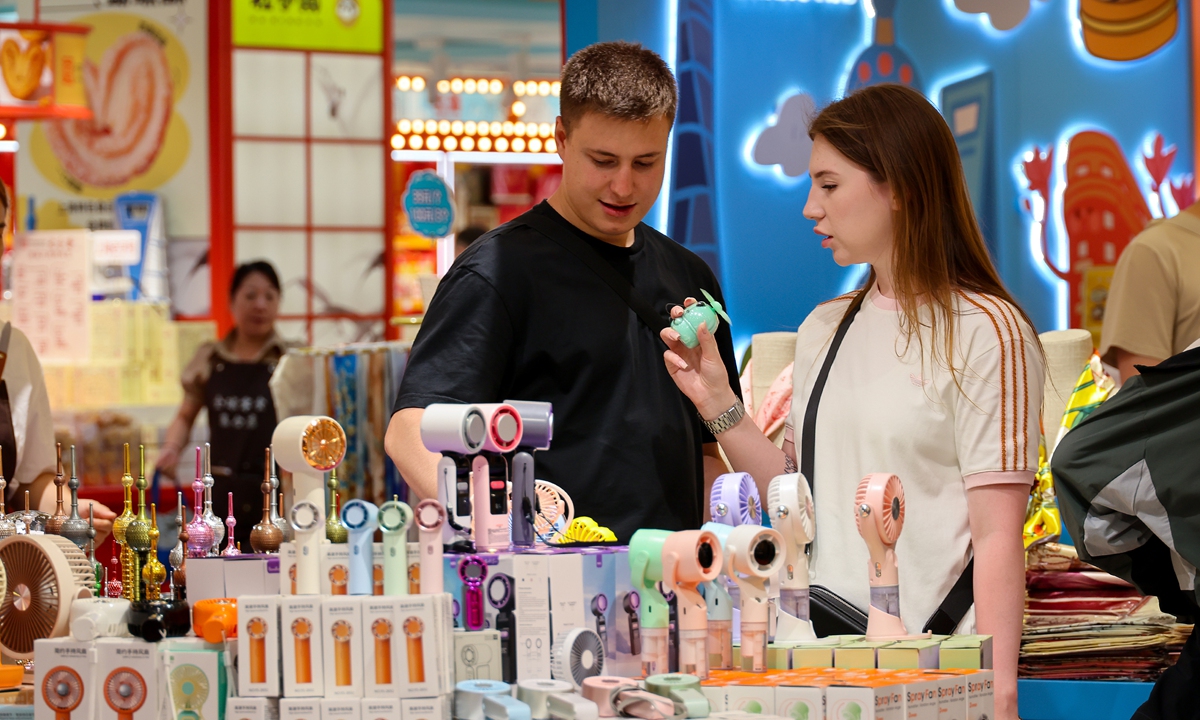
Overseas tourists buy handicrafts in Yuyuan Garden in Shanghai on June 13, 2026. Photo: VCG
Matilda had imagined Shanghai as a place full of high-tech wonders and striking futuristic architecture - a stark contrast to her hometown in Australia's Tasmania, where, in her words, low-rise buildings dominate the landscape.Once Matilda arrived, she found reality was pretty close to the picture in her head. Even so, a visit to a local tech company still left her amazed. "I had seen online that [China] has technology robots, but it was like nothing I'd expected - they were actually moving around! And there was a robot dog too, so cute, just like a real animal," she said. "We don't have a lot of tech robots where I'm from."
Matilda said she also hopes to try one of the driverless taxis now being piloted in some Chinese cities, which she finds incredibly cool.
That mix of curiosity and astonishment is a common reaction among many of the camp participants.
Charlotte Harvey, a 16-year-old from Iowa in the US, said she already knew before coming that China is one of the world's major powers and home to a huge population. But after arriving in Shanghai, she was still struck by the scale and speed of the city's development.
Charlotte went shopping in Shanghai and told the Global Times that she was shocked by the size of the mall. "I was expecting it to be small like the ones at home. But that mall I went to was huge and had six stories! It was crazy," she said.
Phila Reabetswe Sibande from South Africa was similarly surprised by China's level of modernity. He said his country is still "devoting to the Industrial Revolution," while "in Shanghai, it feels like the end of the 10th Industrial Revolution," he told the Global Times.
At the tech company, Phila was impressed by the Chinese-made robots that could move autonomously and mimic human actions. He described the robots as "nearly half-human." What moved him even more, was learning that some sixth-grade students in China are already building Mars rover prototypes. "They're just small ones, but they [Chinese tech companies] are invested in making them. China is investing in the youth of its people, preparing them for the future," said the 16-year-old.
From robots to driverless cars, from skyscrapers to six-story malls, these teenagers from different countries looked at the same Shanghai through their own eyes and arrived at the same conclusion: the level of modernization in China's big cities has exceeded their expectations.
That sense of being surprised beyond belief is precisely what reflects the subtle change organizers have been sensing over the past two decades.
"The camp is becoming more and more appealing, and in a way, it's riding on the wave of China's fast development," said a SPAFFC staffer surnamed Tian, one of the main organizers of the camp. Having worked on the project for years, Tian said that in the past, young foreign participants came to China with a spirit of exploration, seeing it as an unfamiliar country with an intriguing Eastern flavor.
Now, however, many teenagers have already seen images of a modern, tech-driven China online, and they arrive with a different mindset: they want to see whether it is really like that. "Of course, more often than not, China's development still exceeds their expectations," Tian told the Global Times.
Encounter a long-standing culture
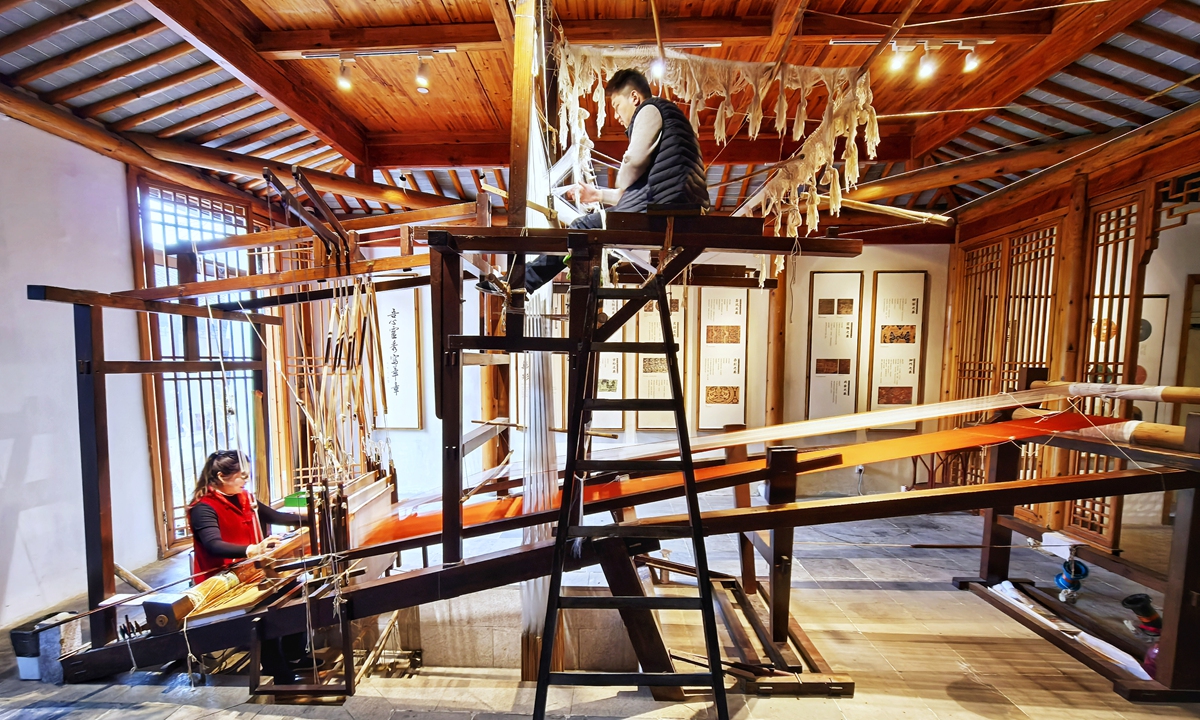
Inheritors of Song Brocade intangible cultural heritage demonstrate the weaving technique at the Suzhou Silk Museum in Suzhou, East China's Jiangsu Province, on March 22, 2026. Photo: VCG
If technology showcased China's speed, then traditional culture gave these teenagers a sense of the country's depth.At the Suzhou Silk Museum in East China's Jiangsu Province, the campers saw up close the enormous machines used in silk production, and learned how much labor and technical skill lies behind every thread.
Matilda said it was one of the most unforgettable experiences of her trip. "In the museum, they showed us how silk is made," she recalled. At the museum, they also tried to make their own round fans using silk thread. "It was a really fun hands-on experience. Each of us left with a truly one-of-a-kind souvenir."
Among the many cultural experiences, Charlotte found traditional Chinese medicine (TCM) the most memorable, especially cupping. "We have that in the US, but it's not popular. I tried it on my back, and it felt really special," she said. In her view, US medicine often means antibiotics or some kind of prescription, while TCM offered "different ways to solve the same problem."
Their encounters with China's traditional culture went far beyond that. The camp also organized hanfu (traditional Chinese costumes) try-ons, calligraphy tracing and a range of other activities. According to Tian, the point of these experiences was to highlight the appeal of China's blend of old and new: "to understand China's long-standing traditional culture while also feeling the pace of its technological development."
From silkworm thread in the museum to cupping marks on their backs, these symbols of a civilization stretching back thousands of years left the teenagers with vivid, tangible impressions. And as they stepped into local homes and spent their days alongside Chinese peers, another kind of connection - softer, quieter and more lasting - was taking shape.
Seeds of friendship
On the evening of July 21, the camp's closing ceremony and farewell party were held at the campsite, a campus of a Shanghai secondary school. A big screen replayed the most memorable moments from the past 10 days. Applause broke out repeatedly, and more than a few people were seen quietly wiping away tears.
"Before I came, I never imagined I would build such deep friendships in such a short time," Mila Leković, a camper from Montenegro, said from the stage. "We grew incredibly close, and I believe this friendship will last a long time."
And she was far from the only one to leave with that gift.
For Matilda from Australia and her Chinese roommate Julia, their story captured one of the most heartwarming scenes at the camp. Matilda recalled that when she first moved into the dorm, Julia walked in, introduced herself, and that same night, just as they were about to go to bed, "we sat and then we talked for hours." "I think from that moment on, we were friends," she said.
Beyond friendships with fellow campers, the teenagers also had a uniquely local experience: "spending a day as a Shanghai resident" with host families in the city.
What moved Matilda most was a small but thoughtful gesture from her host family. While chatting with the girl she stayed with, Matilda mentioned that she wanted to buy Chinese tea for her mother. "At the end of the day, her mom dropped off some tea from their place for me to take back," she told the Global Times. "They really listened to what I liked and wanted."
These encounters, crossing languages and borders, left marks in the hearts of the young participants - imprints they may carry with them for a lifetime. As Tian said, friendship is never some grand, abstract narrative. It is built on these small but genuine moments of human connection.
"This camp has been held for 20 editions, and our goal has always been simple: to be sowers of the seeds of friendship." Tian shared a small story. Years ago, a French girl who had attended the camp later said she had fallen in love with China and would definitely major in Chinese at a university in France, with plans to come to China for further study. And she did.
"We don't expect these children to necessarily go on to work in China-foreign people-to-people exchange in the future," said Tian. "What we truly hope is that, in the most youthful years of their lives, they can find a pure and beautiful friendship in China, and leave with a warm feeling toward this country."
Over the past 20-plus years, 1,918 young people from 70 countries and regions have met, gotten to know one another, and become friends at this camp. They leave with a warm impression of China, and carry the seeds of friendship back to their hometowns.
Matilda has already planned to return to China next year. After graduation, she also hopes to spend a month traveling across the country again. "I hope I can stay in touch with the Chinese friends I made at the camp, and that we can meet again in the future - whether in my country or back in China," she said.
RELATED ARTICLES