43 dead, 519 missing after mudslide strikes China’s Xizang; 675 domestic and 509 foreign calls placed via family hotlines: officials
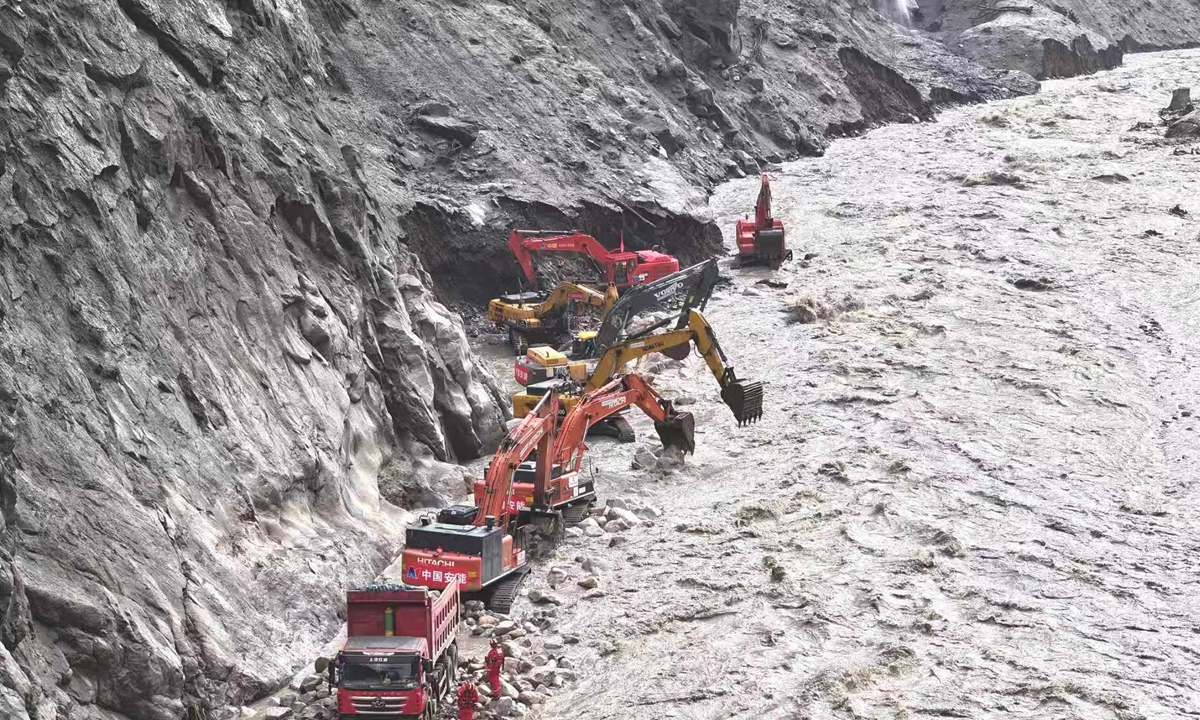
Rescue crews work to reopen a damaged section of the G216 national highway in Gyirong County, Xigaze, Southwest China's Xizang Autonomous Region, on August 31, 2026. By 4 pm, operations had advanced to 1.1 kilometers from Gyirong Port, with 158 personnel and 28 pieces of heavy equipment from China Anneng deployed. The highway, the only land route to the port, was cut off by the mudslide on August 26, 2026. Photo: VCG
The Nepal 8.26 mudslide disaster that struck Gyirong Port in China's Xizang has left 43 people dead and 519 missing as of 6 pm Saturday, according to the emergency rescue command center at Sunday's press conference, CCTV News reported.
Reporters from the US, UK, Russia, India, Pakistan, Singapore, Brazil and other countries were invited for on-site reporting at Gyirong Port on September 5-6. They also attended the briefing in Xizang on Sunday.
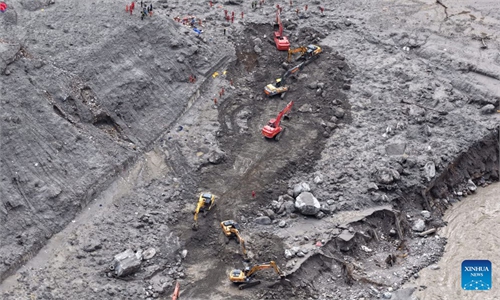
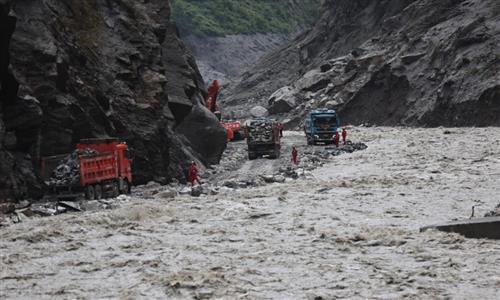
Officials briefed that the disaster-hit area is characterized by high mountains, deep valleys, rapidly changing weather, and numerous glaciers and glacial lakes, with geological hazards widespread. The disaster severely damaged the G216 highway leading to Gyirong Port and disrupted power and communications. Frequent landslides, heavy mud deposits and sharp temperature swings at high altitude, along with risks of falling rocks, landslides and barrier bodies, continue to threaten rescuers, making the operation far more challenging than conventional geological disaster response.
Before roads were restored, rescue operations were carried out by land, water and air. Rescue teams used assault boats and rubber boats to reach the core area by water, while 24 helicopter sorties delivered rescuers, supplies and equipment. By land, teams took a 12-hour detour through mountain roads to reach the core area.
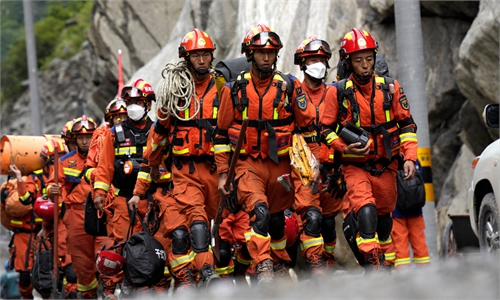
As of 6 pm on September 5, more than 2,500 rescuers had been deployed, along with more than 500 vehicle sorties and over 9,000 sets of rescue equipment. Drones had conducted more than 1,000 sorties, while 5.43 tons of supplies and equipment had been air-dropped. Slopes, valley mouths and changes in debris displacement and subsidence were monitored around the clock to safeguard search and rescue operations.
After the road was reopened at 10 am on September 2, deeper searches of the core area began. Six specialized groups and seven rescue teams were formed, using a strategy of prioritizing access routes, conducting searches by zones and coordinating multiple teams. Rescuers searched, cleared and searched again layer by layer, carrying out multiple rounds of intensive searches across the core area. As of 6 pm on September 5, two people had been rescued and 993 personal belongings recovered.
The authorities also took steps to support families of those killed or missing, assigning dedicated personnel to maintain one-on-one contact, receive and assist family members, respond to their concerns and provide psychological counseling. A dedicated hotline was opened for families of Chinese nationals killed or missing in the disaster. As of 6 pm on September 5, it had received 675 calls, while 791 family members had been received and 640 accommodated.
A total of 499 residents from four villages in Sare Township were relocated, with medical, education, basic living and psychological support provided. Based on expert assessments, authorities are now organizing their return in an orderly manner and working to restore normal production and living conditions.
More than 100 experts and technical personnel from relevant fields have been mobilized to monitor potential secondary collapses, landslides and mudslides around the barrier lake and the source areas of the ice-rock collapse. Geological hazards along roads leading to the border have also been investigated.
More than 150 pieces of specialized equipment have been deployed, including 105 sets of multi-factor monitoring equipment such as slope radar, integrated radar and video monitoring systems, drone surveying equipment, mud and water-level monitoring devices, and meteorological instruments. These measures are being used to closely monitor the potential impact of secondary mudslides downstream amid continued rainfall and high temperatures.
On the foreign nationals, officials said 261 foreign nationals from 23 countries remain missing after repeated verification. Relevant information has been promptly communicated through diplomatic channels to the embassies of the countries concerned in China. A 24-hour hotline for families of missing foreign nationals has received 509 calls, with updates provided to families in a timely manner.
China also provides Nepal with weather, hydrological, glacial lake and glacier information on a daily basis through the China-Nepal disaster prevention information-sharing mechanism.
At Nepal's request, the Chinese government has sent experts in tunnel rescue and DNA testing and provided emergency relief supplies. The Xizang regional government has also provided Nepal with 320 tons of Bailey bridge components and other relief supplies, officials said at the conference.
Global Times
RELATED ARTICLES