BUSINESS / PRESS RELEASE
Egypt accelerates energy transition with Chinese companies becoming key force
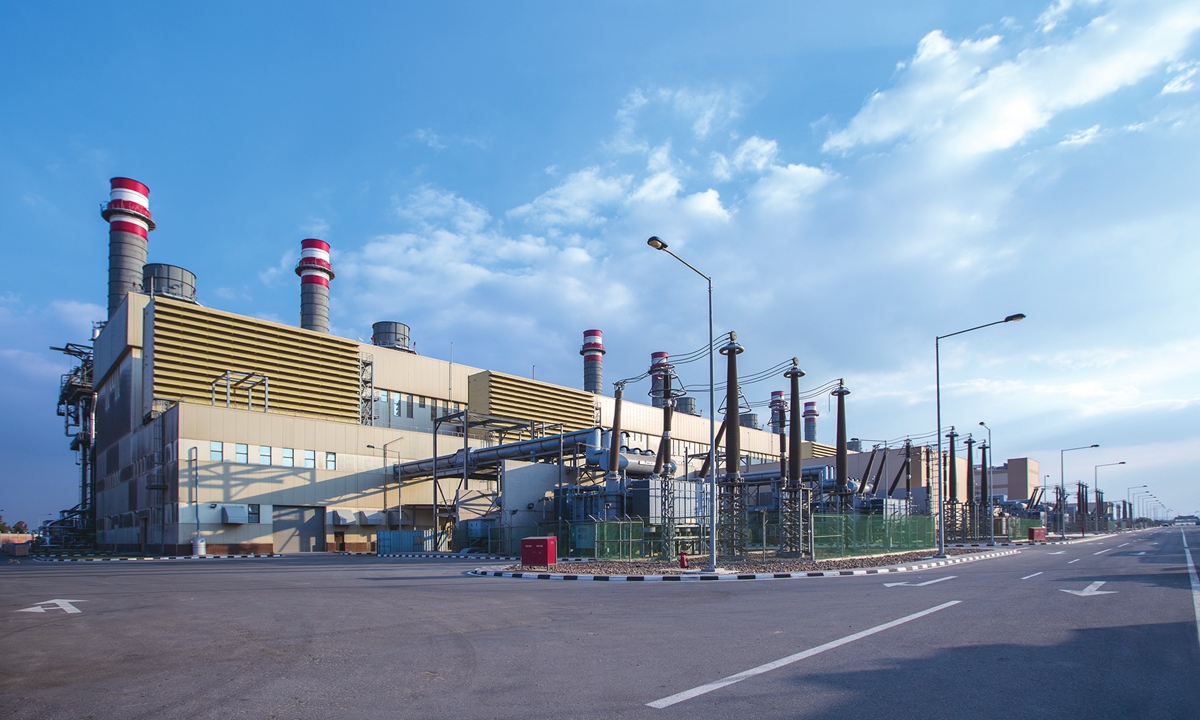
The 1,500MW Giza North Combined Cycle Power Plant in the Giza Governorate, Egypt Photo: Courtesy of POWERCHINA
On Wednesday, China and Egypt issued a joint statement on further deepening their comprehensive strategic partnership. The statement mentioned that the two sides agreed to further deepen the synergy between the Belt and Road Initiative and Egypt's Vision 2030, and encouraged Chinese enterprises to leverage Egypt's competitive advantages and actively explore localized industrial cooperation in renewable energy sectors such as solar and wind power.In recent years, Egypt has been accelerating the transformation of its energy structure, moving its target of 42 percent renewable electricity by 2030 forward to 45 percent by 2028. Why has Egypt strategically accelerated this process? Behind this are considerations of energy security and economic needs, which are also inseparable from the strong support of China-Egypt energy cooperation. This year marks the 70th anniversary of the establishment of diplomatic relations between the two countries. Analysts say that under the guidance of head-of-state diplomacy, cooperation between China and Egypt in emerging fields such as new energy will gain further momentum.
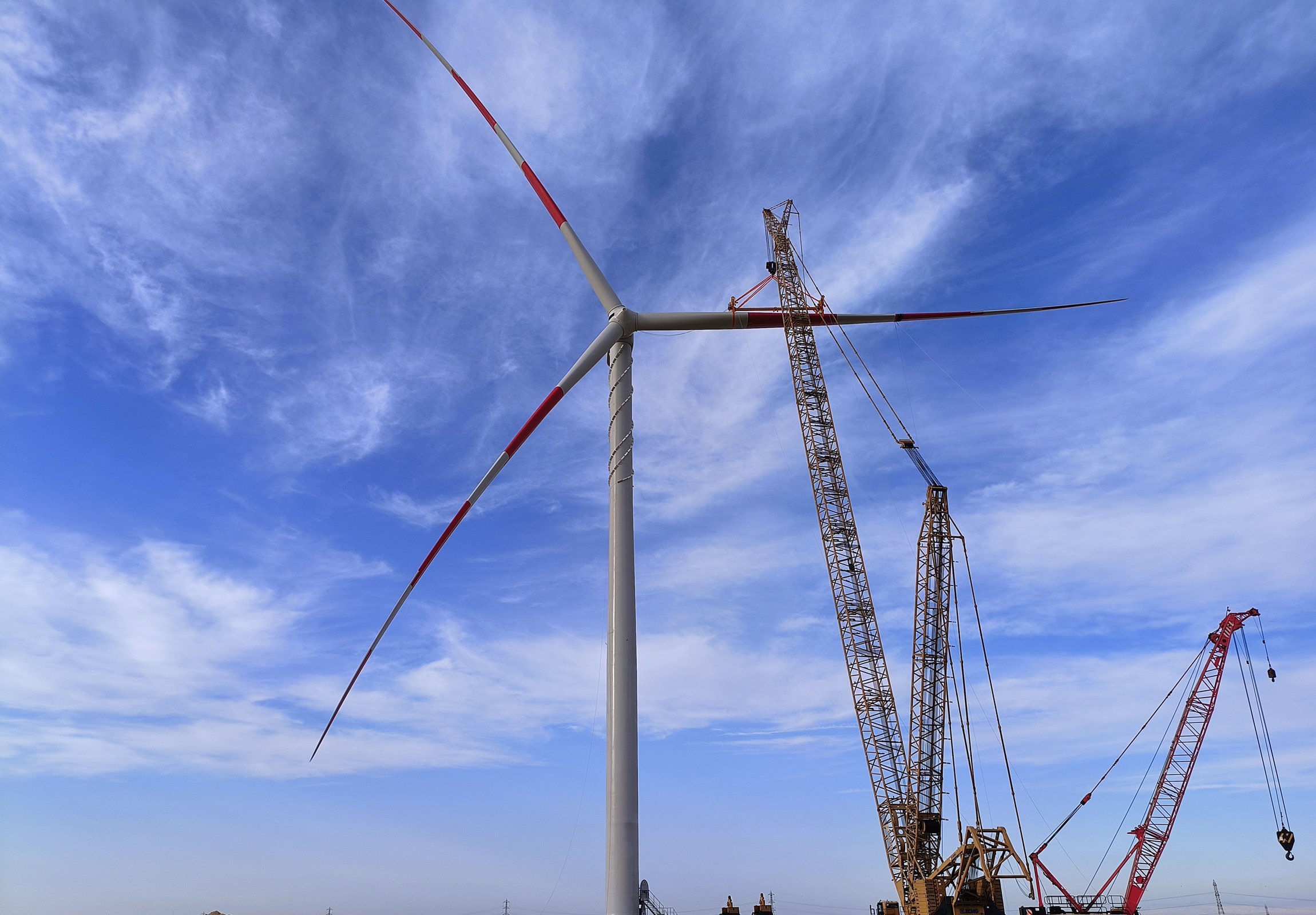
Installation Works at 500MW Amunet Wind Farm, Ras Ghareb, Red Sea Governorate
Chinese enterprises witness changes in Egypt's energy structureIn Ras Ghareb, the Red Sea Governorate of Egypt, rows of wind turbines stand in the desert, creating a spectacular scene. This was once a traditional town dominated by the oil industry. Today, as wind power projects are successively implemented, a new energy industry is taking root and growing here.
Egypt has strong demand for electricity and abundant wind and solar resources, for which the Egyptian government has set new energy development goals. In recent years, the number of new energy power generation projects in Egypt has increased significantly, and Chinese enterprises have become important participants in project construction.
In fact, the changing development trajectory of Chinese enterprises in Egypt is a microcosm of the country's green transition. For example, when POWERCHINA entered the Egyptian market in 2012, it was still involved in traditional energy projects such as gas-fired power stations and power transmission and substation. Over the past decade and more, from a 500MW wind power project to 200MW and 1.1GW wind power projects, and then to an energy storage battery manufacturing plant, POWERCHINA's business footprint has gradually extended from power generation to the new energy industrial chain, while also witnessing changes in Egypt's energy structure.
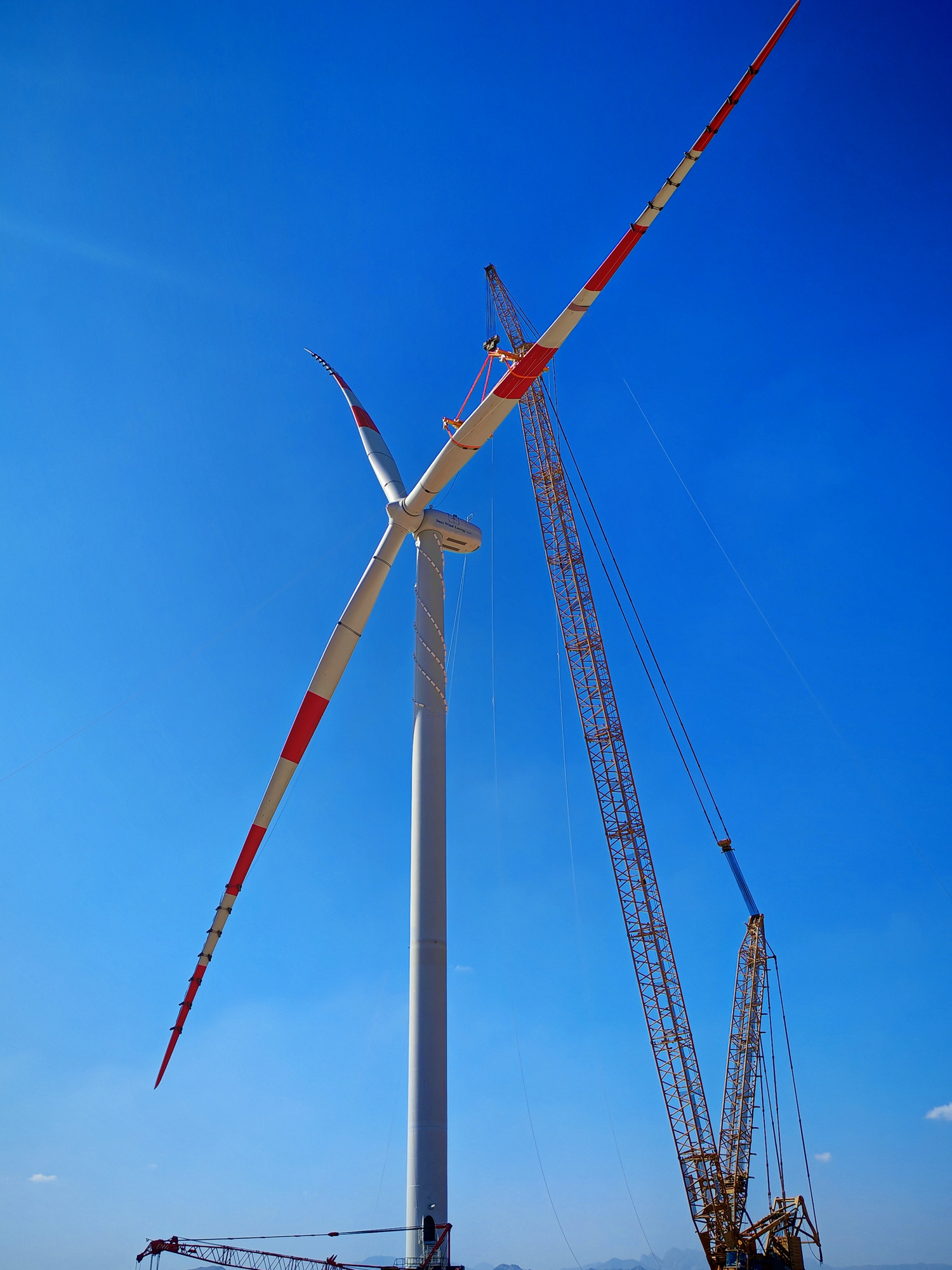
Installation Works at 1.1GW Gulf of Suez Wind Farm, Red Sea Governorate
The 1.1GW onshore wind power project in the Gulf of Suez, Egypt, is currently POWERCHINA's largest overseas wind power project and the largest onshore wind power project, not just for Egypt, but the entire African continent. The Chinese enterprise is responsible for the design, procurement, construction, commissioning, handover and warranty of the entire project. Once completed and put into operation in mid 2027, it is expected to generate more than 4.3 billion kWh of electricity annually, providing green and stable clean energy to over 1 million local households, and reducing carbon dioxide emissions by approximately 2.2 million tons per year.With technical support from Chinese enterprises, Egypt has gained a more solid foundation in advancing its green transition. On August 17, a groundbreaking ceremony was held for the energy storage manufacturing plant project of Sungrow Egypt, contracted by POWERCHINA. Senior officials, including Egypt's minister of electricity and renewable energy, minister of investment and minister of industry attended the ceremony to witness the commencement of this important project.
Egypt initially set a target of 42 percent renewable energy by 2030, but in May, taking into account the necessity, urgency and feasibility of the energy transition as well as the progress of projects under construction, the government advanced the target to 45 percent by 2028. This reflects Egypt's strategic determination and also its confidence in the construction capabilities of Chinese enterprises.
It is worth noting that for both China and Egypt, energy cooperation is shifting from building a project to jointly cultivating an industry. As projects progress, a large number of local workers have entered the new energy construction sector. Some workers and engineers who originally worked in the oil industry have also begun to engage in wind power projects and become technical backbones in this emerging field.
Data shows that through ongoing projects, POWERCHINA has created more than 2,000 direct jobs and over 10,000 indirect jobs locally. Through onboarding training and on-the-job training mechanisms, it has trained more than 350 professionals in quality control, HSE and social management, and materials and logistics management in both traditional and new energy, building a specialized workforce.
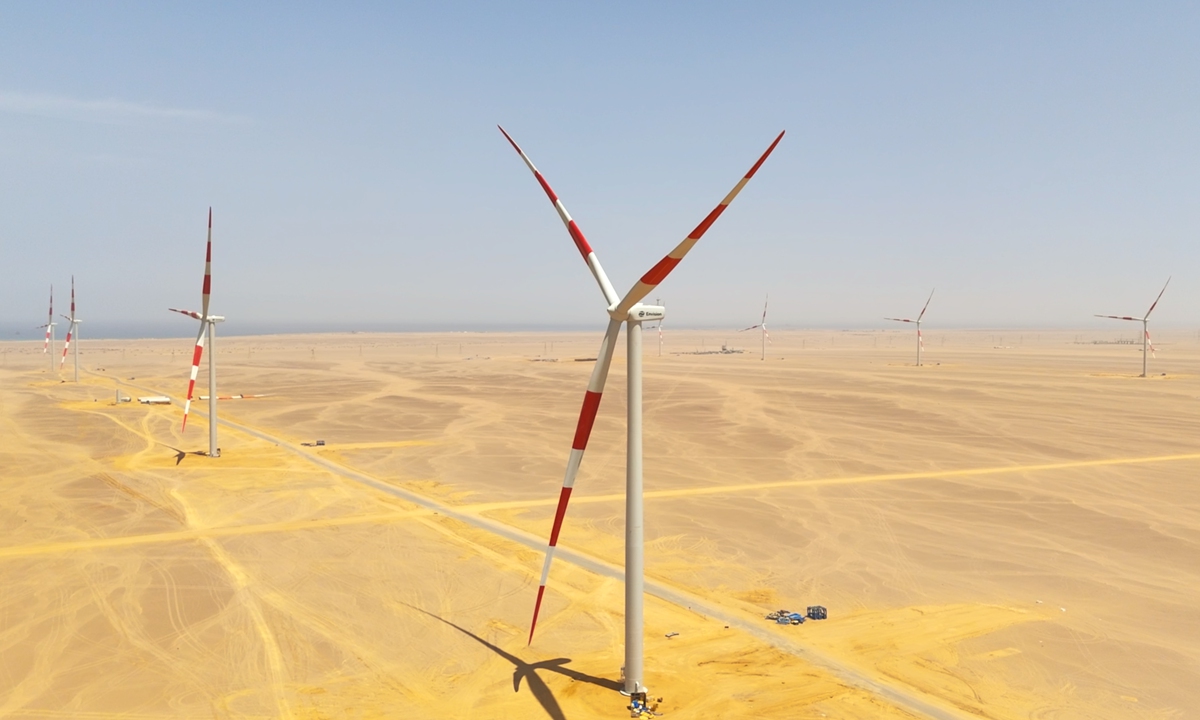
500MW Amunet Wind Farm, Ras Ghareb, Red Sea Governorate
Two-way endeavor, shared growthChinese enterprises investing and taking root in Egypt have also driven the shared growth of a number of local companies. Elalamya General Contracting is a local company in Ras Ghareb. Since participating in the 500MW wind power project in the Gulf of Suez in August 2023, it has cooperated with POWERCHINA for more than three years. Today, the cooperation between the two sides has extended to the 1.1GW wind power project in the Gulf of Suez and the 200MW wind power project in Ras Ghareb.
At the beginning of the cooperation, this company had only 23 employees and eight pieces of equipment. Three years later, it has developed into a medium-sized enterprise with more than 150 employees and over 20 sets of equipment, and its annual revenue has grown from less than 50 million Egyptian pounds ($980,000) at the start to 200 million Egyptian pounds today. Mahmoud, head of the company, said that through cooperation with Chinese enterprises, "we have achieved tremendous development and also gained precious friendship. We hope to continue working side by side with our Chinese friends and create more success."
As a strategic emerging industry, new energy has broad development prospects and contains huge economic opportunities. However, entering this industry also faces relatively high technical barriers. POWERCHINA has handed over a large amount of basic construction and auxiliary works such as road construction, lifting platform construction and collector line laying to local contractors. This deeply localized cooperation model not only directly drives the development of Egypt's upstream and downstream industrial chains in construction, transportation and services, but also enables local enterprises to improve their construction capabilities and management levels through participating in high-standard international projects, laying a foundation for long-term development.
On the other hand, Chinese enterprises have also accumulated practical experience in building large-scale wind power projects under extreme conditions such as high desert temperatures and frequent sandstorms through collaboration with Egyptian teams. A senior manager at POWERCHINA said that the essence of this "shared growth" is a sustainable win-win situation. "We have not only built clean energy infrastructure for Egypt, but also helped the local area build the capacity for independent development by cultivating talent and driving industry development. The projects ultimately provide Egypt with a large amount of clean electricity, supporting its energy transition goals. POWERCHINA has also gained market credibility and brand reputation, and in the process of helping enterprises continue to grow, we have also accumulated valuable subcontracting resources."
It is understood that many Chinese enterprises in Egypt, including POWERCHINA, attach great importance to localized development. In the view of Chinese enterprises, to truly take root in Egypt, they must embed their own development into Egypt's national strategy.
Upgrading China-Egypt infrastructure and energy cooperation
Standing at the important historical juncture of the 70th anniversary of diplomatic relations, China-Egypt cooperation continues to be enriched and its space keeps expanding. In the past, cooperation was more embodied in individual infrastructure projects. Today, cooperation is extending to equipment manufacturing, optimized production capacity layout, talent cultivation and other links. From wind power, photovoltaics and energy storage to future possibilities such as green hydrogen and seawater desalination, the boundaries of bilateral cooperation are constantly expanding.
Egypt has abundant wind and solar resources and is located at an important position connecting Asia, Africa and Europe. For Egypt, developing new energy is not only about emissions reduction, but also about energy security and industrial upgrading. For Chinese enterprises, this means a larger and longer-chain cooperation space.
A senior manager at POWERCHINA said that the China-Egypt joint statement clearly proposed encouraging Chinese enterprises to leverage Egypt's competitive advantages and actively explore localized industrial cooperation in renewable energy sectors such as solar and wind power. POWERCHINA will take this as an opportunity to join hands with Chinese industrial chain, promote the implementation of the model of optimized production capacity layout plus local manufacturing, and help Egypt build indigenous manufacturing capacity for new energy equipment.
In addition, Egypt officially released its national low-carbon hydrogen strategy in August, which plans to capture 5 to 8 percent of the global hydrogen market by 2040. POWERCHINA will actively promote the implementation of green hydrogen projects and explore the integrated development of "wind-solar-hydrogen-storage." In terms of digital transformation, Chinese enterprises will also leverage their technological accumulation in digitalization and intelligence to provide support for the digital upgrading of Egypt's energy infrastructure.
RELATED ARTICLES