Acting mayor of Xigaze in Xizang explains site selection of Gyirong Port connecting Nepal following mudslide disaster
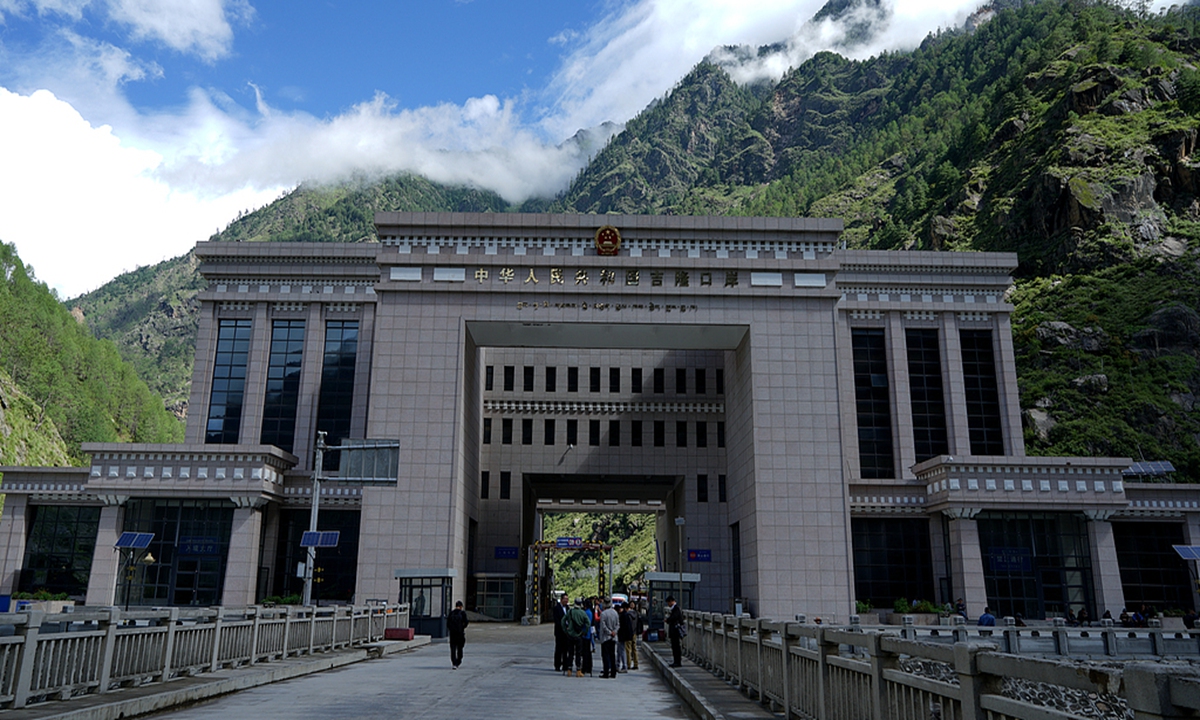
Gyirong Port File photo: VCG
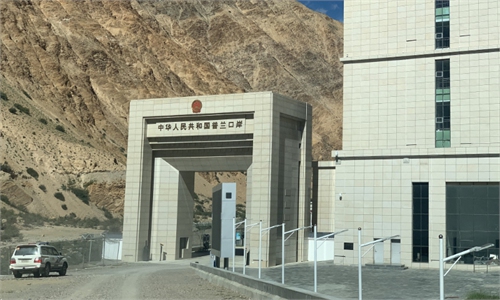
The location of Gyirong Port in Gyirong County, Southwest China's Xizang Autonomous Region, was determined by historical factors, acting mayor of Xizang's Xigaze City Norbu Tsering said at a press conference held by the emergency rescue command center on Sunday, CCTV News reported.
Gyirong Port has been a key node of the ancient Tea Horse Road and Ancient Tang-Bo Road since ancient times, serving as a hub for trade and cultural exchanges between China and Nepal for thousands of years, said Norbu Tsering.
"Gyirong Valley has favorable conditions in terms of terrain, transportation and border access, and historically developed into an important land route," he said. Historical records from the Tang (618-907) and Qing (1644-1911) dynasties show that the Gyirong river valley area was an important route for exchanges between border residents in China's Xizang and Nepal, allowing people from both sides to travel across the Himalayas.
Since the Gyirong customs office was established in 1962, China and Nepal have extended their respective border roads based on the historically established route, gradually connecting roads, bridges, border gates and inspection facilities.
In 1981, China and Nepal designated Gyirong and Rasuwa as border trade points, and third-country nationals began passing through the port in August 2017.
With a long history, favorable transportation conditions and frequent cross-border exchanges, Gyirong Port has become a well-established land port for trade with Nepal, Norbu Tsering said.
Over the past five years, the port has recorded a cumulative trade value of 14 billion yuan ($1.96 billion) and handled nearly 400,000 tons of goods. In 2025, the value of goods cleared through the port accounted for 42 percent of Xigaze's total, while the port's foreign trade imports and exports accounted for 58 percent of the city's total.
Norbu Tsering said that moving forward, authorities will conduct a comprehensive assessment of disaster risks in surrounding areas and carry out further studies and demonstrations on the restoration of relevant functions.
Global Times
RELATED ARTICLES