Deployment of fighter jets overseas lays bare Japan’s ambition for military ‘normalization’
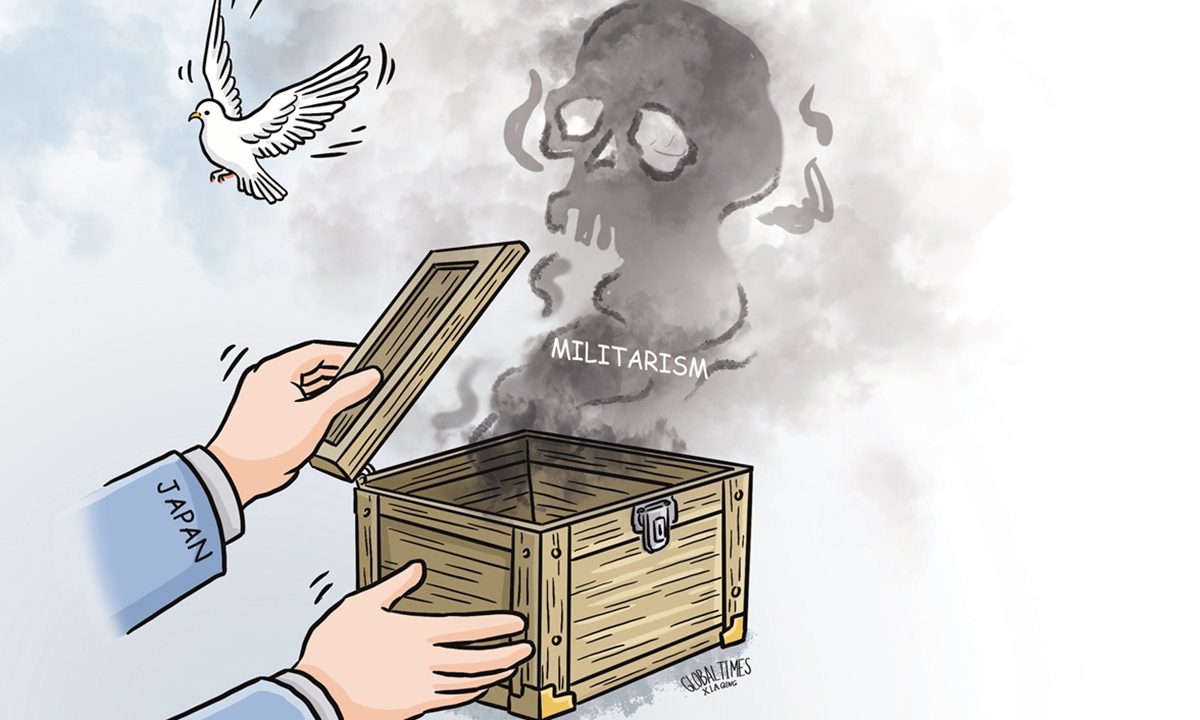
Illustration: Xia Qing/GT
Recently, Japan's Air Self-Defense Force (SDF) announced plans to send three F-2A fighter jets, along with more than 100 air and ground personnel, to Jodhpur Air Force Station in India for the "Veer Guardian 26" bilateral air exercise scheduled from September 9 to 21. This marks the first time since the end of WWII that Japan deploys its main combat aircraft to the South Asian subcontinent. It is by no means an ordinary military exchange. This long-range overseas exercise lays bare Japan's efforts to break through the postwar framework and hollow out the principle of "exclusively defense-oriented" policy.The "exclusively defense-oriented" policy established under Japan's postwar pacifist constitution has long been presented as a cornerstone of the country's commitment to peace. At its core is the principle that the SDFs are limited to defending Japan's own territory and are prohibited from projecting military power overseas or conducting offensive exercises.
The long-range deployment of the F-2A requires Japan to coordinate the airspace of multiple countries, conduct long-distance aerial refueling, arrange air and ground support at a foreign location, and establish cross-border operational command coordination. The entire deployment system is fully compatible with the requirements of real-world long-range force projection and has already gone well beyond the scope of homeland defense. While Japan continues to invoke the rhetoric of "exclusively defense-oriented" policy, it has simultaneously normalized overseas offensive-oriented exercises.
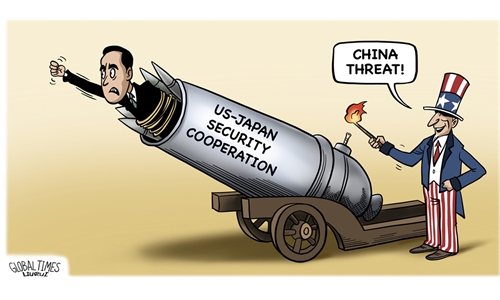
The "Veer Guardian 26" exercise is aimed at cobbling together a small military grouping characterized by bloc confrontation and exclusion. The intention of building practical capabilities for military counterbalancing is difficult to conceal.
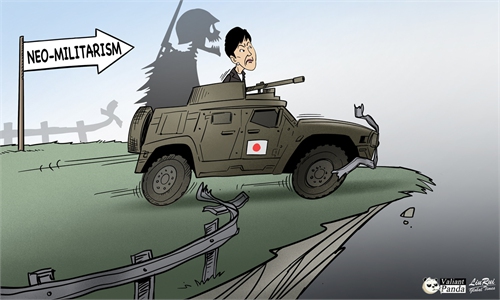
It would be a breakthrough for Japan if it successfully deploys its main combat aircraft overseas. Previous defense interactions between Japan and India largely involved Indian fighter jets traveling to Japan for exercises, meaning that foreign military forces were being hosted on Japanese territory. This time, however, Japan is projecting an operational combat unit beyond its own territory and into South Asia. This represents a major qualitative shift in the overseas military activities of the SDF since the end of WWII. It demonstrates that Japan has effectively broken through the geographic and functional constraints of "homeland defense," while making increasingly visible its ambition for military "normalization" and even an accelerated process of remilitarization.
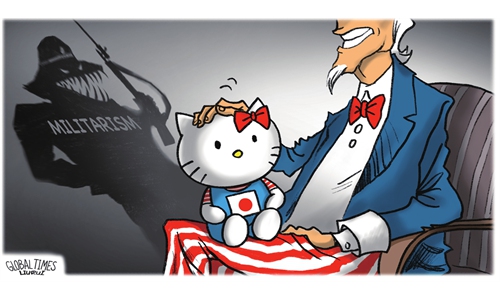
Furthermore, Japan's military expansion, driven by historical revisionism, is particularly dangerous. To this day, Japan has not undertaken a comprehensive reckoning with its history of aggression. Episodes of glorifying aggression among conservative politicians, visits by right-wing politicians to the Yasukuni Shrine, and the promotion of a right-wing imperialist view of history continue unabated.
Since Sanae Takaichi came to power, against a backdrop of deeply distorted historical perceptions and a major regression in security thinking, Japan's defense budget has surged year after year. The country has continued to increase investment in the development and deployment of offensive weapons, including long-range strike and precision-guided capabilities, while repeatedly loosening its Three Principles on Transfer of Defense Equipment and Technology and even discussing revisions to its Three Non-Nuclear Principles. Japan is pursuing a comprehensive transformation toward a more offensive military posture.
Many Asian countries once suffered enormously under Japanese aggression, and the hard-won postwar peace order must not be undermined. Allowing Japan to break through postwar constraints and establish offensive military partnerships across the region is tantamount to giving the remnants of militarism an opportunity to revive under a new guise, inevitably creating unforeseeable risks to regional security.
The author is a research fellow at the Institute of Northeast Asian Studies of the Heilongjiang Academy of Social Sciences. opinion@globaltimes.com.cn
RELATED ARTICLES