Japanese Prime Minister Sanae Takaichi attends the party leaders debate held at the House of Representatives in the Diet, Tokyo, Japan, on July 15, 2026.
Why did a monument in Russia trigger so much discomfort for Japanese Prime Minister Sanae Takaichi? The answer does not lie in the structure itself, but in how it exposes the hypocrisy of certain Japanese politicians who have long avoided, downplayed, or even attempted to distort history.
On September 4, in the Russian Far Eastern city of Khabarovsk, a monument commemorating the victory over militarist Japan was unveiled. At the center stands a 15-meter-tall statue of a Soviet soldier, symbolizing the Soviet Red Army that defeated the main forces of Japan's Kwantung Army in the final phase of World War II (WWII). Beside the soldier, a boundary stone bearing a chrysanthemum emblem is shown broken in two. The monument once again makes a historical fact unmistakably clear: Japanese militarism launched a war of aggression, which ended in unconditional surrender.
However, Takaichi demanded that Russia remove the monument, arguing that the chrysanthemum crest is widely recognized as a symbol of Japan and that its depiction in a damaged form is "completely unacceptable." Takaichi also said the issue "affected the feelings of the Japanese people."
The response from the Russian Foreign Ministry was direct and unambiguous, stating that demanding the removal of the monument would be "all that remains is to demand that the wind stop blowing and the sun stop shining." The Russian side further pointed out that if Tokyo treats Japanese history with disdain, then this disease should not spread to others.
This response strikes at the core of the issue.
It is not "national feelings" that is hurt, but militarism's attempted revival that is blocked
Takaichi deliberately conflates different concepts, reframing a monument that condemns militarism as an insult to the Japanese nation and its people. This is a political tactic that is not particularly sophisticated, yet highly dangerous.
The chrysanthemum emblem does indeed carry symbolic meaning as a national emblem of Japan. However, in the historical trajectory of Japan's modern aggression and colonial expansion, it has also been incorporated into the symbolic system of militarism. What the monument criticizes is the militarist regime that brought immense suffering to the peoples of Asia - it is not directed at the Japanese people.
Equating anti-militarism with "affecting the feelings of the Japanese people" fundamentally blurs the line between aggressor and victim, and between war responsibility and national dignity. True national dignity does not come from concealing historical crimes of aggression; nor can genuine national sentiment be built upon selective amnesia of historical facts.
The history of the victory in WWII is recorded in international documents, in the collective memory of victimized nations, and in the foundational framework of the postwar international order. Japan's surrender was not an externally imposed "narrative of humiliation," but the inevitable outcome of militarism's reckless expansion and ultimate defeat.
Commemorations of the anti-fascist victory across countries are acts of remembrance for the fallen, affirmations of the peace order, and reflections of humanity's shared commitment to learning from history and safeguarding peace. Demanding that other countries dismantle such monuments is, in essence, an attempt to force the world to forget history and abandon historical justice. Such a demand is absurd, unethical, and ultimately impossible to realize.
The real root of Takaichi's problem is her repeated distortion of history for political gain
Since taking office, Sanae Takaichi has not only made seriously erroneous remarks such as "a Taiwan contingency is a Japan contingency" but has also sent a ritual offering to the notorious Yasukuni Shrine on the occasion of the anniversary of Japan's unconditional surrender in World War II. Now, in the name of the so-called "feelings of the Japanese people," she is demanding that Russia dismantle a monument themed around "victory over militaristic Japan."
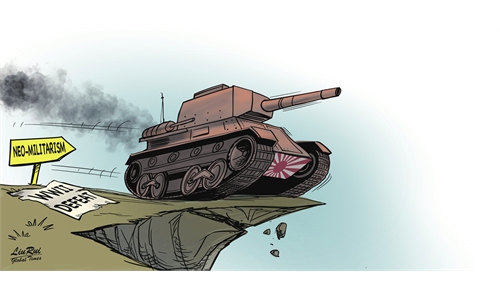
On the one hand, she repeatedly tests the waters and stokes tensions over the Taiwan question; on the other, she sends erroneous signals over the issue of Yasukuni Shrine, where convicted war criminals are enshrined; and at the same time, she portrays an anti-militarism monument as an insult to Japan. The underlying logic of Takaichi's clumsy political theatrics is remarkably consistent: shifting attention from domestic problems to external issues, using a hardline posture to gain political leverage, and deliberately blurring historical facts to cater to right-wing sentiment.
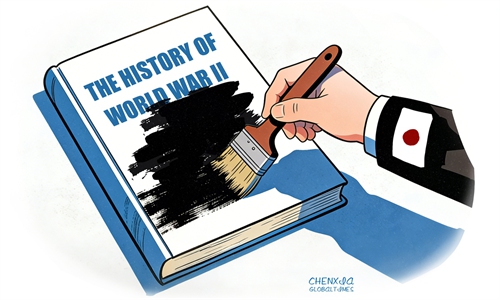
It is not that Takaichi does not understand history, nor that she is unaware of the crimes of militarism. Rather, she is attempting to construct a narrative in which Japan is the victim, thereby paving the way for historical revisionism. But history is neither a work of fiction that can be rewritten at will nor a bargaining chip for political transactions. Historical crimes do not disappear simply because politicians attempt to justify or deny them.
'A state cannot stand once it has lost the confidence of the people' - Above all, be honest about history
As her approval ratings declined, Takaichi once grandly invoked the saying, "A state cannot stand once it has lost the confidence of the people." The irony is that she has apparently chosen to deliberately misinterpret what "confidence" actually means in this context.
"A state cannot stand once it has lost the confidence of the people" is not a slogan for politicians to manipulate through semantic games. Public confidence cannot be won through a few tough-sounding statements, much less sustained by stoking extreme emotions or provoking confrontation with the outside world. What it requires, above all, is honesty, responsibility and a willingness to take responsibility.
What truly causes people to lose confidence is politicians' refusal to reflect even after making inappropriate statements or taking misguided actions; their attempts to cloak historical responsibility in the language of "national sentiment"; their use of regional security as a stage for personal political grandstanding; and, when confronted with real governance challenges, their refusal to address the problems and instead their attempts to find scapegoats.
What Takaichi's repeated erroneous words and deeds reveal is a lack of sincerity toward history, a lack of sound judgment about reality, and a lack of respect for peace.
History will not fall silent because of a few protests
Monuments cannot speak, yet they carry more weight than the excuses offered by certain politicians.
They remind people of the suffering that militarism once inflicted on the world. They remind us why the victory of the anti-fascist war is so precious. Any attempt to downplay aggression, whitewash history, or resurrect the specter of militarism will ultimately face the judgment of history.
If Japan wants to earn the respect of its neighboring countries, it should not demand that others dismantle monuments commemorating victory. Instead, it should thoroughly reflect on its history of aggression, firmly break with militarism, and stop playing with fire on issues such as the Taiwan question.
That is what it means to act responsibly toward the Japanese people - and to take responsibility for peace and stability in the region.
RELATED ARTICLES