Japan needs to face up to the core issues in bilateral ties despite 'mini surge' in proposed exchanges with China
China Japan Photo: GT
Recently, there has been a "mini surge" in visits to China by Japanese political and business representatives. Takeshi Iwaya, head of the Japanese Association for the Promotion of International Trade and former Japanese foreign minister, reportedly plans to lead a delegation to China from September 27 to 30. Meanwhile, it was reported that former secretary-general of Japan's ruling Liberal Democratic Party Moriyama Hiroshi, who chairs the Japan-China Friendship Parliamentarians' Union, is also coordinating a visit to China this month by this group's junior Diet members. Earlier, a delegation of young Japanese parliament members headed by Shinichi Isa, chairman of the Public Relations Committee of the Centrist Reform Alliance and Member of the House of Representatives of Japan, visited China at the end of August and held talks with Lu Kang, vice minister of the International Department of the CPC Central Committee. At a press conference on September 4, Japan's Chief Cabinet Secretary Minoru Kihara also said, "communication is vital precisely because there are concerns and outstanding issues."
This trend indicates that hard‑line rhetoric toward China is not the only voice within Japan. Whether it is Takeshi Iwaya, Moriyama Hiroshi, or Shinichi Isa and others who have previously visited China, they have a deeper understanding of China than the Takaichi administration and are well aware that the long-term deterioration of China-Japan relations does not serve Japan's national interests. Japan's business community, in particular, has a clearer understanding of the importance of the Chinese market and bilateral cooperation along industrial supply chains. The successive visits to China, both past and planned, by Japanese political and business figures demonstrate that people of insight in various sectors of Japanese society are concerned about the future of China-Japan relations and are taking concrete actions in an attempt to improve them.
China has consistently maintained an open attitude toward exchanges and communication. On September 3, a spokesperson for the Chinese Foreign Ministry explicitly stated, in response to plans by Japanese lawmakers to visit China, that China is ready to engage with them in the hope of enhancing mutual understanding and trust as long as they abide by the four political documents, support a friendly China policy, and cherish China-Japan relations. It should be noted, however, that this "mini surge" in visits to China by various Japanese sectors remains largely confined to non-governmental channels involving the Diet, political parties, and economic and trade organizations. This does not mean that the Takaichi administration's China policy has undergone a significant shift. Compared with government-to-government diplomacy, party-to-party and people-to-people diplomacy are subject to fewer policy constraints.
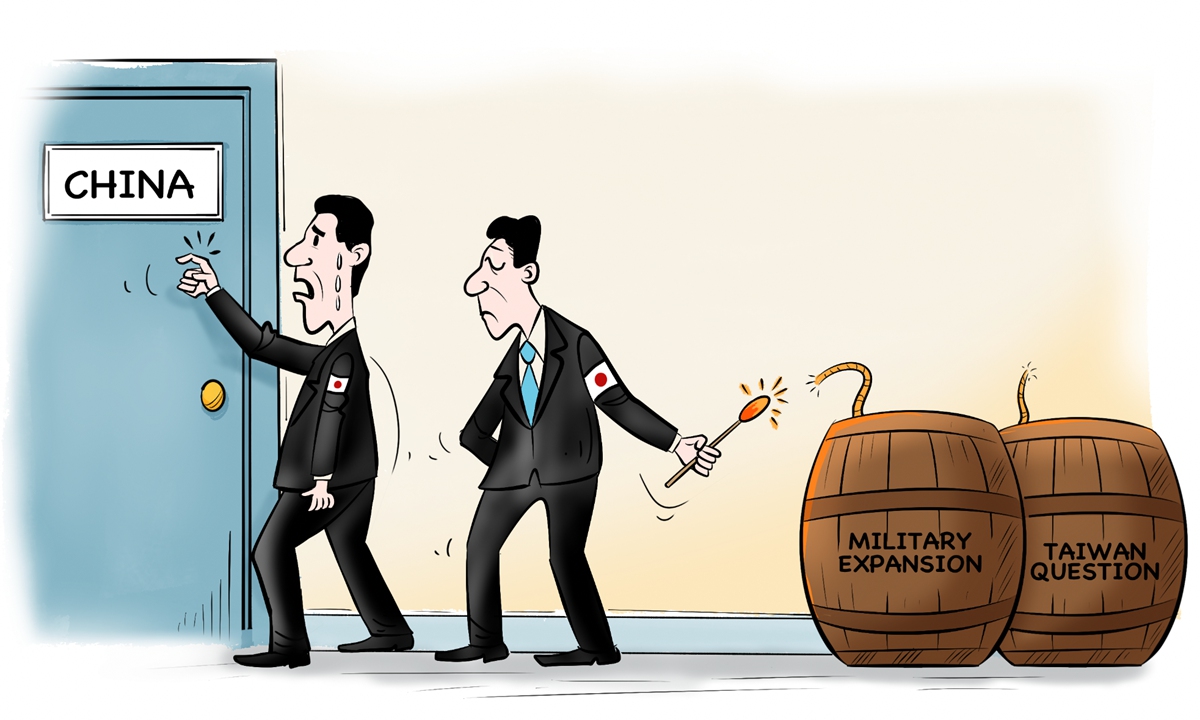
It needs to be stressed that the foremost sticking point in China-Japan relations remains the Taiwan question. The Takaichi administration has linked a "Taiwan contingency" to Japan's "survival-threatening situation" and the exercise of the right of collective self-defense. This amounts to a public declaration that Japan may consider military intervention in the Taiwan Straits situation. Yet, the Taiwan question is purely China's internal affair and is also directly related to the political foundation of China-Japan relations. The 1972 Joint Communiqué of the Government of Japan and the Government of the People's Republic of China explicitly states: "The Government of the People's Republic of China reiterates that Taiwan is an inalienable part of the territory of the People's Republic of China. The Government of Japan fully understands and respects this stand of the Government of the People's Republic of China." However, while the Takaichi administration claims that it seeks to build a "constructive and stable China-Japan relationship," it has repeatedly crossed the political commitments it made on the Taiwan question, directly undermining the foundation of the normalization of diplomatic relations between China and Japan. This is the fundamental reason for the sharp deterioration in bilateral relations. If the Japanese government genuinely wants to promote a thaw in China-Japan relations, it must immediately stop its political provocations, correct its rhetoric concerning Taiwan, and return in real terms to the proper path established by the four China-Japan political documents.
Japan must also face up to the issue of history. Japan has failed to correctly recognize its war of aggression and that its security policy has failed to make a clear break with the militarism of the past. Therefore, despite the past and planned visits to China by Japanese political and business figures, it remains difficult to convince the Chinese people of the Japanese government's sincerity in improving bilateral relations.
Another issue that needs to be corrected is the distinctly China-oriented nature of Japan's security policy. Japan's newly released 2026 Defense of Japan white paper identifies China as the "greatest strategic challenge" and explicitly states that "Japan should respond with its comprehensive national power and in cooperation and collaboration with its ally, like-minded countries, and others." If Japan's security policy is consistently premised on a "China threat" and primarily oriented toward intensifying military competition with China and even containing China, there can be no basis for meaningful political dialogue between China and Japan.
Historical experience has already demonstrated that people-to-people diplomacy is an important pillar supporting the development of China-Japan relations. However, whether China-Japan relations can emerge from their current downturn does not ultimately depend on Japanese civil society, but on whether the Takaichi administration and decision-makers in Nagatacho can make decisive political choices to correct their mistakes.
The author is a lecturer at Shanghai University of International Business and Economics. opinion@globaltimes.com.cn
RELATED ARTICLES