IN-DEPTH / IN-DEPTH
Readers’ Reflections: SCO’s practice an example of fair global governance: director of the SCO Center for Public Diplomacy
By Published: Sep 10, 2026 10:45 PM Updated: Sep 11, 2026 01:15 AM

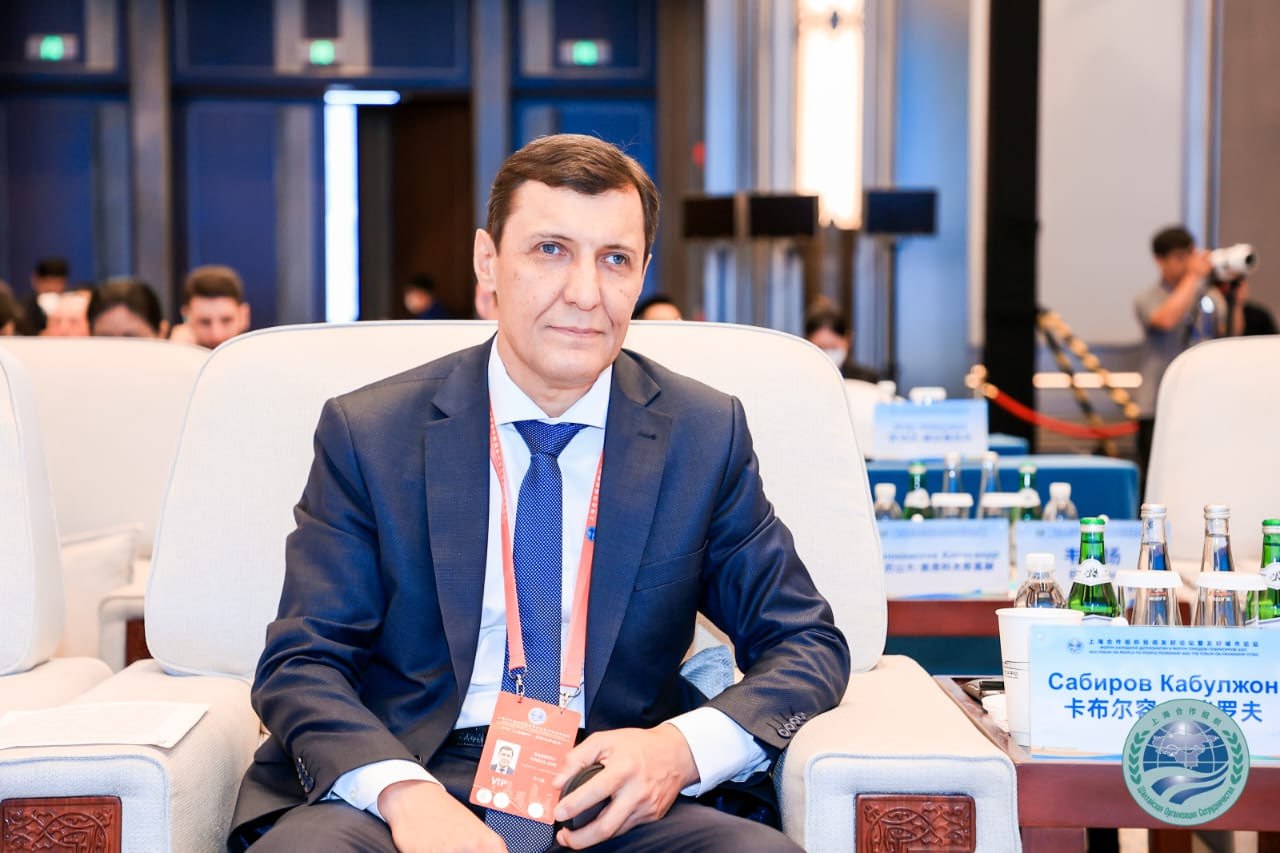
KabuljonSabirov (Sabirov), director of the SCO Center for Public Diplomacy in Uzbekistan
Editor's Note:
This year marks the 25th founding anniversary of the Shanghai Cooperation Organisation (SCO). The SCO Summit was held in Bishkek, the capital of Kyrgyzstan, from August 31 to September 1.
Chinese President Xi Jinping solemnly put forth the Global Governance Initiative (GGI) at the SCO Tianjin Summit held in September last year. Over a year, a series of practical measures have taken root, and the GGI is being translated from a Chinese proposal into international practice.
At the SCO Plus Meeting in Bishkek, President Xi pointed out that the SCO "takes it as its mission and responsibility to make the global governance system more just and equitable." How should we understand the substance and significance of the GGI in greater depth? How can the Shanghai Spirit be further strengthened to guide the reform and improvement of global governance?
In the 28th installment of the special series "Decoding the Book of Xi Jinping: The Governance of China," the Global Times, along with the People's Daily Overseas Edition, continues to invite Chinese and foreign scholars, translators of Xi's works, practitioners with firsthand experience and international readers to engage in in-depth discussions on the above-mentioned theme.
In the 28th article of the "Readers' Reflections" column, the Global Times (GT) talked to Kabuljon Sabirov (Sabirov), director of the SCO Center for Public Diplomacy in Uzbekistan.
GT: The 2026 SCO summit has just been successfully held in Bishkek, the capital of Kyrgyzstan. Against the backdrop of today's turbulent international landscape, how do you assess the outcomes of this summit? From Tianjin to Bishkek, where has the SCO cooperation agenda broken new ground?
Sabirov: The Bishkek Summit arrives at a defining moment for the SCO and for the international community at large. The global landscape is undergoing a profound transformation, shaped by geopolitical tensions, regional conflicts, economic uncertainty, climate change, cyber threats and disruptions to global supply chains. Against this complex backdrop, the summit reaffirms the SCO's enduring commitment to dialogue over confrontation, cooperation over division, and shared development over zero-sum rivalry.
This year's gathering carries particular weight, coinciding with the 25th anniversary of the organization's founding. It is far more than a commemorative occasion - it offers a moment to take stock of what the SCO has achieved and to chart its strategic course for the next quarter-century. The passage from Tianjin Summit to Bishkek Summit embodies continuity and steady progress in implementing the initiatives member states have jointly embraced. At the same time, Bishkek marks a new stage in the SCO's evolution - its transformation from a platform for security dialogue into a mechanism capable of delivering tangible, measurable results for the peoples of the region.
The Tianjin Summit placed considerable emphasis on strengthening economic connectivity, digital transformation, transport corridors, green development and financial cooperation. The Bishkek Summit has built on these foundations by sharpening the focus on practical implementation and institutional coordination.
Equally important is the deepening of humanitarian cooperation. Education, culture, tourism, youth and people-to-people exchanges are increasingly recognized as essential pillars of regional stability - a reflection of the understanding that lasting security cannot be built through political or military instruments alone, but must also rest on mutual trust between societies.For its part, our center sees its mission right here - in direct, genuine connections between people, which ultimately make inter-state partnerships sustainable rather than merely situational.
GT: In the face of certain countries' push for "decoupling and breaking chains" and bloc confrontation, the SCO has stayed with an institutional design of consensus, non-targeting of third parties, and regard for every party's interests. How does that differ in essence from international mechanisms marked by exclusivity and hegemonic overtones? What demonstrative significance do you see in the SCO's development for improving global governance and building a more just and equitable international order?
Sabirov: Since its inception, the SCO has been fundamentally different from closed, bloc-style organizations. The equal status of all member states - from the largest powers to the smaller Central Asian states - is enshrined in very mechanism of decision-making: consensus, rather than weighted voting, and not targeting of third parties. The SCO does not, as a matter of principle, take a stance against third parties. This approach has allowed it to grow into an organization uniting a significant proportion of the world's population.
This is borne out in practice: SCO membership and the chairmanship are built on an equal footing, and the chairmanship rotates annually from one member state to another, regardless of the country's size. In recent years alone, Uzbekistan, India, Kazakhstan, China and Kyrgyzstan have successively held the rotating chairmanship. Every country, regardless of its economic weight, has an equal say when decisions are taken by consensus.
Chinese President Xi Jinping proposed the Global Governance Initiative (GGI) when chairing the "SCO Plus" Meeting in Tianjin in September 2025. He highlighted five principles of the GGI - adhering to sovereign equality, abiding by international rule of law, practicing multilateralism, advocating the people-centered approach, and focusing on taking real actions.
The 2026 SCO Summit in Bishkek was a relay of the Tianjin agenda. The institutional design - non-targeting of third parties and regard for every party's interests - has not changed. The meeting signaled that, after membership expansion, the organization is still choosing to widen the table rather than narrow the door. Uzbekistan shares and consistently promotes this approach, and has called for efforts to transform the organization into a platform for cooperation with the entire Global South, rather than a closed club.
The SCO model demonstrates that a multilateral platform can be built on equal representation for every participant. The SCO's practice also demonstrates that regional integration can expand, deepen economic interdependence and strengthen security without being directed against anyone. This is a working example of fair and rational global governance and a concrete contribution to a more just architecture of international relations.
GT: In the article "Carry Forward the Shanghai Spirit and Build an SCO Community with a Shared Future" included in the fifth volume of Xi Jinping: The Governance of China, he said, "at the forefront of this trend is the SCO, upholding this very concept and the Shanghai Spirit to build an SCO community with a shared future." How do you understand the Shanghai Spirit? In your view, how has the Shanghai Spirit enabled the SCO to become a multilateral platform for equal participation and mutual benefit among its members?
Sabirov: The concepts of a health community, a security community, a development community and a cultural community within the framework of the SCO is a natural continuation of the Shanghai Spirit - mutual trust, mutual benefit, equality, consultation, respect for diversity of civilizations and pursuit of common development - upon which the organization has been built for a quarter of a century. This logic has allowed the SCO to move far beyond its original, predominantly counter-terrorism agenda, into a pattern of comprehensive governance that gives equal weight to security, development and people-to-people ties. This year marks the 25th anniversary of SCO, a moment that underscores the enduring relevance of the Shanghai Spirit.
Uzbekistan's practice of the Shanghai Spirit has never stopped at statements, and the concept ultimately has to land in contact between peoples. Exchanges between the peoples of Uzbekistan and China are especially direct and lively under the SCO framework. People-to-people diplomacy between the two countries keeps going deeper and more practical, and cultural and humanitarian ties have grown closer through student exchanges, the Confucius Institutes in Tashkent and Samarkand, and regular Culture Days.
GT:In the article "Build a Stronger Shanghai Cooperation Organisation" included in the fourth volume of Xi Jinping: The Governance of China, he said, "we need to strengthen complementarity between the Belt and Road Initiative (BRI) and the development strategies of SCO countries, and with regional cooperation initiatives such as the Eurasian Economic Union." The BRI has been deeply aligned with the SCO's development strategy. In your view, how has that alignment raised the level of practical cooperation within the organization?
Sabirov: The alignment of the BRI with the SCO's agenda is not merely declarative - it is underpinned by specific projects that are already underway. Take the BRI flagship project, China-Kyrgyzstan-Uzbekistan railway, as an example. The project was formally launched in December 2024, and construction of its key controlling works began in 2025. Once completed, it will create favorable conditions for Central Asian countries to better connect with the Trans-Caspian and southward corridors to the sea, and markedly boost regional connectivity, prosperity and stability.
The Tianjin Summit explicitly supported aligning the BRI with the development of the Eurasian Economic Union. The Bishkek Summit stressed further deepening cooperation in transport, including the use of the transit potential of SCO member states, the creation of new and modernization of existing road and rail routes, as well as multimodal transport corridors and logistics center. Connectivity is moving from a map of proposed routes toward arrangements that can be executed and delivered.
Over the past decade, the joint construction of the BRI has brought together around two-thirds of the world's countries. Against a backdrop of increasing fragmentation in global trade and disruptions in supply chains, such interconnectedness takes on not merely symbolic but strategic significance: It turns Central Asia's long-standing geographic handicap - its distance from seaports - into a potential advantage. And Central Asia is becoming a fully-fledged link in Eurasian connectivity and is gaining additional resilience in the face of global economic uncertainty.
GT: As changes unseen in a century gather pace, instability and uncertainty in the international and regional landscape have grown markedly. Geopolitical conflicts flare repeatedly, trade protectionism keeps rising, and the global governance deficit is widening. Facing this complex and severe external environment, how, in your view, should the SCO better use the strengths of a regional multilateral mechanism to meet traditional and non-traditional security challenges?
Sabirov: Today's understanding of security extends far beyond military threats and border protection. Alongside terrorism, extremism and separatism, the SCO must contend with newer challenges - cybercrime, disinformation, climate change, pandemics, food and water insecurity and transnational organized crime. These threats are deeply interconnected and demand coordinated regional responses. The SCO's real strength lies in its ability to bring together countries with different political systems, cultures, and development models around shared interests and a common responsibility for regional stability.
On both traditional and non-traditional security challenges, the SCO is gradually putting in place a fuller set of security infrastructure. After the relevant agreements were signed at the Tianjin Summit, the Bishkek Summit adopted the regulations on the SCO Universal Centre for Countering Security Challenges and Threats and the Executive Committee of the SCO Anti-Drug Centre, moving comprehensive security and counter-narcotics work toward standing institutions. Information security and transnational organized crime have also entered the outcome documents.
Economic cooperation is gathering pace at the same time. Under the strategic guidance of head-of-state diplomacy, China's economic and trade ties with the Central Asian countries delivered notable results in 2025: two-way goods trade crossed the $100 billion mark for the first time, reaching $106.3 billion, and China has become each of those countries' largest trading partner.
RELATED ARTICLES