IN-DEPTH / IN-DEPTH
Scholars’ Perspectives: SCO principles, achievements offer new paradigm for global governance: chief expert
By Zhang Han and Published: Sep 11, 2026 01:14 AM

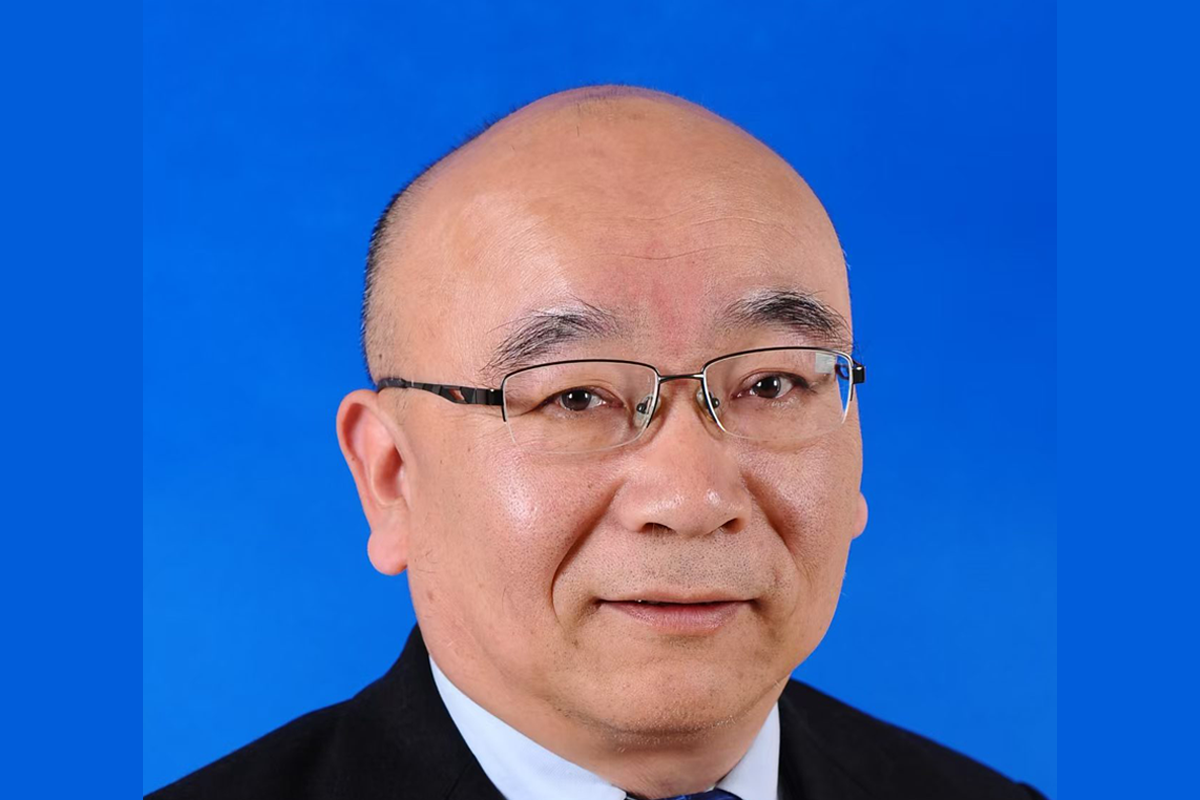
Li Xin, chief expert at China National Institute for SCO International Exchange and Judicial Cooperation Photo: Courtesy of Li Xin
Editor's Note:
This year marks the 25th founding anniversary of the Shanghai Cooperation Organisation (SCO). The SCO Summit was held in Bishkek, the capital of Kyrgyzstan, from August 31 to September 1.
Chinese President Xi Jinping solemnly put forth the Global Governance Initiative (GGI) at the SCO Tianjin Summit held in September last year. Over a year, a series of practical measures have taken root, and the GGI is being translated from a Chinese proposal into international practice.
At the SCO Plus Meeting in Bishkek, President Xi pointed out that the SCO "takes it as its mission and responsibility to make the global governance system more just and equitable." How should we understand the substance and significance of the GGI in greater depth? How can the "Shanghai Spirit" be further strengthened to guide the reform and improvement of global governance?
In the 26th article of the "Scholars' Perspectives" column, Li Xin, chief expert at China National Institute for SCO International Exchange and Judicial Cooperation, elaborated on how the Shanghai Spirit and SCO principles have contributed to innovation in global governance models.
Global Times: Over the past 25 years, the SCO has pioneered and has since followed invariably the Shanghai Spirit of mutual trust, mutual benefit, equality, consultation, respect for diversity of civilizations, and pursuit of common development. It has found the right way of coexistence featuring non-alliance, non-confrontation, and not targeting any third party. It has grown into a new type of regional cooperation organization with the largest land area and population and enormous development potential. What do you see as the most important changes and most valuable lessons of the SCO over the past 25 years?
Li: The SCO, through its principles and achievements, has offered valuable experience and a new paradigm for global governance. First, adhering to the Shanghai Spirit, the SCO rejects the Cold War mentality and bloc confrontation and stresses resolving differences through dialogue and consultation, setting a paradigm for a new type of international relations and serving as a demonstration zone for advancing the Global Governance Initiative.
Second, committed to the vision of common, comprehensive, cooperative, and sustainable security, the Organization has grown into an important platform for implementing the Global Security Initiative.
Third, as a priority region for advancing the Global Development Initiative, the SCO boosts economic development and social prosperity, promotes in-depth practical cooperation among member states, advances high-quality Belt and Road cooperation, and facilitates regional economic integration and connectivity.
Fourth, upholding the vision of equality, mutual learning, dialogue, and inclusiveness between civilizations, the SCO advocates the common values of humanity, while respecting the diversity of civilizations and cultures, strengthens international people-to-people and cultural exchanges, and faithfully practices the Global Civilization Initiative.
GT: The Tianjin Summit last year marked an institutional upgrade for the SCO. Building on that, how do you view the outcomes and highlights of the recent Bishkek Summit? What metrics do you believe deserve the closest attention for the SCO's development over the next decade?
Li: Over the past 25 years, the SCO family has continued to expand and grow. Its scope of cooperation has gradually broadened from security cooperation alone to trade, investment, science and technology, energy, finance, transport, people-to-people exchanges, and many other fields. The focus of cooperation has shifted from the quantity of projects to higher quality, including boosting the implementation efficiency, coordination capacity, and risk response capabilities of existing mechanisms. This captures the essence of President Xi's call for "higher-quality development of the SCO."
To achieve this goal, institutional development holds the key. From Tianjin to Bishkek, the SCO has taken important strides in institutional building. Measures included adopting the Protocol on Amendments and Additions to the SCO Charter, establishing the Universal Center for Countering Security Threats and Challenges and the Anti-drug Center as permanent bodies of the SCO, in response to regional security realities.
The Organization merged the statuses of SCO "observer states" and "dialogue partners" into a single category of "SCO Partners," in keeping with the new "SCO+" model. Granting official working language status to English addresses the pressing needs arising from the SCO's expansion and people-to-people bonds through cultural exchanges.
This demonstrates that, responding to its internal development needs and shifts in the international landscape, the SCO has embarked on a process to comprehensively modernize its operational mechanisms, while refining its treaty and legal foundation as well as cross-field cooperation frameworks. Building on consensus, cooperation across all areas is shifting toward practical collaboration, with rules, action guidelines, and roadmaps being formulated.
The institutional upgrade suggests growing capacity to implement the consensus and decisions of state leaders and deliver public services. Going forward, the effectiveness of SCO cooperation will be judged not by how many statements are issued, documents signed, or institutions established, but by the effective execution and delivery of those documents.
GT: The SCO is a major international organization co-founded by China and named after a Chinese city. Over the past 25 years, how has China's role within the SCO evolved? Against the backdrop of the collective rise of the Global South, what unique contributions have China's propositions and Chinese wisdom made?
Li: China has made robust contributions to SCO development. Over the past 25 years, China has played an active leading and driving role in the SCO through diverse approaches and in multiple capacities. China's propositions and wisdom have delivered unique contributions to the rise of the Global South and the reform of the global governance system.
First, China has spearheaded conceptual guidance. It initiated and faithfully practiced the Shanghai Spirit, while the Global Governance Initiative has endowed the Shanghai Spirit with new connotations of the times. The SCO has grown into a model for building a paradigm for a new type of international relations by abandoning the Cold War mentality and zero-sum games and serves as a cooperation demonstration zone for implementing the four global initiatives and building a community with a shared future for humanity.
China pioneered the new security vision. It promotes regional security cooperation by jointly combating common security threats such as the three evil forces, drug trafficking, and transnational crimes, and helps foster a reliable new security architecture for Eurasia.
China acts as an active promoter of practical cooperation and a key engine for regional development and prosperity. It was the first to put forward the vision of establishing an SCO free trade zone and an SCO development bank. The Belt and Road Initiative was first proposed and first actively responded to and implemented among SCO member states. Enhanced connectivity has expanded trade and investment and advanced regional economic integration.
Also, in advancing people-to-people exchanges and connectivity, China is an active promoter of mutual learning between civilizations.
Rooted in and committed to the Global South, the SCO serves as a vital pillar of South-South cooperation. China's propositions and wisdom within the SCO have galvanized the steady growth and expansion of the Global South. Taking the SCO as a practical model, China has facilitated profound shifts in the international balance of power and advanced reform toward a more just and effective global governance system, rendering the trend of world multipolarity irreversible.
GT: The shared concern of SCO member states has expanded from traditional security to development, security, and modernization. Does this mean that the logic of SCO cooperation is evolving? Faced with the "small yard, high fence" and "decoupling" pushed by some countries, as well as the rising trend of securitization of economic issues, can the SCO serve as an important platform for its members to jointly tackle risks while maintaining autonomy over their development paths — and if so, how?
Li: Guided by the Shanghai Spirit, cooperation among SCO member states has gradually expanded from border security to all-round sustainable security, and from security cooperation to comprehensive economic cooperation covering trade, investment, and finance, cooperation on sustainable development and modernization, as well as cultural exchanges and mutual learning between civilizations. The SCO has pioneered a new type of regional cooperation model featuring neighboring countries' coexistence, non-alliance, non-confrontation, and not targeting any third party.
Through the SCO, major powers, neighboring states, and countries of all sizes together built a demonstration zone for practicing the four major initiatives proposed by China, and evolved into an important platform for all member states to jointly defuse risks while safeguarding the independence of their development paths.
This platform offers an SCO solution to the evolving profound changes unseen in a century. It contributes SCO strength to boosting the prosperity and common development of the Eurasian region, advancing sustainable global economic growth, and safeguarding the security of global industrial and supply chains. It also galvanizes concerted SCO actions to oppose hegemony, unilateralism, and protectionism, reject the law of the jungle, the Cold War mentality, and long-arm jurisdiction, and steer the global governance system toward greater fairness and rationality.
RELATED ARTICLES