LDP-backed Koja’s Okinawa win may accelerate Japan’s southwestern military buildup, deepen local divisions
By Published: Sep 14, 2026 01:18 PM

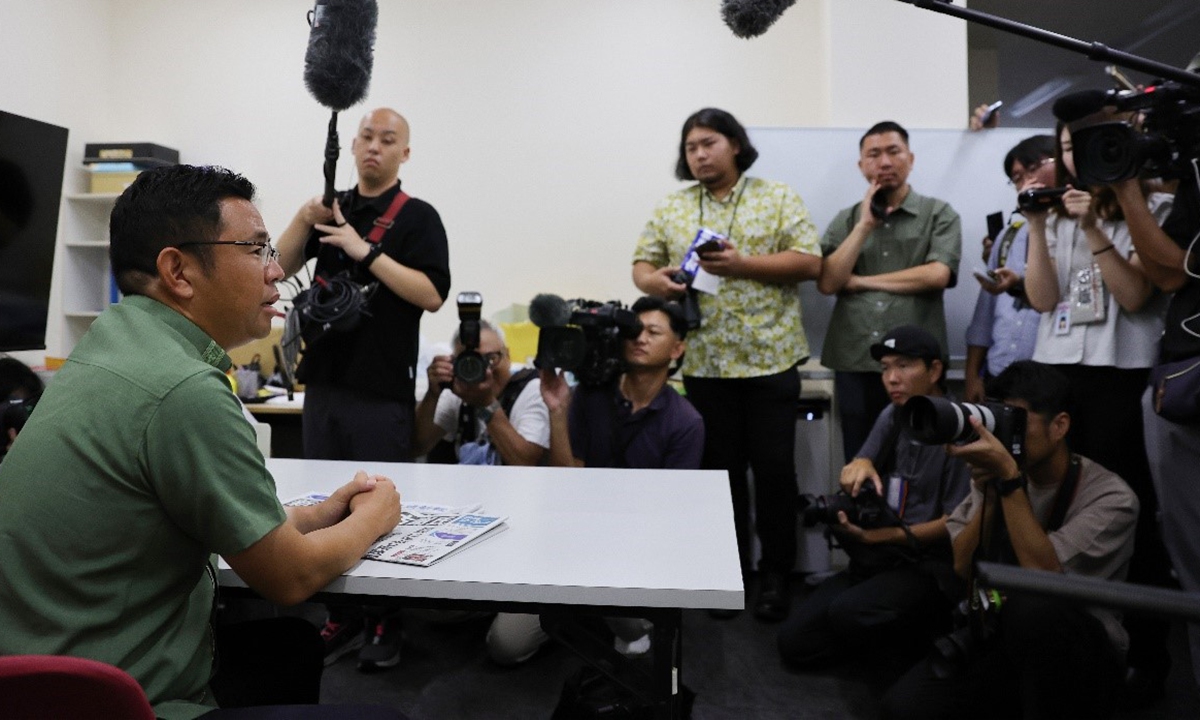
Genta Koja (left) answers questions from the press in Naha City, Okinawa Prefecture on September 14, 2026, following his victory in the Okinawa gubernatorial election held the previous day. Photo: VCG
Genta Koja, the candidate backed by the Liberal Democratic Party (LDP), won Sunday's gubernatorial election in the prefecture of Okinawa, Japanese media reported. The election result may boost Tokyo's efforts to expand defense deployments in Okinawa and further erode Japan's traditional exclusively defense-oriented posture, Chinese experts said. This could also deepen local divisions over US military presence there, while Japan's accelerating military buildup across the southwestern islands warrants vigilance from neighboring countries.Koja, the 42-year-old former vice mayor of Naha, Okinawa's capital, was up against 66-year-old Denny Tamaki, who had sought a third term as Okinawa governor, and four other candidates. Koja takes a position accepting the relocation of the US Marine Corps' Futenma air base in Ginowan to the Henoko district in Nago, another city in Okinawa, according to the Japan Times.
Tamaki opposed the current relocation plan during his two four-year terms and has demanded that the base be moved outside of the prefecture, which still hosts the bulk of the facilities exclusively used by US Forces Japan, Kyodo News reported.
Koja's victory reflects some complex changes in Okinawan public sentiment. After years of opposition to base relocation, some voters may appear more willing to compromise on the issue in exchange for economic benefits, as economic concerns have gained greater prominence amid a weak yen, rising prices and fiscal pressures, Da Zhigang, a research fellow at the Institute of Northeast Asian Studies of the Heilongjiang Academy of Social Sciences, told the Global Times.
Koja was endorsed by the LDP, which is the ruling party in Japanese politics, and its junior coalition partner, the Japan Innovation Party, as well as the Democratic Party for the People, Sanseito, the Conservative Party of Japan and Komeito's Okinawa prefectural chapter, according to a report from the Japan Times.
According to the Kyodo News, unlike in previous elections, the US military base relocation issue took a backseat to economic issues, and with legal battles with Tokyo over last year and almost no effective measures left for Okinawa to block the transfer, work to build a replacement facility continues.
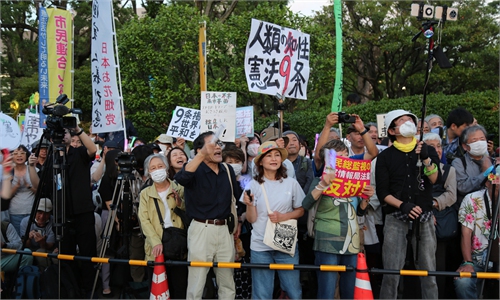
Tamaki also faced a structural disadvantage, with a local political coalition competing against several national parties. At the same time, the anti-base camp is aging, younger voters have become relatively more conservative, and groups such as All Okinawa have seen their influence decline, said Da.
However, even with Koja's victory, the issue of US military base relocation will continue to divide local society, while anti-base sentiment and grassroots activism are unlikely to disappear.
Da noted that there is also uncertainty surrounding Koja's goal of increasing residents' incomes. Given Japan's heavy reliance on government borrowing and debt refinancing, it remains unclear how much funding the Japanese government will ultimately allocate to Okinawa.
A report by the Mainichi Shimbun claimed that the result could boost the Japanese government's security policies, including strengthening defenses in the southwestern islands and enhancing Japan-US security cooperation.
Unlike Tamaki, who challenged Tokyo through political and legal means in an effort to prevent the prefecture from becoming a bridgehead for war, Koja has taken a more accommodating stance, which could make it easier for the Japanese government to advance military deployments in Okinawa, said Da.
Opposition from anti-base groups is likely to persist, however, and further military expansion could deepen local divisions, the expert said.
"This local election in Okinawa serves as a barometer, suggesting that conservative thinking, more assertive defense policies and increased military spending are being promoted among the public across Japanese society. This dangerous trend warrants close attention and heightened vigilance from neighboring countries," Da said.
RELATED ARTICLES