Seeking security common ground Illustration: Xia Qing/GT
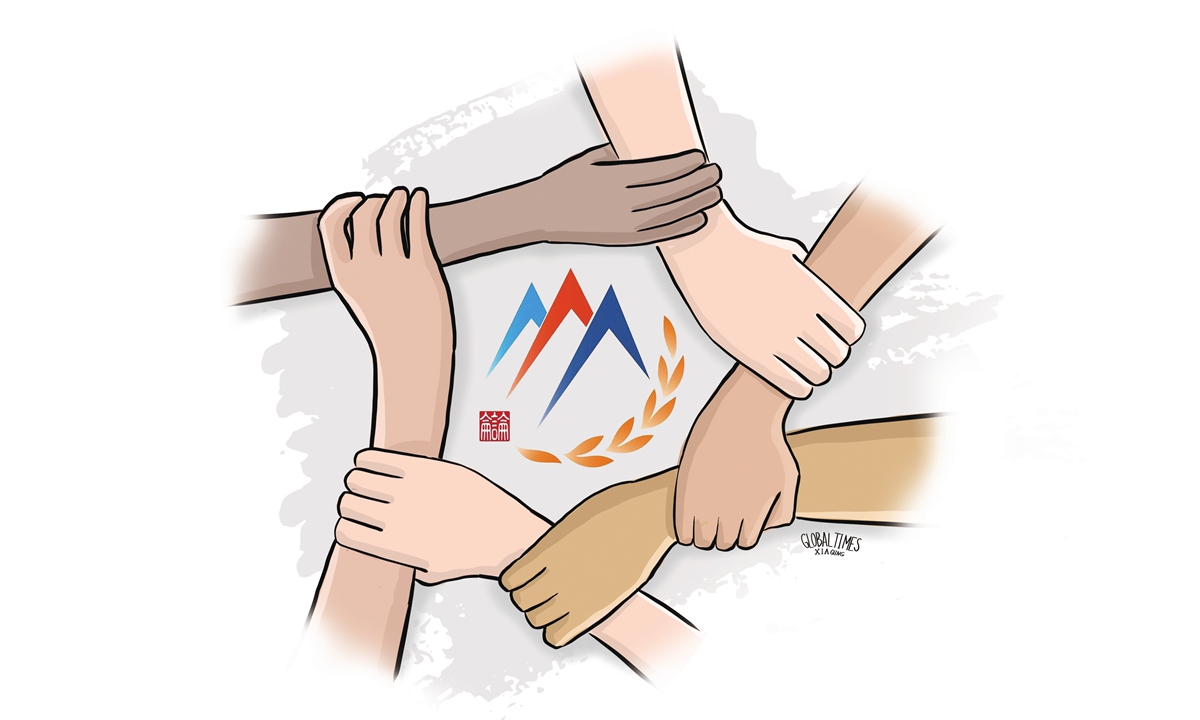
The 13th Beijing Xiangshan Forum (BXF) will be held from September 15 to 17 under the theme of "Build Consensus on Stability, Advance Security Governance Together." The gathering marks the forum's 20th anniversary. In two decades, it has grown from a biennial Track II think tank seminar into a Track 1.5 security dialogue that brings together more than 1,800 representatives from over 100 countries, regions and international organizations. More important than the scale is something that has become increasingly difficult to do: get people with different - even opposing - positions to sit down and finish what they want to say.International security dialogue today is splitting into two kinds of "products." One is good at turning anxiety into budgets, arms and alliance obligations. The other first lets disagreements be fully spoken, then looks for the lowest common interests that still truly exist. The BXF belongs to the latter. Its value is not that everyone agrees, but that people who disagree are still willing to sit at the same table.
I have attended the last three sessions since 2023. Three things have struck me most.
First, the people in the room keep getting more diverse. There are military and security officials, scholars from Asia, Europe, the Middle East, Africa and Latin America, and also top experts from mainstream Western think tanks. That Western think tanks show up is a sign that China's "home-court diplomacy" is drawing more international recognition. The BXF's biggest difference from Western-led security forums is that voices from the Global South are fully heard and have become the mainstream feature of the event. Putting people from different countries and different positions in the same hall is itself a rare security practice.
Second, the agenda keeps getting wider and does not dodge hard questions. From major-power relations, regional conflicts and maritime security, to the military use of emerging technologies and space security governance, the forum does not go out of its way to avoid the most contested issues. I have seen Chinese and American scholars clash over the Taiwan question, and heard a Philippine scholar speak about divergences between China and the Philippines. During one coffee break, I watched Israeli and Ukrainian representatives talk at length, then move through other rooms to explain their own positions and seek understanding. The BXF does not hide disagreements. It puts them on the table and lets different narratives meet.
Third, offstage, everyone is a friend. Sharp exchanges do not stop people from talking to each other. The hosts arrange many side events each year. Scholars who were arguing on stage may drink coffee together after the session. Officers, diplomats and researchers from different countries exchange name cards at coffee breaks, and talk about their societies, families and travels over meals and in corridors. Understanding is not the same as agreeing. But only if you first understand why the other side thinks as it does can you reduce miscalculation. The most important function of the BXF is to create the conditions in which consensus can form.
That is also why this year's theme matters. The world does not lack places to state positions, or mechanisms to strengthen deterrence, raise military spending and harden alliances. What is scarce is space for dialogue when strategic distrust is rising and regional conflicts drag on. Stability is not a static result. It is the ability to keep talking and manage risks even when disagreements and crises occur. The consensus the forum seeks is not that every country says the same thing. It is that, when views cannot be aligned, some lines are still not to be crossed lightly: Major-power competition must not slide into direct conflict; when regional crises occur, communication channels must be kept open; new technologies must not break free of rules; and one country's security cannot be built by endlessly squeezing the security space of others.
Bring the differences to the table, then work out the possible common ground, bit by bit. That is the public good the BXF has offered to this unstable world in the past 20 years.
The author is an associate professor at the School of International Studies of Nanjing University, and assistant director of the Collaborative Innovation Centre of South China Sea Studies at Nanjing University. opinion@globaltimes.com.cn.
RELATED ARTICLES