What to expect from Iranian FM's China visit amid shifting Middle East dynamics
Iran-US tensions, Strait of Hormuz, and Iran-Gulf dialogue likely to top agenda: Chinese analysts
By Published: Sep 15, 2026 10:20 PM

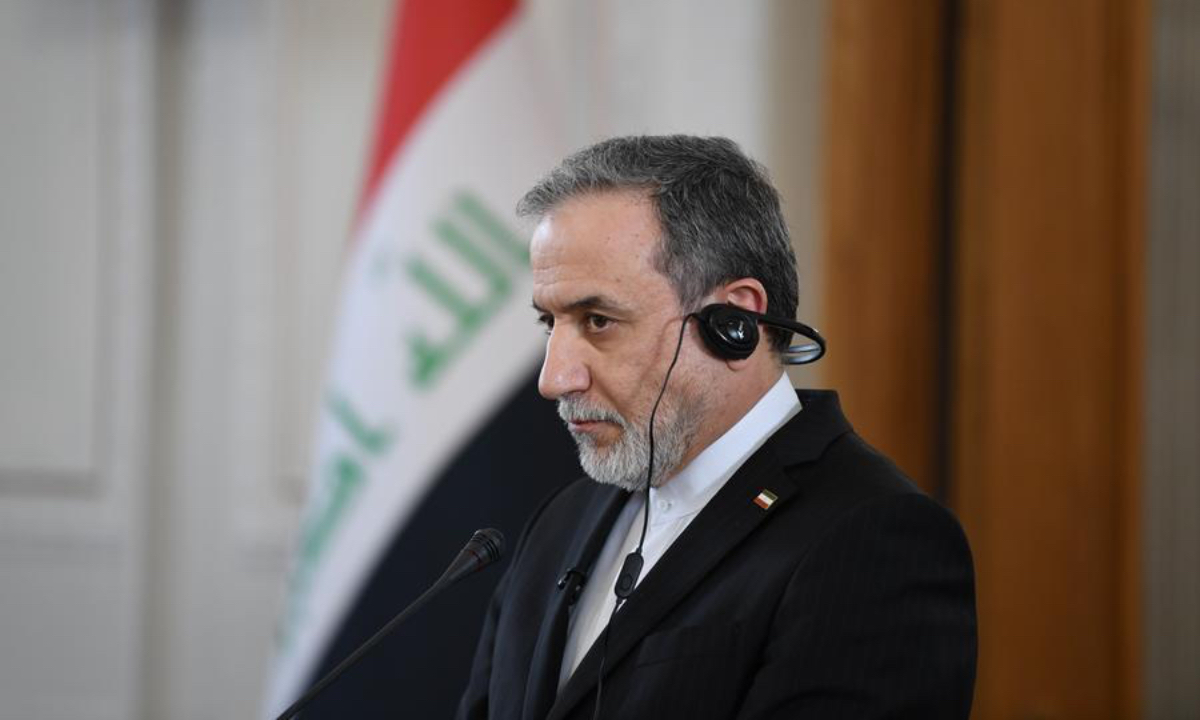
Iran's Foreign Minister Seyed Abbas Araghchi (R) attends a joint press conference in Tehran, Iran, Jan. 18, 2026. (Xinhua/Shadati)
Minister of Foreign Affairs of Iran Seyyed Abbas Araghchi will visit China on September 16, a Chinese foreign ministry spokesperson announced on Tuesday.
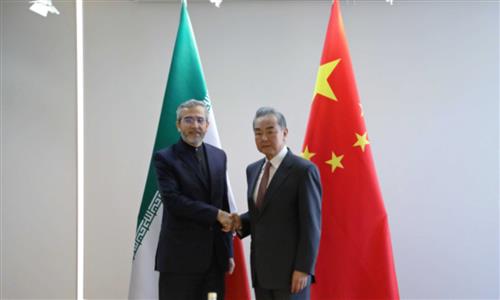
According to the spokesperson, Wang Yi, member of the Political Bureau of the Communist Party of China (CPC) Central Committee and Minister of Foreign Affairs, will hold talks with Araghchi.
As uncertainty again grows across the Gulf, Wednesday's talks will be closely watched for signals on how China and Iran view the next stage of diplomatic efforts - from Iran-US tensions and the Strait of Hormuz to Iran's relations with Gulf countries and the search for a more sustainable regional security framework, Chinese analysts reached by the Global Times said on Tuesday.
The visit comes only days after Wang and Araghchi met on the sidelines of the BRICS summit in New Delhi. According to Iran's semi-official Mehr News Agency, during the latest meeting, the two top diplomats exchanged their views on a host of issues, including bilateral ties, recent regional and international developments, as well as issues of mutual interest.
Meanwhile, efforts to resolve the Strait of Hormuz issue remain uncertain. An Iran-Oman understanding reached recently did not provide for the immediate reopening of the strategic waterway, according to Reuters on Saturday. Also, a meeting that had been scheduled for Monday in Oman between Iran and Gulf countries to discuss issues surrounding the strait was subsequently postponed, per another report by Reuters on Sunday.
Against this backdrop, the upcoming visit of Araghchi is expected to provide an opportunity for more focused bilateral communication, Liu Zhongmin, a professor at the Institute of Middle East Studies at Shanghai International Studies University, told the Global Times.
The intensive exchanges between the two sides reflect the need for China and Iran to maintain communication and exchange information amid the current situation in the Gulf and the Iran-US conflict, as well as the importance Iran attaches to its relations with China, as China has played an important role in facilitating improved relations between Iran and regional countries, most notably by helping facilitate the restoration of diplomatic relations between Iran and Saudi Arabia, Liu said.
The expert believed that two broad areas could be particularly important during the visit: promoting communication and coordination between Iran and Gulf countries, and exploring ways to push the current tensions in the Gulf, particularly those surrounding the Strait of Hormuz, toward negotiation and a political settlement.
China also has significant interests and concerns regarding the strategic waterway, making its security and stability issues of direct relevance to China, he noted.
The upcoming visit follows months of intensive communication between Wang and Araghchi that has closely tracked shifts in the Middle East situation.
According to an official release by the Chinese Foreign Ministry, previously in June, Araghchi briefed Wang on a first-phase memorandum of understanding reached between Iran and the US and expressed sincere gratitude to China for its positive role in advancing the negotiations and concluding the agreement.
Wang welcomed the MoU, saying that facts have proven that force and power politics cannot resolve disputes and that dialogue and negotiation represent the right path forward. He stressed that the priority going forward is for all parties to deliver earnestly on their commitments and fend off disturbances from all sides.
When Wang and Araghchi met again on the sidelines of the Shanghai Cooperation Organization foreign ministers' meeting in Kyrgyzstan in July, Wang expressed China's deep concern over renewed tensions in the Middle East and the Gulf, saying that progress achieved through dialogue should not be abandoned and that "the door to negotiations, once opened, should not be closed, and as long as there is hope for peace, it should not be given up," according to an official release by the Chinese Foreign Ministry.
Araghchi said at the time that Iran's willingness to negotiate remains unchanged and that Tehran did not want the conflict to continue, while expressing hope that China would continue playing an important role in helping ease regional tensions, the release said.
Qin Tian, deputy director of the Institute of Middle East Studies of China Institutes of Contemporary International Relations, told the Global Times that Araghchi is coming to Beijing with concrete expectations. Iran hopes China will continue to provide political and economic support, while Tehran is also aware that the current stop-and-start confrontation with the US is not conducive to its long-term interests and hopes China can play the role of a major country in helping find a way out of the current impasse in Iran-US relations.
Araghchi's latest visit can also be viewed in the context of China's vision for a new security architecture in the Middle East. The architecture is inclusive and supports regional countries in building a shared home featuring good-neighborliness, development, security, and cooperation, Qin said.
RELATED ARTICLES