China invites global partners to deepen fusion engineering cooperation toward practical applications
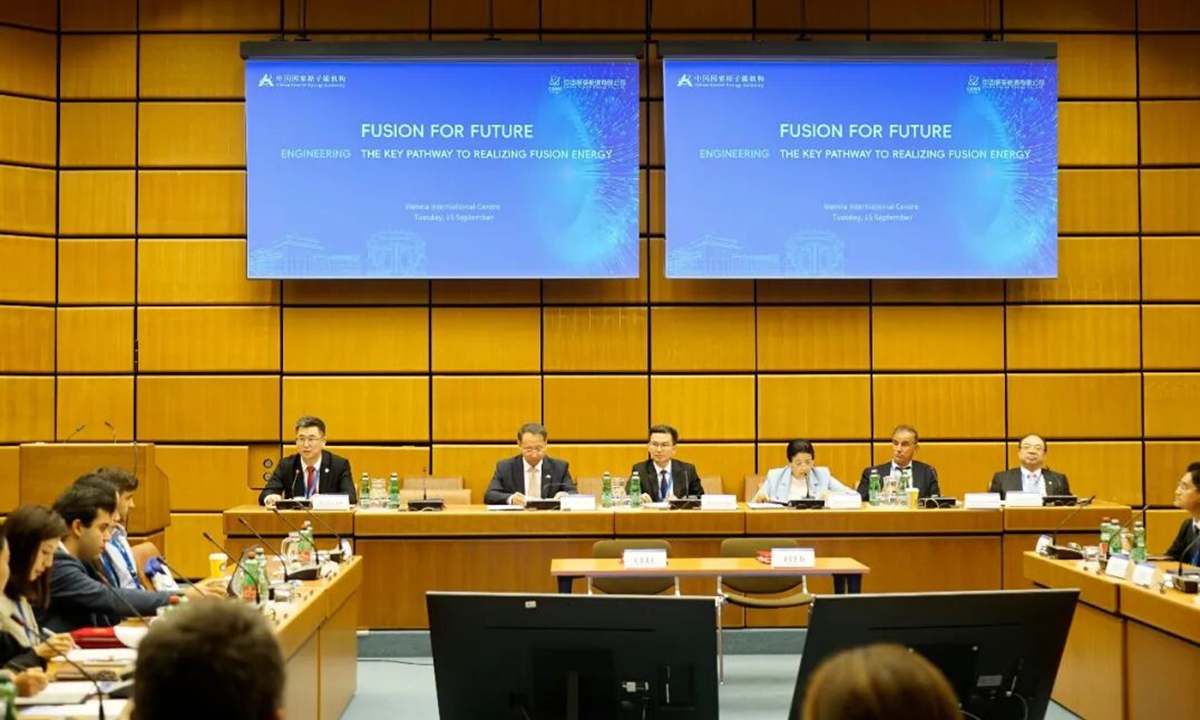
Photo: Official WeChat account of China National Nuclear Corporation (CNNC)
The China National Nuclear Corporation (CNNC) has extended an invitation to the global fusion community to deepen cooperation on fusion engineering, calling for a new international cooperation platform to help move fusion energy from scientific research toward engineering applications.The proposal was made at a side event themed "Fusion for Future: Engineering the Key Pathway to Realizing Fusion Energy," hosted by CNNC on Tuesday during the 70th International Atomic Energy Agency (IAEA) General Conference, according to CNNC.
"Fusion is a cause for all humanity, engineering is a common challenge, and cooperation is the only answer," CNNC said, calling on the global fusion community to work together to build a new platform for international cooperation on fusion engineering.
The event was attended by Najat Mokhtar, IAEA Deputy Director General; Pietro Barabaschi, Director-General of the ITER Organization; Liu Guanghui, deputy permanent representative of China to the IAEA; Huang Ping, secretary general of the China Atomic Energy Authority; and Zhang Tao, general manager of CNNC. Representatives from institutions including the National Nuclear Center of Kazakhstan, the Thailand Institute of Nuclear Technology (TINT), and Spain's Nuclear Safety Council also attended.
International participants spoke highly of China's recent progress in fusion research, engineering technologies, and international cooperation.
They agreed that it is critical to connect fundamental research, technological development, engineering validation, and industrial collaboration when moving fusion energy from scientific research toward engineering applications.
They also called for stronger international cooperation and greater coordination of resources to provide sustained support for the future development of fusion energy.
Zhang said engineering is the essential bridge between scientific exploration of fusion energy and its eventual application for the benefit of society.
CNNC, a major participant in China's three-step nuclear energy strategy of developing thermal reactors, fast reactors, and fusion reactors, said it's willing to work with global partners in key technology development, engineering practice, and talent training, Zhang said.
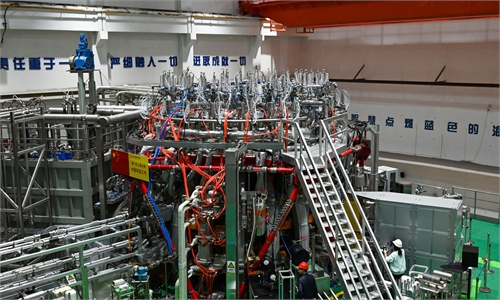
During the event, CNNC released a report on the latest progress of HL-3 and its joint experimental program, while opening applications to international partners seeking to participate in experiments.
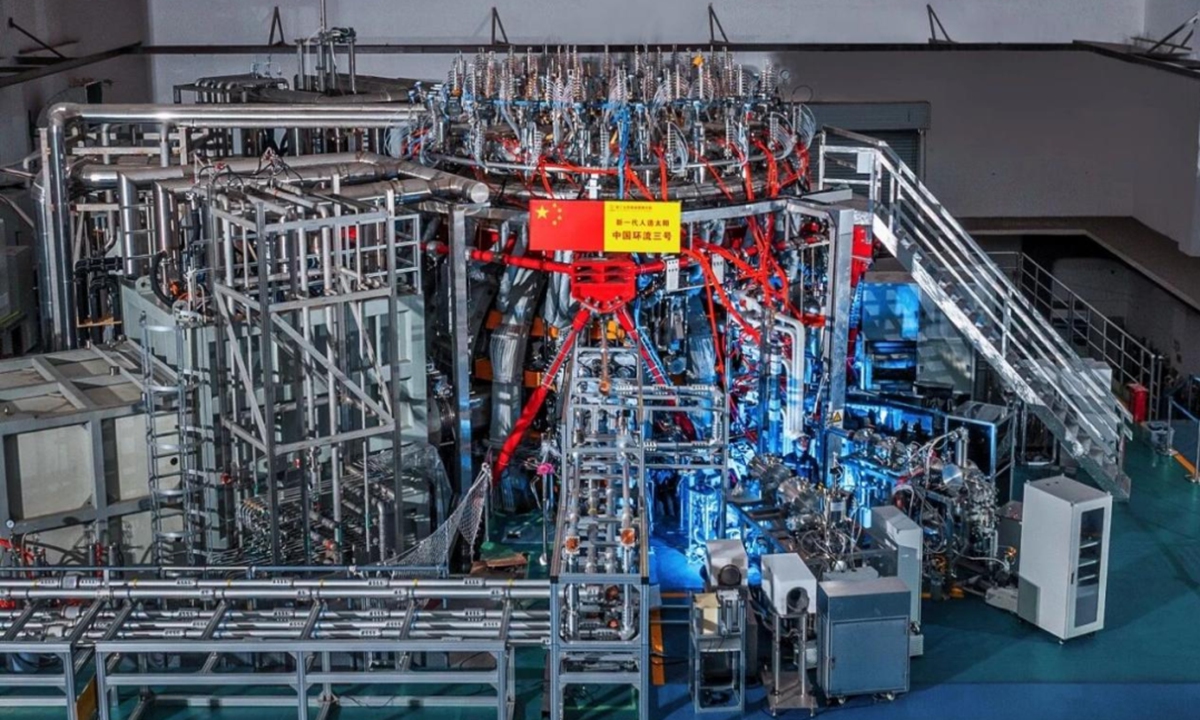
The HL-3, a fusion experimental device at the international advanced level, independently designed and constructed by China's CNNC. Photo: Official WeChat account of China National Nuclear Corporation (CNNC)
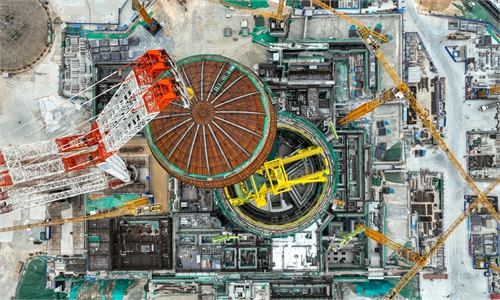
CNNC also released updates on the construction and interim achievements of the world's first fusion energy research and training collaborating center and introduced a proposed "world fusion engineering alliance" as well as the already established Controlled Fusion Innovation Consortium.
China Fusion Energy Co Ltd (CFEC) and ITER signed a memorandum of cooperation, while CNNC's Southwestern Institute of Physics (SWIP) and TINT signed a separate memorandum. The agreements are expected to further deepen cooperation in fusion engineering technologies, scientific research, and international exchanges.
Fusion energy has drawn growing international attention as countries seek to address climate change and strengthen energy security, and is widely regarded as a promising source of future energy.
However, moving fusion energy from the laboratory toward practical use requires engineering development. Fusion engineering is one of the most complex systems-engineering challenges ever undertaken, and its scale and difficulty go beyond what any single country or institution can tackle alone.
Global fusion development is now at a critical stage of moving from physics experiments toward engineering applications. This transition requires not only scientific breakthroughs and technological accumulation, but also broader international consensus on governance frameworks, standards, and cooperation mechanisms.
China has long attached great importance to the development of fusion energy. The country's 15th Five-Year Plan (2026-2030) lists hydrogen energy and nuclear fusion energy among future industries, while the Atomic Energy Law, which took effect in January, encourages and supports research and technological development in nuclear fusion.
As a major force in China's nuclear science and technology industry, CNNC has capabilities spanning basic research, engineering construction, and industrial applications, and is working to advance fusion energy toward engineering application.
China has also worked with the IAEA to host the 30th Fusion Energy Conference, established the world's first fusion energy research and training collaborating center, and opened 12 nuclear research facilities, including fusion research facilities, to international partners.
Global Times
RELATED ARTICLES