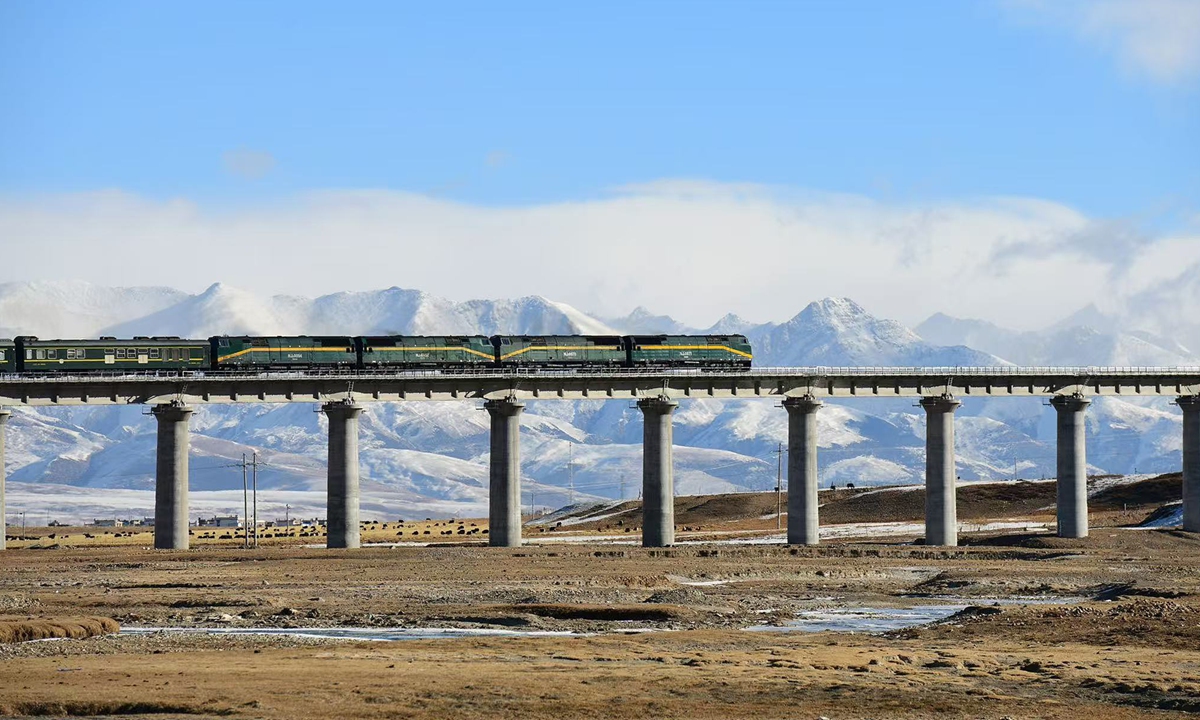
A train crosses a bridge in Damxung County, Southwest China's Xizang Autonomous Region, on July 1, 2026. Photo: VCG
Two decades into full operation, the Qinghai-Xizang Railway is undergoing another change. Artificial intelligence is helping screen equipment faults and monitor risks along remote tracks, while preparations for electrification are advancing.The railway that first brought rail access to Xizang now handles everyday journeys and deliveries across the plateau. Its 20th anniversary offers a chance to look at both the technology supporting those services and the railway workers whose jobs have changed alongside it.
The 1,956-kilometer line links Xining in Northwest China's Qinghai Province with Lhasa in Southwest China's Xizang Autonomous Region. It has transported more than 104 million passenger trips and dispatched over 824 million metric tons of freight over the past two decades, the Xinhua News Agency reported, citing the railway operator. Those services support personnel exchanges, supplies and industrial activity in both regions.
AI is becoming part of the railway's maintenance work. Systems deployed at key flood-prone locations can identify water covering tracks, slope failures and objects obstructing the railway, then send warnings to staff. Automated freight-train inspection systems also screen large numbers of vehicle images for possible faults, reducing the volume that workers must examine manually, according to the news outlet china.com.cn.
The report described remote management of dozens of unstaffed stations on the Golmud-Lhasa section, supported by intelligent dispatching and AI video analysis. However, human checks remain essential: Images are initially screened by AI and then reviewed by railway workers. The systems assist staff rather than remove their responsibility for assessing faults and responding to emergencies.
Monitoring extends beneath the tracks. Xinhua reported that more than 200 sensors cover about 544 kilometers of the railway, tracking changes in permafrost and helping identify potential risks. Maintaining stable tracks across frozen ground remains a continuing task, long after construction of the line was completed.

Passengers look out of a train window in Xigaze, Xizang Autonomous Region. Photo: VCG
Another transition is being prepared through the planned electrification of the Golmud-Lhasa section. Construction of supporting external power infrastructure began on March 31, the Xizang Daily reported. The work will provide the power supply needed for the railway's conversion, following earlier improvements to tracks, stations and freight facilities.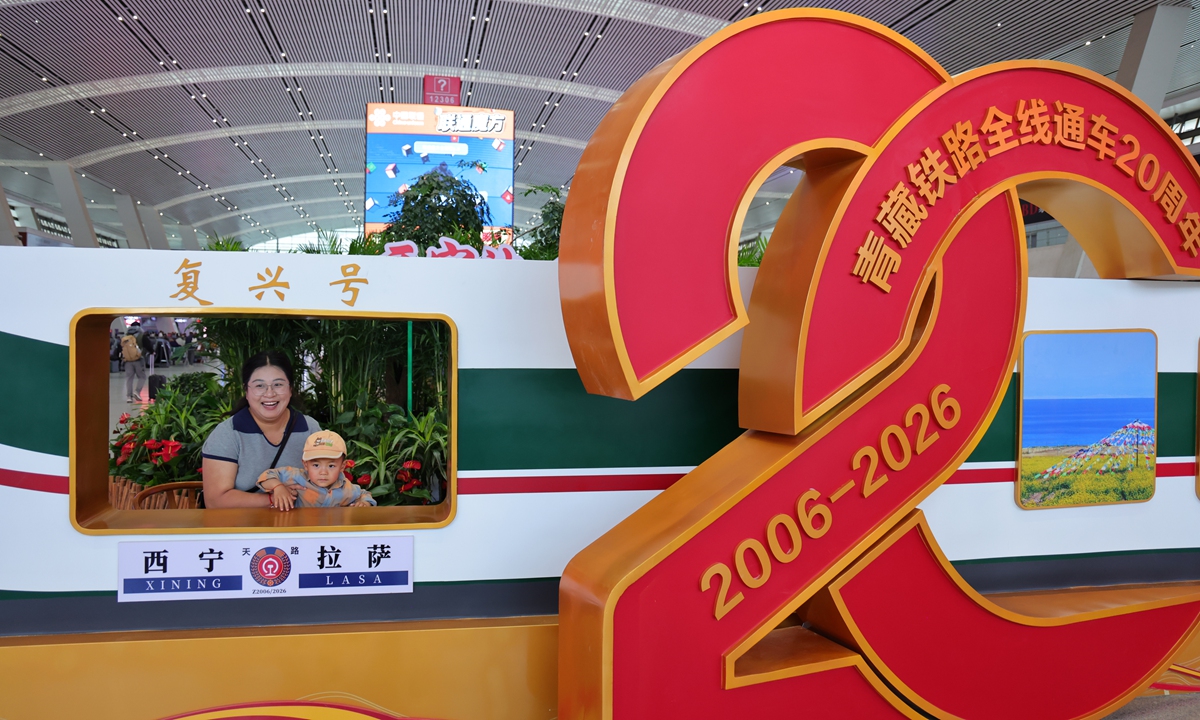
Tourists pose for photos in the waiting hall of Xining Railway Station in Northwest China's Qinghai Province on June 24, 2026. Photo: VCG
Anniversary activities have meanwhile brought passengers and railway employees together. The Lhasa Railway Station held celebrations on June 28, also marking five years of operation of the Lhasa-Nyingchi Railway. A cultural program launched in Xining brought writers and artists to railway workplaces and communities to document changes along the route, the Xizang Daily reported.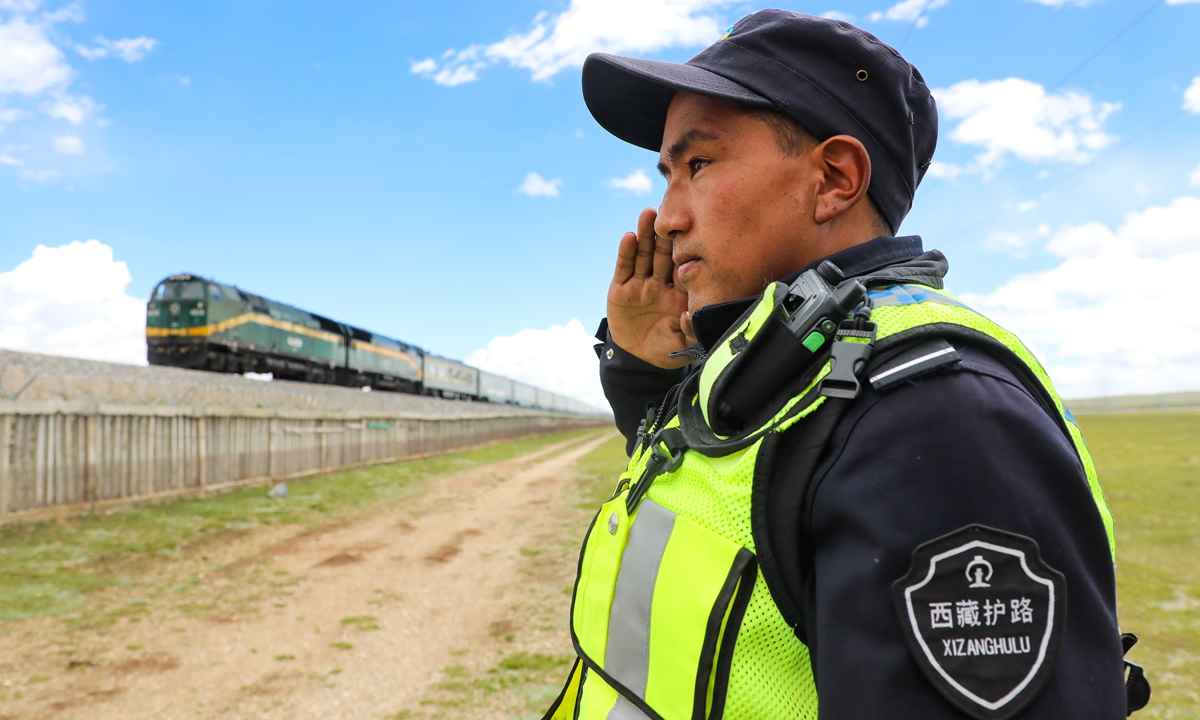
Railway patrol worker Baima salutes passengers aboard a Qinghai-Xizang Railway train in Nagqu, Xizang Autonomous Region, on June 15, 2026. Photo: VCG
The China Railway Qinghai-Xizang Group Co., Ltd. told the Global Times that passenger services on the Golmud-Lhasa section have increased from five train pairs in the early years to 17. The number of drivers has grown from 127 to more than 600. Onboard services and staff training have also developed as more trains and passengers use the route.Li Jianming, who drove the inaugural passenger train in 2006, helped prepare for its opening through more than 30 trial runs over eight months. He subsequently spent 15 years driving on the Golmud-Lhasa section, covering over 1.5 million kilometers. Since becoming an instructor in 2021, he has passed that experience to younger drivers.
For veteran crew member Zhou Haihong, the changes are visible inside the carriage. Staff now use digital terminals to check berth use, passenger needs and onboard water and power conditions. Trains also carry defibrillators, blood oxygen monitors and medical kits. Her account describes service moving "from experience to data" and "from reacting to problems to anticipating them."
Zhaxi Pengcuo, one of the railway's first Tibetan locomotive drivers, has witnessed changes from diesel locomotives to Fuxing bullet trains and from manual maintenance to intelligent detection. His next ambition is to reach his home region in western Xizang. "My greatest wish is to one day drive a train carrying passengers to Ngari in Xizang," he told the Global Times.

Local residents dance outside Amdo Railway Station in Xizang on June 27, 2026. Photo: VCG
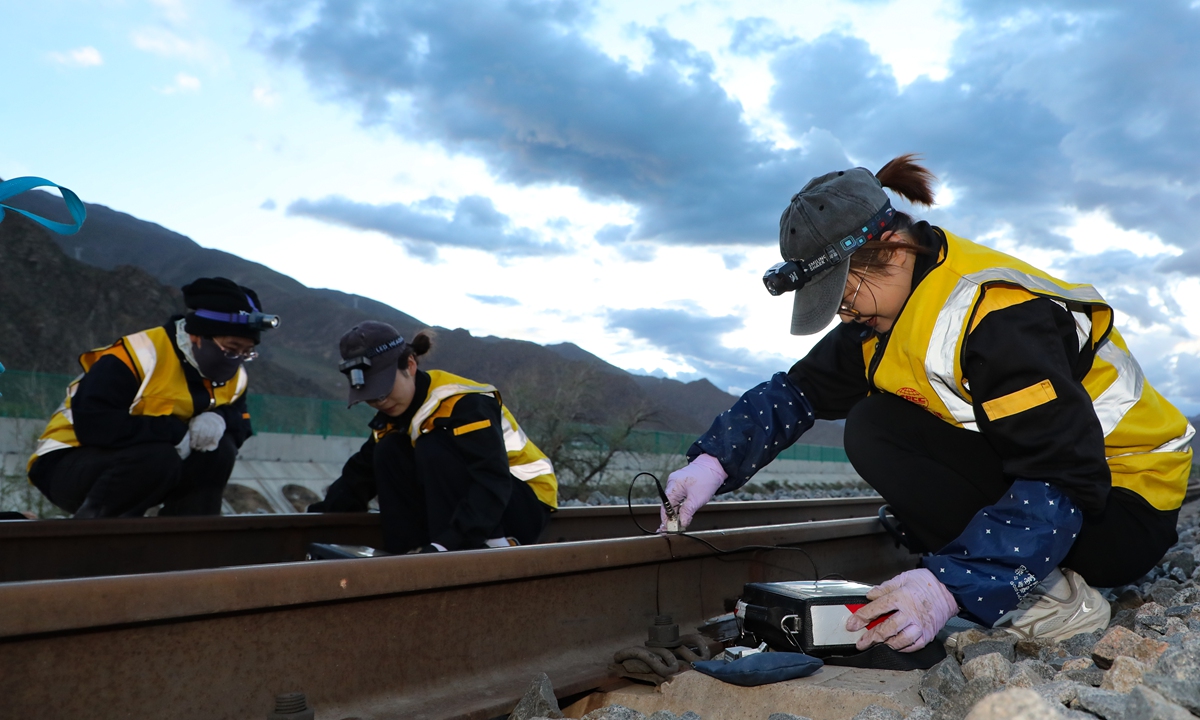
Members of an all-female rail inspection team from China Railway 12th Bureau Group's railway maintenance company inspect rail welds in Lhasa, Xizang Autonomous Region, on June 22, 2026. Photo: VCG
Fan Wei contributed to the story