Manila’s claim of standing by one-China policy while pursuing economic cooperation with Taiwan region may risk new friction with China, move to hurt itself: expert
By Published: Sep 21, 2026 01:09 PM

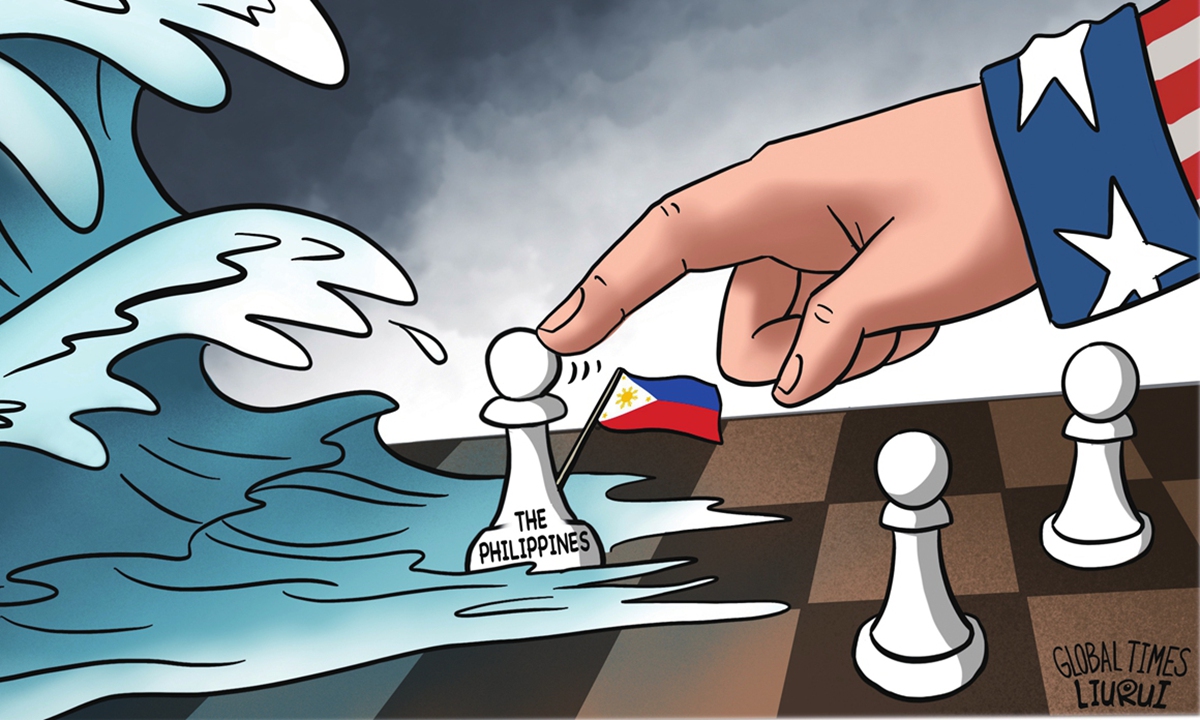
Illustration: Liu Rui/GT
The Philippine Department of Foreign Affairs claimed on Sunday that Manila is standing by its one-China policy but will also keep pursuing economic and cultural cooperation with island of Taiwan. Chinese experts said the Philippines' growing engagement with Taiwan regional authorities could add another source of friction to existing South China Sea issue. They warned that actions involving China's core interests could trigger China's firm countermeasures.
"The Philippines recognizes the Government of the People's Republic of China as the sole legal government of China. This policy remains consistent, clear and unchanged," the DFA said in a statement, referring to Manila's 1975 Joint Communiqué with Beijing, according to the Philippine Daily Inquirer.
It claimed, however, that the policy "does not preclude the Philippines from pursuing economic, cultural and functional cooperation with Taiwan."
The statement came after Lin Chia-lung, head of the so-called "foreign affairs" department of the Taiwan regional authorities, confirmed in a recent interview a plan to set up a "representative office" in the central Philippine province of Cebu, which he said would serve as a platform to deepen ties through the "Taiwan-Philippines economic corridor."
In response, Chinese Foreign Ministry spokesperson Guo Jiakun said on Wednesday that he would like to stress again that no matter how the Democratic Progressive Party (DPP) authorities collude with external forces to seek "diplomatic breakthroughs" and advance their separatist agenda in whatever form, such attempts will be all in vain and doomed to fail.
Guo warned that "we also urge the Philippine side to abide by the one-China principle with concrete actions, and refrain from taking any steps that could harm China-Philippines relations."
Philippine Defense Secretary Gilbert Teodoro Jr. claimed on Friday that Beijing should not interfere in how the Philippines implements that policy, the Philippine Daily Inquirer reported.
"We recognize the One China policy but how we implement it is none of their business," he claimed.
Some anti-China figures in the Philippines may believe that focusing solely on the South China Sea issue is producing diminishing political returns and has become less effective as a tool for exerting pressure on China. As a result, they may seek to create new points of friction by bringing Taiwan region-related issues into the picture, Ding Duo, director of the Research Center for International and Regional Issues at the National Institute for South China Sea Studies, told the Global Times.
Dai Fan, director of the Center for Philippine Studies at Jinan University, told the Global Times that prominent anti-China figures such as Teodoro are leveraging tensions between China and the Philippines and seeking political gains by posturing a tough stance toward Beijing while signaling alignment with US strategic interests.
Ding said the growing interactions between the island of Taiwan and the Philippines, as well as between the island of Taiwan and Japan, have been facilitated by what he described as US support, tacit approval and, to some extent, encouragement. He said Washington may seek to rely on its allies and partners to take actions related to Taiwan region as a way to pressure China while limiting its own direct involvement.
In February, Japan, the Philippines and the US held joint military drills near the Bashi Channel, the waterway between the Philippines and the island of Taiwan, for the first time, with the exercises running from February 20 to 26, according to the Japan Times.
Later, Zhai Shichen, a spokesperson for the People's Liberation Army Southern Theater Command, criticized the Philippines for disrupting peace and stability in the South China Sea.
Zhai said the navy of the theater command conducted a routine patrol in the South China Sea from February 23 to 26. The theater command forces will resolutely safeguard China's territorial sovereignty and maritime rights and interests, and firmly uphold regional peace and stability, Zhai said.
In May, Chinese Foreign Ministry spokesperson Mao Ning said China strongly opposed planned maritime delimitation talks between Japan and the Philippines and had lodged stern representations with both countries in response to an inquiry regarding a joint statement issued by Japan and the Philippines claiming that the two sides decided to "commence formal negotiations to delimit the maritime boundary of the exclusive economic zone and the continental shelf between the two countries."
Mao said that the maritime boundary area involved in the Japan-Philippines negotiations lies east of China's Taiwan island. In accordance with China's domestic laws and international law including the United Nations Convention on the Law of the Sea (UNCLOS), China enjoys exclusive economic zone and continental shelf rights in the relevant waters.
Ding said the so-called maritime boundary delimitation talks between Japan and the Philippines could further draw Taiwan island into a potential trilateral framework involving Taiwan region, Japan and the Philippines.
Ding said that for Manila, China remains a major neighbor, trading partner and source of investment, and the long-term damage to bilateral ties could ultimately come with significant costs for the Philippines itself.
RELATED ARTICLES