UK US relations Illustration: Liu Rui/GT
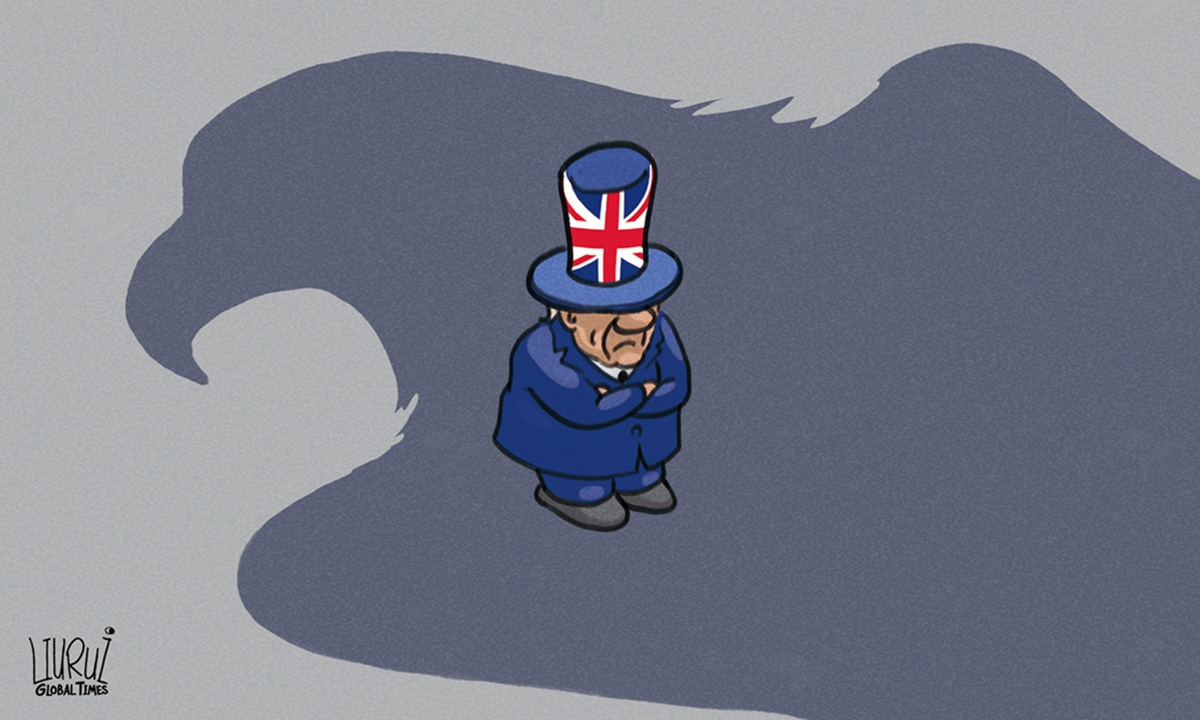
Britain has long viewed the UK-US "special relationship" as an insurance for its security.
Today, London is finding it increasingly difficult to determine just how effective the insurance still is. From the Falkland Islands, known as the Malvinas Islands in Argentina, to Northern Ireland, the US has repeatedly touched on politically sensitive issues for the UK, putting the "special relationship" between the two countries to frequent tests.
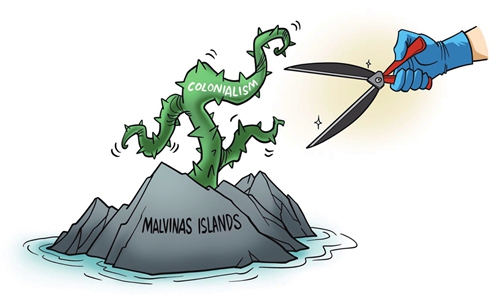
On August 31, when asked whether the US would reconsider its position on the question of the Malvinas Islands, US President Donald Trump stated that "I always review every position." On September 12, during his visit to Ireland, Trump told reporters alongside the Irish prime minister that he would "love" to see a united Ireland and stated that unification is "going to happen eventually." In just half a month, the US twice touched a sensitive nerve of Britain.
These remarks provoked strong opposition from the UK. On the question of the Malvinas Islands, the US has long maintained a relatively neutral stance on sovereignty. Regarding Northern Ireland, the core of US policy has been to promote compromise among all parties, uphold the peace agreement and allow the people concerned to determine their future through democratic processes. Although it cannot yet be concluded that the US government has formally changed its existing policy, the signals the US president has sent in quick succession have brought the rift between the UK and the US to the surface.
When viewed against the backdrop of the US attack against Iran, the signs of a rift in the "special relationship" between the UK and the US become even clearer. In April, Reuters reported that the Pentagon was internally discussing options to "punish NATO allies," including reevaluating the US position on the Malvinas Islands, because the UK had not fully supported US military action against Iran.
The purpose of the US is clear: To exert pressure - if you do not cooperate sufficiently on the battlefields that matter to me, I may renegotiate my terms on the issues that matter to you.
This fully reveals the underlying tone of current US foreign policy: The long-term mutual benefits of alliances are increasingly being squeezed out by "loyalty tests" that are settled on a case-by-case basis. While there is room for discussion regarding the US demanding that allies share responsibilities fairly, using whether an ally follows the US in a specific military operation as the yardstick for measuring if it deserves support severely disregards the autonomy and legitimate interests of allies.
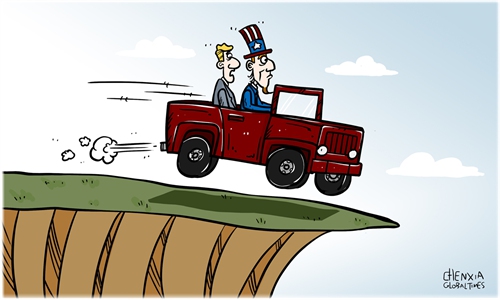
Moreover, when the tools of pressure extend from tariffs and defense cost-sharing to territorial disputes and national sovereignty, they touch upon the political red lines that are the hardest for the other country to compromise on. Demanding more money today, demanding military deployment tomorrow and possibly imposing new conditions the day after - such security arrangements cannot reassure US allies.
The reason London finds itself in a particularly passive position is related to the asymmetry in power and the degree of mutual dependence between the two sides. The UK needs the US to maintain its global influence, making it easy for Washington to use London's dependence as a bargaining chip. The "special relationship" between the two countries will not dissolve immediately, but Britain's wariness toward the US will deepen. Going forward, UK-US relations will likely involve increased caution and bargaining alongside continued cooperation. Every time the US exerts additional pressure, it gives its allies one more reason to seek other partners.
From the Falkland Islands to Northern Ireland, the "special relationship" between the US and the UK is being reevaluated, and the UK's experience serves as a microcosm of the shared predicament faced by US allies.
"America First" is increasingly becoming a demand that allies must prioritize fulfilling the US' unilateral demands. When the US' security insurance keeps asking for extra "loyalty premiums," and even the insurer turns into a source of risk, allies will sooner or later recalculate whether renewal is worthwhile. The more obsessed Washington is with squeezing marginal gains from every ally, the more likely it is to lose the long-term benefits brought by the alliance system as a whole.
The author is an associate research fellow at the Institute of American Studies, Chinese Academy of Social Sciences. opinion@globaltimes.com.cn
RELATED ARTICLES