China delivers customized version of MAZU intelligent meteorological early warning system to Nepal
By and Zhang Weilan Published: Sep 22, 2026 08:05 PM

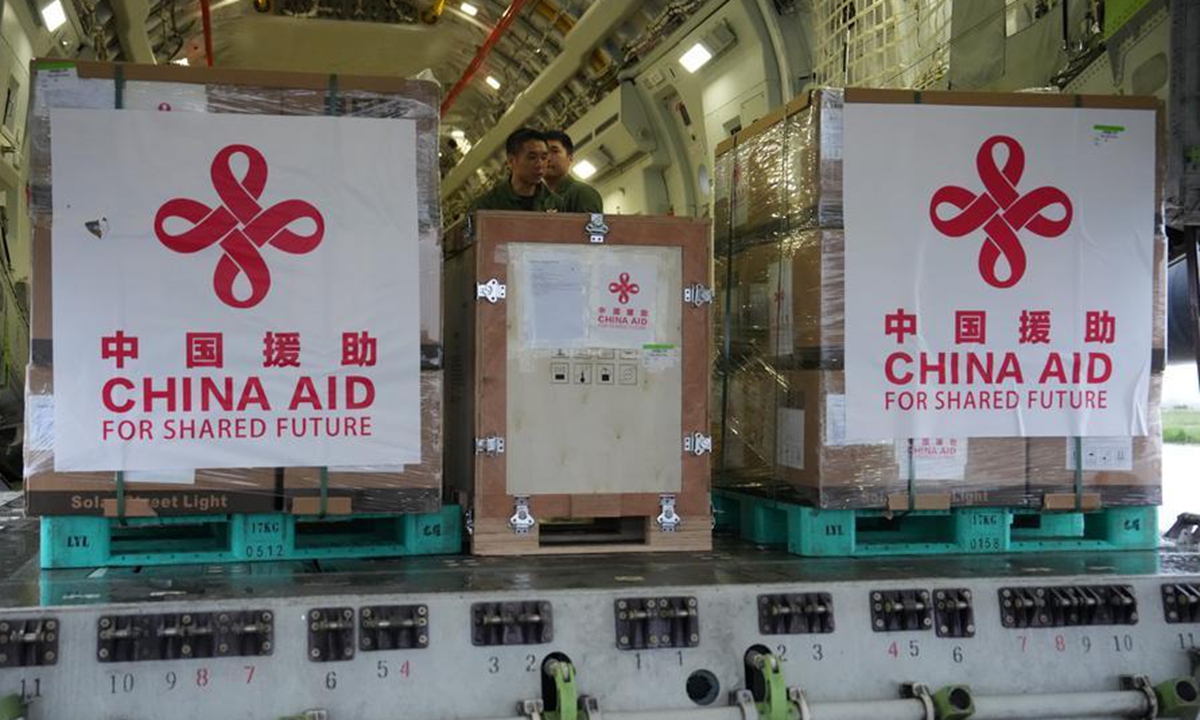
Chinese relief supplies are pictured on a Y-20 transport aircraft at Tribhuvan International Airport in Kathmandu, Nepal, September 1, 2026. Photo: Xinhua
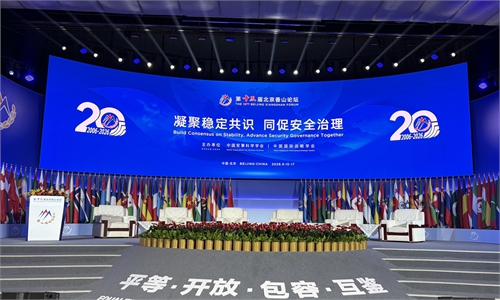
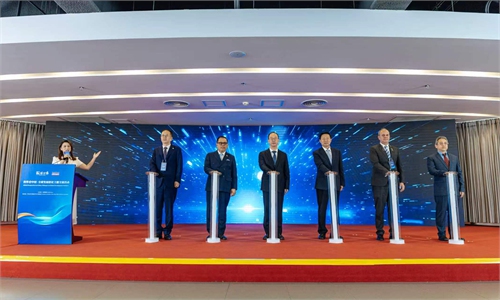
Chinese meteorological authorities delivered a customized version of China's intelligent meteorological early warning system, MAZU, to their Nepalese counterparts, the Global Times learned on Tuesday.The China Meteorological Administration (CMA) said in a post shared with the Global Times that the delivery was completed at a forum in Urumqi, capital of Northwest China's Xinjiang Uygur Autonomous Region, on the same day.
On August 26, an ice-rock avalanche in Nepal unleashed a devastating debris flow in the China-Nepal border region, causing heavy casualties.
The Chinese side has been providing meteorological support services to the Nepalese side, conducting joint video consultations, and providing relevant forecasting and early warning support in the aftermath of the disaster.
In accordance with Nepal's needs, the CMA integrated observational data from Fengyun meteorological satellites and other sources and incorporated domestically developed artificial intelligence (AI) weather forecasting models such as Fengqing and Fengshun. The agency also quickly launched high-resolution, rapidly updated monitoring, forecasting, and early warning products to support disaster relief.
On August 29, the Nepal-customized version of MAZU was delivered to the Nepalese meteorological authority for cloud-based trial use.
"The monitoring and forecasting products are very useful," the CMA post cited an expert at the Nepal Meteorological Department as saying.
During the rescue period, the Chinese side produced daily special bulletins for monitoring and forecasting services based on the Nepal-customized version of MAZU, and the Nepalese side continuously used the monitoring and forecasting products through the cloud-based access platform and applied the relevant products in joint video consultations for analysis and judgment.
Against the backdrop of a new round of scientific and technological revolution and industrial transformation, AI is becoming an important technological engine for enhancing the capacity for forecasting and early warning of extreme weather, You Yang, a staff member with the Shanghai Meteorological Bureau, told the Global Times on Tuesday.
"In recent years, China has actively responded to the United Nations Early Warnings for All initiative, promoting the transformation of meteorological AI from primarily technology export to joint capacity-building, operational integration, and ecosystem sharing, as well as providing a technological foundation, toolbox, and early warning solutions for Global South countries to enhance their ability to respond to extreme weather," You said.
Following the principle of "communicating, building, using, and improving in parallel," the Nepal-customized version of MAZU will continue to integrate products and improve functions, sustainably support Nepal's meteorological operations, enhance local disaster prevention and mitigation capabilities, and deepen cross-border disaster collaborative management and cooperation between China and Nepal, according to the CMA post.
According to the CMA, MAZU has now been implemented and applied in seven countries and put into cloud-based trial use in more than 50 countries.
Chen Zhenlin, head of the CMA, said that meteorological early warning is a key measure for safeguarding economic and social development, people's well-being and health, and the safety of life and property, and that the MAZU solution is growing from a Chinese practice into a global public good.
The CMA will accelerate the innovative development of meteorological AI and the global implementation and application of the MAZU solution, Chen said.
In accordance with Nepal's needs, the CMA will advance the deployment of the Fengyun satellite AI toolbox and integrated devices, enhance Nepal's localized support capacity, conduct specialized training for foreign personnel, establish bilateral data-sharing and consultation mechanisms, and jointly improve the ability to respond to meteorological disaster risks, per the post.
RELATED ARTICLES