From snow leopards to mangroves, China’s ecological red lines show progress
By Published: Sep 22, 2026 09:33 PM

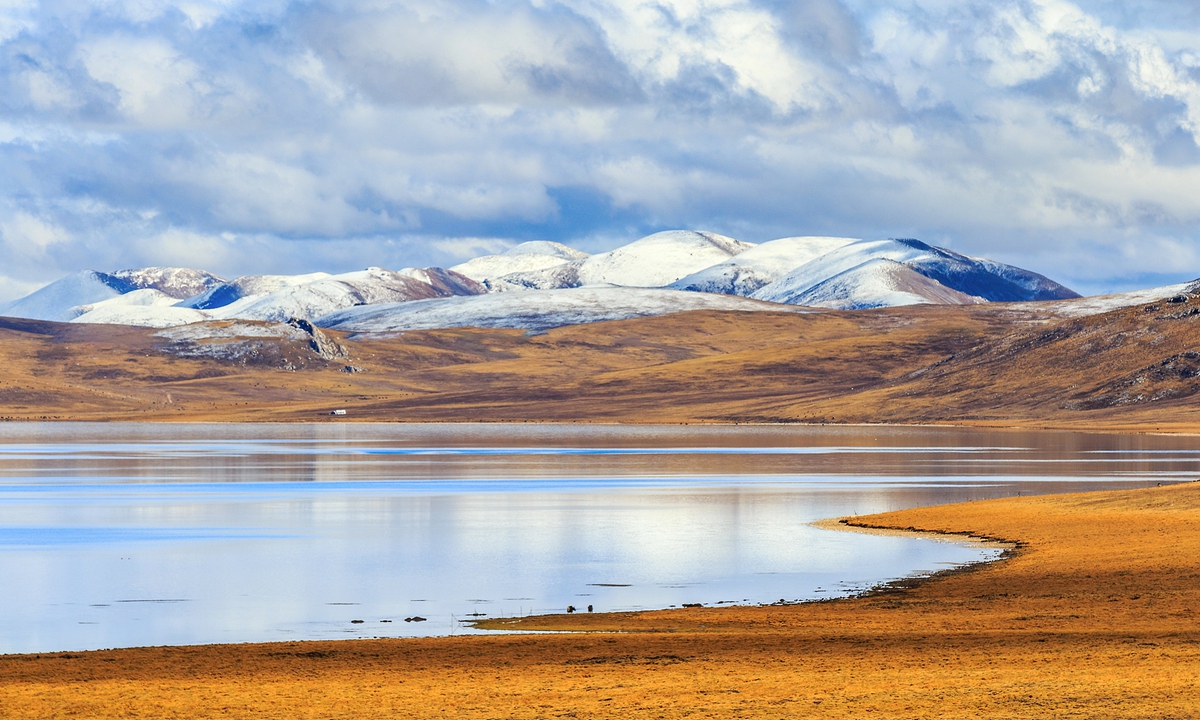
China's Sanjiangyuan National Park in Northwest China's Qinghai Province Photo: VCG
China's ecological protection red lines, which designate ecologically important and vulnerable areas for strict protection, saw an overall improvement in environmental conditions in the recent years, China's Ministry of Ecology and Environment said on Tuesday.
At the ministry's regular September press conference, spokesperson Pei Xiaofei said the five-year assessment found improving protection outcomes during the 14th Five-Year Plan period (2021-25) across major ecological security barriers and strategically important regions, including the Yangtze River Economic Belt, Yellow River basin, Qinghai-Xizang Plateau, Qinling Mountains, coastal areas, Beijing-Tianjin-Hebei region, Yangtze River Delta and Guangdong-Hong Kong-Macao Greater Bay Area.
The total area within the red lines remained stable, while the overall ecological protection performance continued to improve, Pei said. Key indicators, including water conservation, biodiversity protection and vegetation coverage, all showed improvement. Water and air quality continued to improve. The assessment recorded no major ecological destruction or environmental emergency incidents within the protected zones.
The Qinghai-Xizang Plateau, one of China's most important ecological security barriers, saw the habitats of rare alpine species continue to recover steadily.. The protection rate for key biological species within the red lines rose by 8.7 percent, while the vegetation carbon sequestration capacity index increased by 3.1 percent, Pei said.
Other regions showed similarly gains. Aquatic habitats within the Yangtze River Economic Belt's red lines continued to recover, while biodiversity increased steadily and water quality in the river's main stem remained at the high-quality Grade II level.
In the Yellow River Basin, the water-conservation capacity index rose by 28.6 percent and the vegetation-cover index increased by 2.1 percent.
The Qinling Mountains saw notable progress in ecological restoration and steady improvements in biodiversity conservation.
Thewater-conservation capacity index within the red lines rose by 7.1 percent, whilethe protection rate for key biological species increased by 3.4 percent. The marine natural coastline retention index also improved in coastal red-line areas. Pei said that Beijing-Tianjin-Hebei, the Yangtze River Delta and the Guangdong-Hong Kong-Macao Greater Bay Area had sustained and enhanced ecological functions within their red line areas despite intensive economic activity.
China's ecological red lines cover areas with particularly important ecological functions, such as water-conservation zones, as well as environmentally sensitive areas. They cover more than 30 percent of the country's land area, according to the Ministry of Ecology and Environment.
Earlier ministry data also pointed to gains in protected areas across the plateau. In the Qomolangma National Nature Reserve in Southwest China's Xizang Autonomous Region, for example, recorded snow leopard numbers rose from 87 to 106, while their distribution area expanded from 9,146 square kilometers to 11,090 square kilometers, according to a Ministry of Ecology and Environment assessment released in July.
The latest data also reflect changes taking place at the local level. Along the Nyang River in Nyingchi, southeastern Xizang, wetland rangers patrol riverbanks, report injured wildlife, remove litter and monitor illegal grazing or damage to wetland fences.
Kelsang Tashi, director of the Bayi district branch of the Nyingchi ecology and environment bureau, previously told the Global Times that local authorities had clarified the responsibilities of different departments for wetland and watershed protection while strengthening ecological governance and public participation.
"In the final analysis, prioritizing ecology is about benefiting the people and better protecting this pure land," he said.
At Tuesday's press conference, Pei noted, however, that climate change and human disturbance still pose risks of ecological degradation in some red-line areas. The ministry will work with other departments and local governments to improve implementation and management policies, strengthen oversight tailored to local conditions, and further enhance ecosystem diversity, stability and sustainability, he said.
RELATED ARTICLES