Illustration: Liu Rui/GT
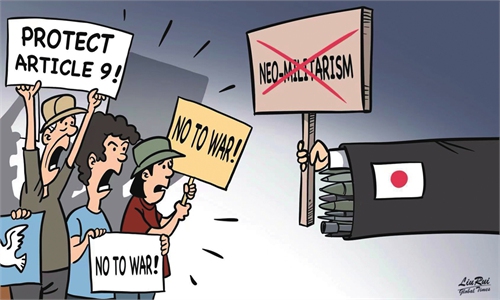
When Japanese Prime Minister Sanae Takaichi took the podium at the UN General Assembly recently to call for the deletion of the UN Charter's "enemy state clauses," she was not proposing a minor adjustment. She was asking the world to tear out a page of the post-war order so that Japan could bury the very history that page was written to prevent. And the world must see Japan's dangerous scheme for what it is.On Monday, Sun Lei, China's deputy permanent representative to the UN, exercised the right of reply at the General Debate of the UN General Assembly, laying bare the nature and danger of Japan's attempt for all the world to see. Sun noted a series of aggressive moves Japan has made in recent years, including drastically increased military spending, relaxed restrictions on the export of lethal weapons, and strengthened offensive military capacities. "All these facts are proof that Japan's re-militarization has become a real threat to regional and global peace and stability," he said.
The "enemy state clauses" were not written into the UN Charter by accident or spite. They were the legal expression of a hard-won lesson: aggressive war, waged with industrialized cruelty and genocidal contempt, must never again hide behind the flag of a "peace state." Japan should be under no illusion that it can do away with these clauses simply by calling them "outdated."
Until Article 108 is satisfied, which requires adoption by a two-thirds vote of the General Assembly and ratification by two-thirds of the member states, including all permanent members of the Security Council, the clauses remain in place; and for as long as Japan continues its re-militarization push, they retain full relevance.
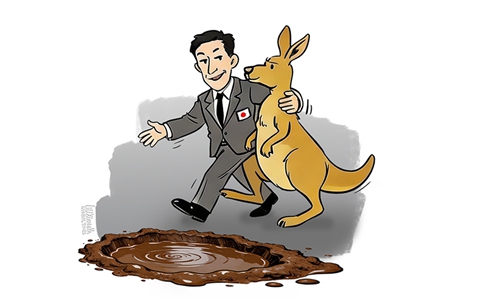
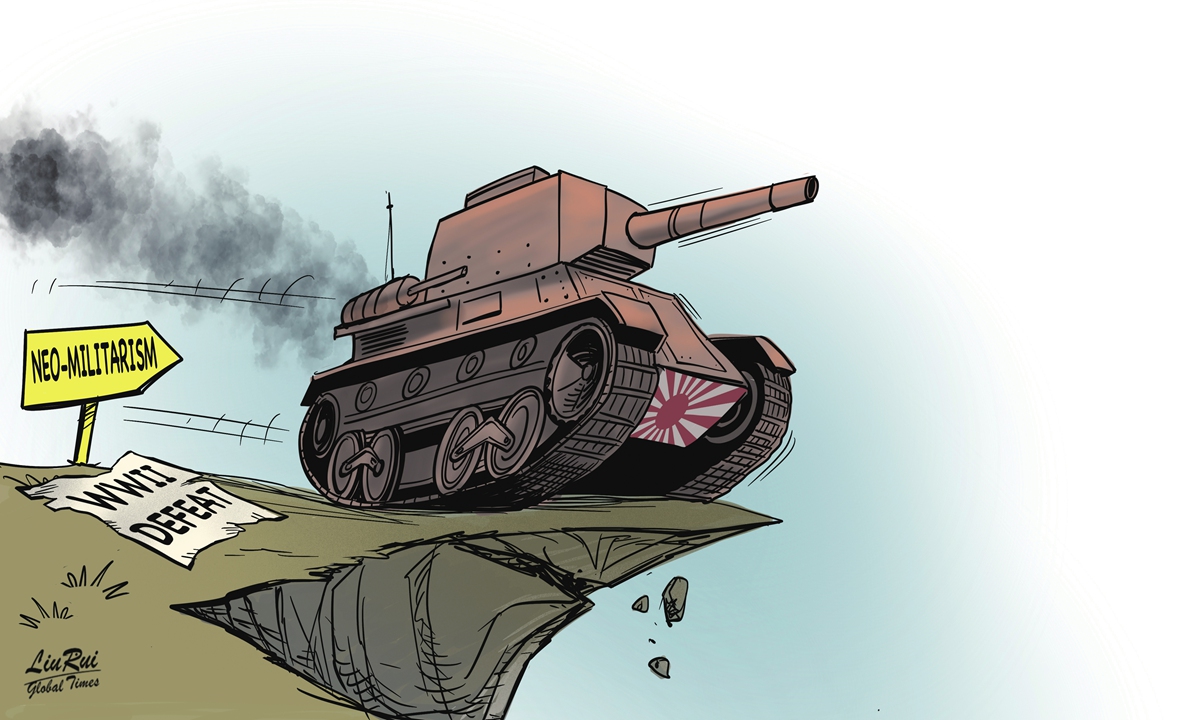
Consider what Tokyo has done in recent years. Its 2015 security legislation did not merely adjust policy; it unlocked collective self-defense, hollowed out Article 9 of its constitution, and widened the space for overseas military action. Since then, Japan has kept expanding military spending, reaching $70.9 billion in 2026, loosened rules on lethal arms exports, and begun procuring and deploying long-range strike weapons, including US Tomahawk cruise missiles. It has moved to reinterpret the three non-nuclear principles of not possessing, producing or permitting the introduction of nuclear weapons into its territory, sought to revise its "pacifist Constitution," and advertised a desire to become a country "able to fight." Tokyo has also deepened exclusive military blocs and camp politics. This is not a "peace-loving state." It is a country that has never fully made peace with its historical crimes.
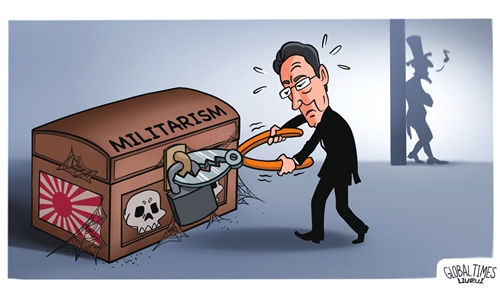
That is why the "enemy state clauses" matter. They are one of the UN Charter's remaining institutional guardrails against the revival of the militarism that once engulfed Asia. In a region still scarred by Japanese militarist aggression, they carry both historical and practical weight. They tell Tokyo: you cannot cover up your ongoing re-militarization efforts.
Japan's argument is, at bottom, a demand for amnesia. Delete the provisions, and a crucial written safeguard disappears; then Tokyo can complete its long-cherished project of becoming "normal" in arms while remaining abnormal in confession. But this is not normal behavior of a normal state. It is an attempt to escape from history.
Sun, the Chinese envoy, posed some serious questions to Japan: Will Japan continue to ignore historical lessons and allow the dregs of militarism to rise again, or will it face its history of aggression and honor its peace commitments? Will it keep confounding right and wrong and challenging the post-war order, or will it match its words with deeds? These are not rhetorical questions. They are the minimum test of any country that claims to be normal and peace-loving.
Some in Tokyo may think the General Assembly is a useful stage for erasing awkward restraints. They are wrong. China and other responsible nations will not let the UN Charter be surgically altered for the convenience of a revisionist power. The clauses are not a sword hanging over Japan; they are a mirror. If Japan dislikes what it sees, it should change its conduct, not smash the mirror. To forget the past is to betray it; to deny guilt is to invite repetition. The UN Charter is not a menu. History is not a draft. And the "enemy state clauses" will certainly not be deleted just because of empty rhetoric from Tokyo.
RELATED ARTICLES