Hurling insults will never win the Philippines any advantages in the South China Sea
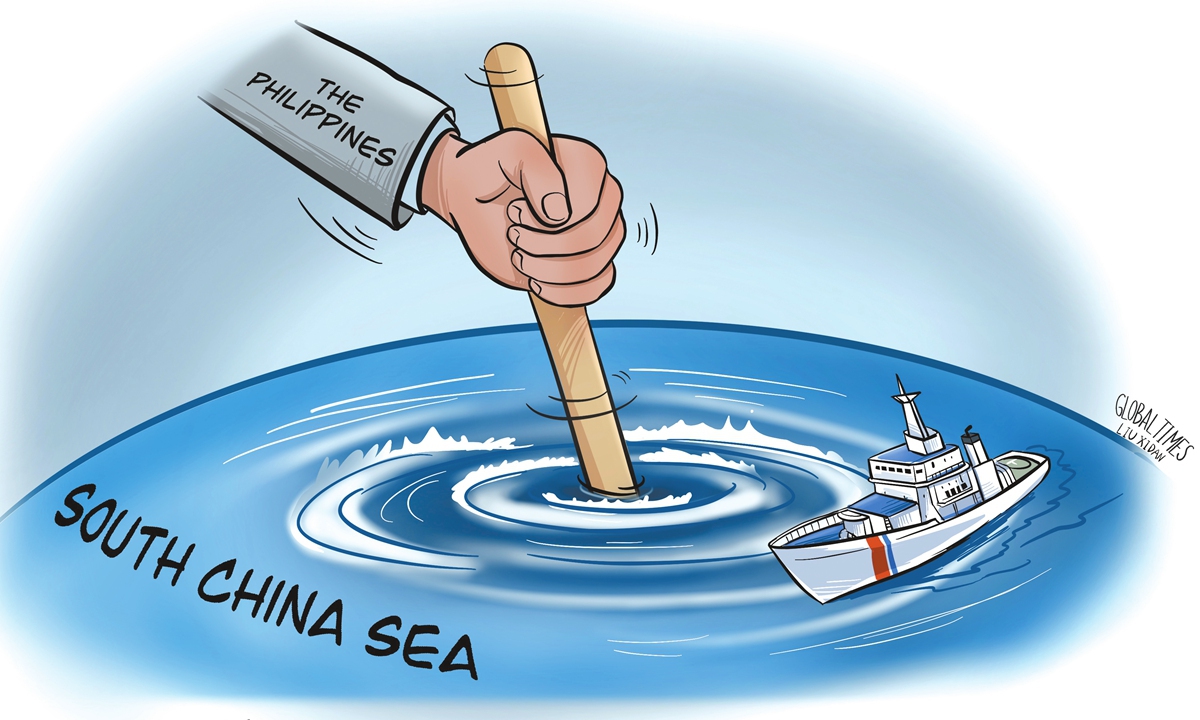
Illustration: Liu Xidan/GT
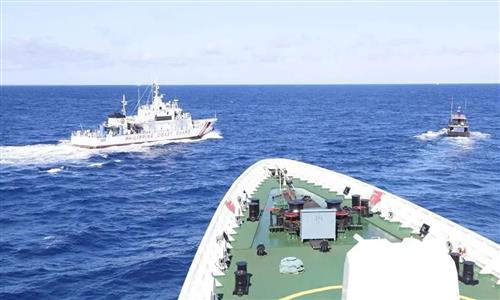
Recently, Jay Tarriela, a spokesperson for the Philippine Coast Guard, resorted to crude language on social media, launching a personal attack on the Chinese Ambassador to the Philippines. This is yet another textbook case of malicious slander and reversing blame, following Manila's hype over the operation of the Chinese scientific research vessel Jia Hai Ke 7 near the Batanes Islands.The Chinese Embassy in the Philippines has already clearly stated its position: China holds sovereignty and jurisdiction over the relevant waters. The operations of relevant Chinese vessels in waters under Chinese jurisdiction comply with international law, including the United Nations Convention on the Law of the Sea. Lacking any credible evidence to back up its accusations, the Philippine side flew into a rage and turned to emotionalized verbal abuse. Such a scheming attempt to leverage public opinion by hurling insults in pursuit of maritime rights is doomed to fail.
Manila's narrative is riddled with distortion of the facts and an inherent presumption of guilt. The Jia Hai Ke 7 is a civilian research vessel conducting offshore marine geological surveys and scientific investigations in waters under Chinese jurisdiction. These activities serve public purposes such as marine resource development and environmental protection, making them entirely legitimate and lawful. By hyping this up, the Philippine side is essentially disregarding China's sovereignty and jurisdiction. By forcibly overstretching the concept of security and militarizing civilian research, the Philippines not only interferes with China's normal navigation and scientific operations, but also deliberately stokes regional tension.
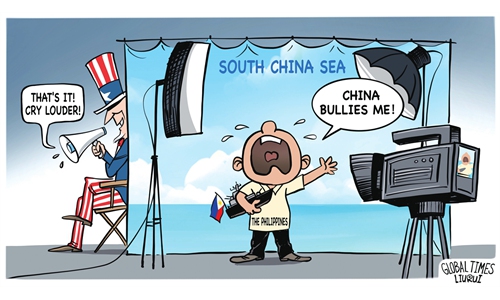
This playbook has long been a fixture of Manila's routine. From Huangyan Dao to Ren'ai Jiao, the Philippines has turned blame-shifting into a diplomatic tactic - using verbal abuse to throw dirt, staging maritime provocations to manipulate public opinion, and relying on external forces to pump up its courage. Yet shouting matches cannot win maritime rights. The Philippines is severely miscalculating if it thinks that by raising its voice it can gain an advantage or force China to make concessions. Facts have repeatedly shown that the louder the shouting, the deeper the underlying insecurity - while reminding the world that reality is far different from what Manila claims.
Peace and stability in the South China Sea require all parties to exercise restraint and return to dialogue and consultation, rather than constantly manufacturing friction and fueling confrontation. The Philippine side must wake up to reality and drop its illusions. Relying on verbal abuse, staged provocations, and empty bluster to make illicit gains in the South China Sea is an absolute non-starter. Maintaining basic respect in diplomatic exchanges is a bottom line of international relations; for a Philippine official to disregard diplomatic protocol and smear a Chinese Ambassador only exposes the sheer desperation of someone who is losing a fact-based argument.
Manila is advised to put away this farce of unreasonable provocation and not to underestimate China's firm resolve to safeguard its sovereignty and maritime rights and interests. The South China Sea is not anyone's shouting ring, and no advantage can be gained by throwing tantrums.
RELATED ARTICLES