China firmly opposes unilateralism, protectionism in name of addressing ‘overcapacity’, ‘forced labor’: trade rep at G20 meeting
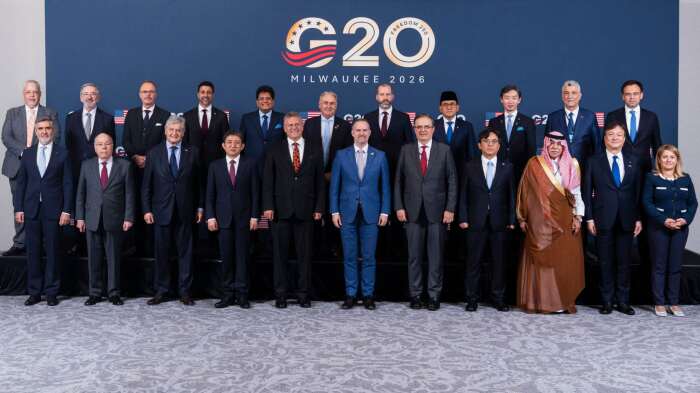
G20 trade ministers and representatives attend a meeting in Milwaukee, the US, from September 30 to October 1, 2026. Photo: China’s Ministry of Commerce
China called on G20 members to support the multilateral trading system with the WTO at its core, while voicing firm opposition to unilateralism and protectionism pursued in the name of addressing “overcapacity” or eliminating “forced labor,” Li Chenggang, China international trade representative and vice minister of commerce, said at a Group of 20 (G20) trade ministers' meeting.
The meeting, held in Milwaukee, the US, from September 30 to October 1, brought together trade ministers and representatives from G20 members as well as guest country Poland, according to a statement published by China’s Ministry of Commerce (MOFCOM).
Participants exchanged views on issues put forward by the US, including opposition to the weaponization of food, addressing “overcapacity,” eliminating “forced labor” and adjustments to the most-favored-nation principle. The meeting reached a joint statement on food-related issues but did not produce outcome documents on the other issues, the MOFCOM statement said.
Speaking at the meeting, Li said that amid continued challenges from unilateralism, China called on G20 members to practice multilateralism, support the WTO-centered multilateral trading system, and jointly safeguard and strengthen the most-favored-nation principle as a cornerstone of global trade, helping inject greater stability and predictability into global trade.
The G20 should safeguard an open order through collective action, narrow global gaps through sustainable development, and unleash growth momentum through digital and intelligent cooperation, Li said.
On food security, Li said it concerns human survival as well as national and social stability, and that China has made positive contributions to global food security. G20 members should actively reduce trade barriers and jointly maintain stable and smooth food production and supply chains, he said.
“China has always followed a people-centered development approach and attaches great importance to protecting workers' rights and interests. He called on all parties to further tap the potential of trade, create more high-quality jobs and ensure that the benefits of growth are broadly shared,” Li pointed out.
On industrial capacity, Li said the issue should be analyzed in a comprehensive, objective and dynamic manner from a global perspective, with more focus on exploring cooperation rather than creating confrontation.
“China is willing to actively engage with all parties in dialogue and cooperation on industrial policies, strengthen policy coordination, enhance mutual trust and jointly promote the sound and sustainable development of global industries,” Li said.
“China firmly opposes unilateralism and protectionism pursued in the name of addressing so-called ‘overcapacity’ or eliminating ‘forced labor,’” the vice minister added.
Li also held bilateral meetings or brief talks with heads of delegations from the US, the EU, Saudi Arabia, Russia, Brazil, Canada, Mexico, Argentina, Australia, South Korea and Poland, according to the MOFCOM statement.
Global Times
RELATED ARTICLES