Respect is earned, not demanded – Japan’s fuss over a diplomatic title rings hollow
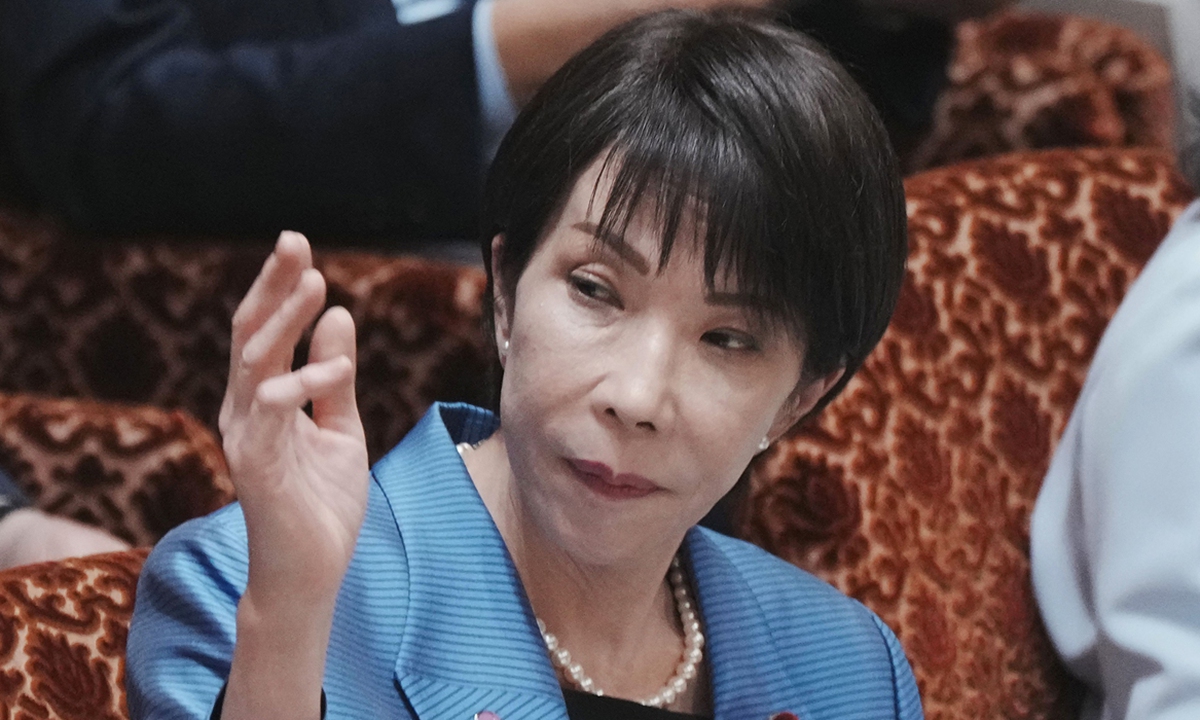
Japan's Prime Minister Sanae Takaichi raises her hand to answer a question during a session of the House of Councillors Budget Committee at the National Diet in Tokyo, Japan on November 12, 2025. Photo: VCG
In a news briefing on Wednesday, Japanese Foreign Ministry spokesperson Toshihiro Kitamura said that Tokyo had relayed its concerns to Beijing after the Chinese Foreign Ministry spokesperson Guo Jiakun referred to the Japanese prime minister only as "Sanae Takaichi" at a recent press conference. Showing "appropriate respect to the leader of another country" is a matter of "international protocol," said Kitamura.
The news provoked irony. The international community sees clearly: The one that has truly wantonly trampled on international etiquette, undermined basic diplomatic principles, and challenged the post-war international order has always been certain Japanese politicians.
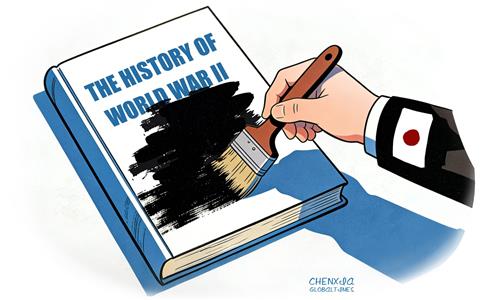
After all, diplomatic etiquette goes far beyond mere titles and addresses. For some time now, the Japanese right-wing forces, led by Sanae Takaichi, have been constantly crossing diplomatic red lines and trampling on the boundaries of international relations, with a series of provocations against China. When the Takaichi cabinet repeatedly tests the waters on historical accountability, remains obstinate on the Taiwan question, refuses to retract erroneous remarks, and accelerates constitutional revision and military expansion - breaking free from the constraints of its pacifist constitution - they are violating international ethics, diplomatic etiquette, and the post-war order.
While Japan recklessly harms the interests of other countries and crosses the bottom line of international relations, it nitpicks at minor details of diplomatic titles, demanding that other countries grant it so-called "appropriate respect." Doesn't this sophisticated self-serving double standard completely deviate from the essence of international etiquette?
A look at the trajectory of the Chinese Foreign Ministry's recent rhetoric over Tokyo reveals a clear logic: from "Japanese prime minister" to "the incumbent leader of Japan," and finally to addressing her simply by name. This shift underscores a simple truth: Respect has always been mutual; the bottom line must not be crossed, and restraint does not equal indulgence.
Since Tokyo often tries to conflate Takaichi and her cabinet with the entirety of Japan to muddy the waters, Chinese observers have noted that Beijing's wording achieves a precise political distinction - separating the reckless agenda of Sanae Takaichi and her likes from the rational elements of the Japanese nation and its people. It signals that China's stern warning is directed not at the Japanese public, but strictly at the radical Japanese right-wing politicians led by Takaichi.
On the other hand, Beijing has not slammed the door shut and continues to engage with Japanese friendly figures, economic groups, and rational voices from civil society, striving to steer bilateral relations back onto the right track.
Instead of obsessing over a title, Japanese politicians need to reflect on how to act as a good neighbor to regional countries, including China. As an ancient Chinese saying goes, "He who tied the bell on the tiger must untie it." Rather than nursing a fragile ego over whether a spokesperson uttered the word "prime minister," Tokyo should put its energy where it matters - rectifying its damaging actions against China-Japan relations and figuring out what it actually takes to build a "constructive and stable relationship" with China.
At the end of the day, respect is earned, not demanded.
RELATED ARTICLES