China, EU reach 16-point consensus on areas including trade, investment, export controls in second trade consultation mechanism meeting in Beijing: MOFCOM
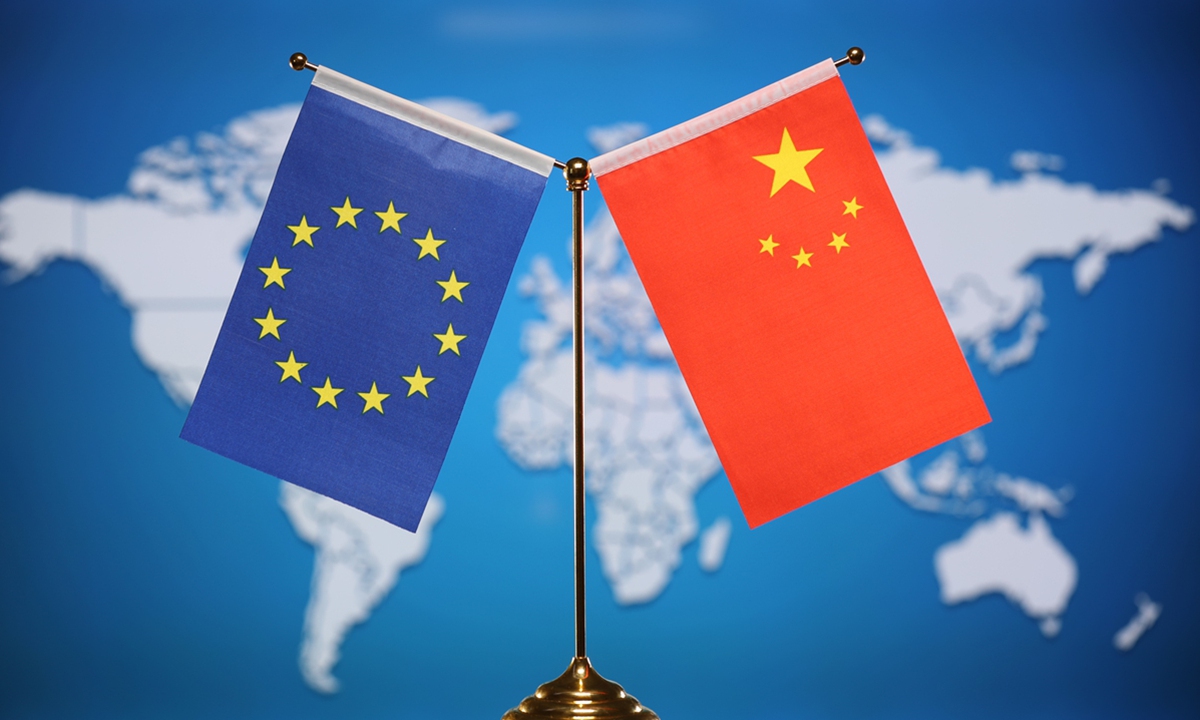
China EU Photo:VCG
China and the European Union (EU) reached a 16-point consensus covering trade and investment, export controls, intellectual property rights and World Trade Organization (WTO) reform during high-level talks in Beijing on Thursday and Friday, marking concrete progress in efforts to manage bilateral economic differences.
According to a joint statement released by China's Ministry of Commerce (MOFCOM) on Friday, Chinese Commerce Minister Wang Wentao and European Commissioner for Trade and Economic Security Maros Sefcovic held the second meeting of the China-EU trade and investment consultation (TIC) mechanism on October 8-9, engaging in pragmatic and productive discussions.
The two sides reaffirmed their commitment as key trading partners to properly managing differences under WTO rules, maintaining stable bilateral economic and trade ties and making them more balanced.
They agreed to hold the third meeting in March 2027 and maintain close communication in the meantime, including a ministerial-level video meeting in January.
Among the key outcomes, China and the EU reached an understanding on hybrid vehicle trade in a manner consistent with WTO rules following intensive consultations. The two sides also agreed to continue exploring the possibility of reducing tariffs on certain products under WTO rules.
On electric vehicles, both sides recalled the guidance document on price undertakings in the EU's anti-subsidy investigation into Chinese electric vehicles and agreed to continue procedures concerning company-specific price undertakings and reviews.
Market access featured prominently in the agreed outcomes. The two sides pledged to continue dialogue on EU medical devices entering the Chinese market, with the EU welcoming China's measures to expand imports of European medical devices, including a procurement matchmaking event during the ninth China International Import Expo.
China will also accelerate, based on risk assessments, recognition of regionalization for eligible EU member states. The two sides agreed to exchange approaches and techniques for disease control and jointly explore ways to lift restrictions on imports from relevant member states related to bluetongue disease.
Further technical exchanges will cover computer reservation systems, while discussions on regulatory frameworks for cosmetics and pharmaceuticals will continue to address existing and emerging market-access concerns.
The two sides also agreed to launch technical dialogue on the EU's Foreign Subsidies Regulation. On the EU's financing guidance for inverter projects, the EU clarified that the document was not directed at any particular country, with further consultations planned.
Both sides pledged to explore investment cooperation to support their respective economic development and to discuss future-oriented cooperation.
Export controls formed another major part of the agreement, with both sides reaffirming the need to strengthen dialogue and improve communication on their respective policies through guidance documents, exchanges between authorities and businesses, and training activities.
Recognizing the importance of greater predictability and stability in global industrial and supply chains, China expressed its willingness to continue facilitating export license approvals for rare earths and permanent magnets destined for the EU through a "green channel" mechanism.
The EU, for its part, will continue working with member states to facilitate the resolution of priority individual licensing cases involving exports to China in the dual-use sector.
Both sides also reaffirmed their commitment to addressing export control concerns and discussed the possibility of developing structural facilitation measures for compliant trade in dual-use items.
Under their export control dialogue mechanism, China and the EU reached an understanding on advance notifications before items are added to control lists, improving transparency in listing and delisting procedures and supporting the initiation of delisting procedures under their respective legal frameworks.
On intellectual property rights, China and the EU said they had begun addressing systemic issues and made progress. They agreed to continue cooperation, establish interim targets and focus on effective and fair intellectual property protection and enforcement, with greater transparency and predictability.
The China-EU intellectual property working group will monitor progress in these areas.
On WTO reform, both sides pledged to deepen bilateral communication and cooperation in an open and constructive manner, engage in the reform process and discuss all relevant issues with a view to achieving substantive progress.
RELATED ARTICLES