China, EU trade chiefs meet in Beijing
Resolving economic and trade disputes through equal-footed dialogue and consultation serves shared interests of China, EU: FM spokesperson
By and Yin Yeping Published: Oct 08, 2026 10:44 PM

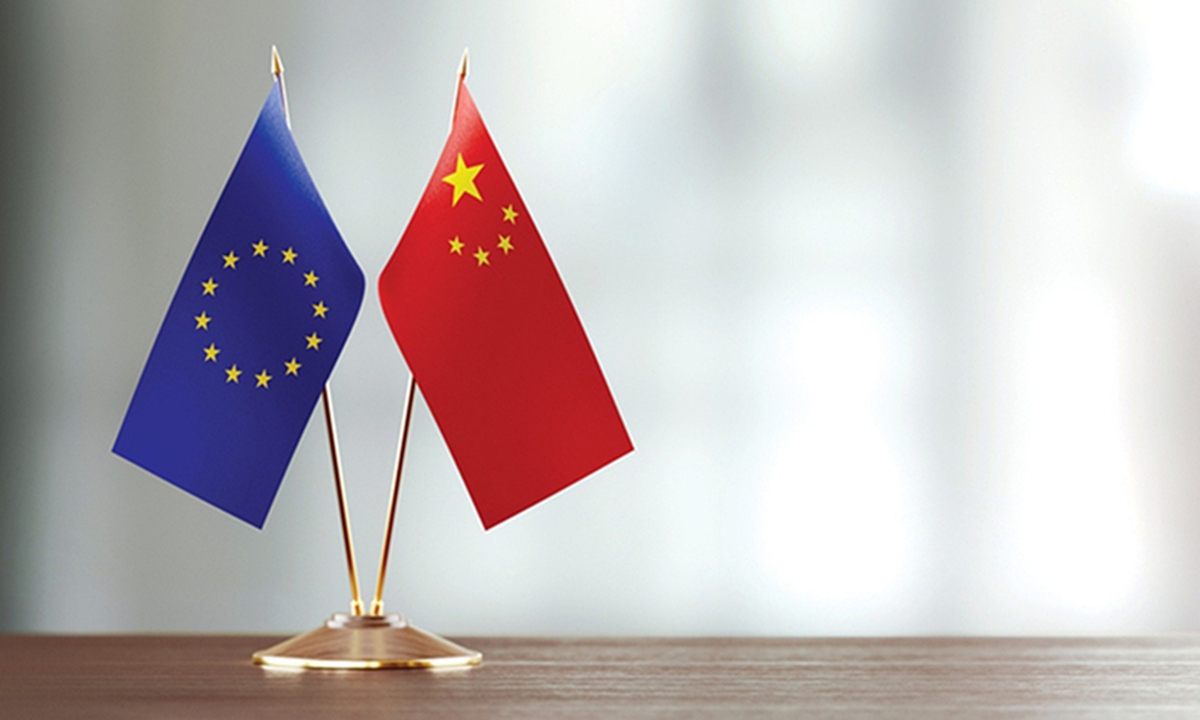
China-EU Photo: VCG
Chinese Commerce Minister Wang Wentao held a meeting with the European Commissioner for Trade and Economic Security Maros Sefcovic on Thursday in Beijing, according to a statement released by China's Ministry of Commerce (MOFCOM).
The talk followed a meeting held between Chinese Vice Minister of Commerce and Deputy China International Trade Representative Ling Ji and Ditte Juul Jørgensen, Director-General of the European Commission's Trade and Economic Security, on Thursday morning in preparations for the second meeting China-EU trade and investment consultation mechanism, according to the MOFCOM. .
Although the MOFCOM statement did not provide more details, Sefcovic was reportedly in Beijing for the second China-EU trade and investment consultation mechanism meeting.
As the two sides engage in intensive trade talks, Chinese experts said that the latest China-EU engagement ' underscores the willingness and ability of the two major economies to address trade disputes through dialogue and consultation, as a trade war would serve neither side's interests.
They cautioned, however, that the EU should refrain from pursuing unilateral trade measures or threatening China while engaging in talks, as such an approach would undermine the spirit of dialogue and constructive engagement. The EU should understand that China is not the source of Europe's economic problems, but a partner in addressing them, they noted.
Dialogue, consultation serve common interests
China always believes that it serves the shared interests of China and the EU to stay committed to openness and cooperation, and resolve economic and trade disputes through equal-footed dialogue and consultation, Foreign Ministry spokesperson Mao Ning said on Thursday, in response to media inquiries about China-EU trade talks in Beijing.
On an inquiry over EU's measures seeking greater protection of its interests, Mao said that "we hope that Europe will work with China in the same direction, resolve respective concerns through dialogue and consultation, and promote the sound and steady development of China-Europe economic and trade relations. We believe this serves the common interests of both sides."
The reported second meeting follows the first, held in Brussels on June 29, which produced tangible outcomes. At that time, China and the EU identified four initial workstreams covering trade and investment balancing, export controls, intellectual property rights, and WTO reform. The two sides agreed that the mechanism's main objective is to strengthen ministerial-level dialogue on trade and investment policies, stabilize bilateral relations, and make them more balanced, according to the MOFCOM.
"While it is natural for China and the EU, two of the world's major economies, to encounter trade disputes, it is essential for both sides to address them through dialogue rather than unilateral trade measures," Jian Junbo, director of the Center for China-Europe Relations at Fudan University's Institute of International Studies, told the Global Times on Thursday.
China has consistently advocated and sought to resolve differences through negotiation, said Li Yong, a senior research fellow at the China Association of International Trade. "The two trading partners share extensive trade and economic links, and for the two to address differences under the WTO framework is of great significance in today's volatile world."
China and the EU are each other's second-largest trading partners, with complementary strengths and deeply integrated industrial and supply chains. Together, they account for more than one-third of global GDP, while bilateral trade represents nearly one-quarter of global trade, making China-EU economic and trade ties one of the largest bilateral economic relationships in the world.
As two major trading partners that both support multilateralism, resolving economic and trade differences through equal dialogue and consultation has a significant positive impact on the global economy, Chinese analysts noted.
"The second meeting should therefore be seen not as an endpoint, but as a starting point for China and the EU to narrow differences, build consensus and strengthen cooperation," Jian said.
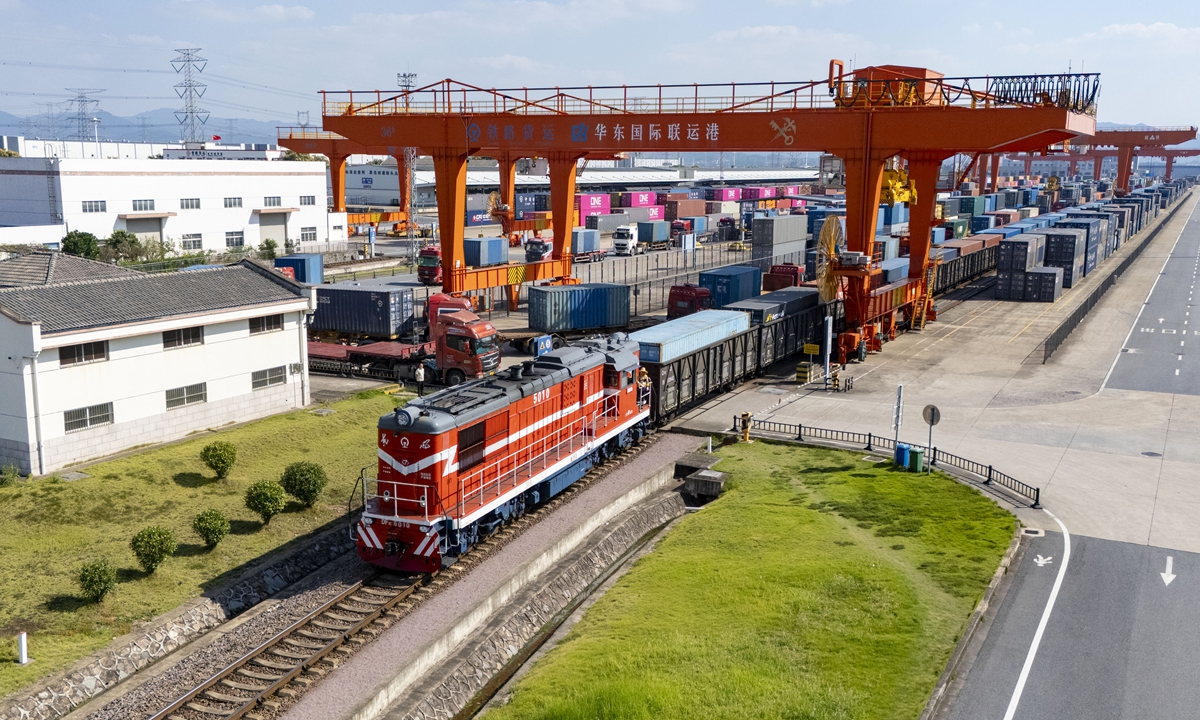
A China-Europe freight train on the Yiwu-Xinjiang-Europe route leaves the East China International Intermodal Port in Jinhua, East China's Zhejiang Province on October 8, 2026. Photo: VCG
Cooperation, not confrontationHowever, a protectionist push within the EU has intensified ahead of the Beijing talks. In a recommendation adopted on Wednesday (EU time) by 454 votes in favor, 86 against, and 110 abstentions, the European Parliament demanded a "stronger and principled EU-China policy" that combines dialogue with more protection of European interests, calls for "economic reciprocity," and what it calls a proportionate EU response if China "does not open its markets," according to Euronews.
The move follows reported moves by France and Germany on Monday proposing that the EU reinforce its economy by enacting a new rapid-action measure to strike back against countries that harm it, with China the most likely focus. They claimed that "systemic market-distorting practices" jeopardize the bloc's economy and industrial base, requiring urgent action. German officials also claimed the EU needs a tool as powerful as the Section 301 tariffs imposed by the US.
China has vowed to respond resolutely to safeguard the legitimate rights and interests of Chinese industries if the EU insists on introducing discriminatory restrictions against Chinese companies or products, after media reports that some EU member states are drafting a joint document calling on the European Commission to accelerate the development of a European version of the US "Section 301" tool and take tougher measures against China.
A Chinese observer told the Global Times on September 29 that if the EU presses ahead with protectionist measures targeting China, China will respond with a strong policy toolbox. Potential countermeasures could include anti-discrimination investigations, industrial and supply chain security investigations, and probes into the impact of foreign subsidies, among others.
The EU's contradictory approach and other protectionist actions have already drawn the irk of the Chinese side since the beginning of this year, including revisions to the Cybersecurity Act, the Industrial Accelerator Act, and the Public Procurement Act, all of which are seen by observers as targeting primarily at China. They said these moves risk eroding the trust needed for trade negotiations to deliver results.
"The EU should recognize that the consultation mechanism is not a platform for making unilateral demands, nor should the success of a meeting be judged solely by whether it delivers benefits to the EU. Rather, the mechanism should serve as a platform for both sides to address mutual concerns and seek mutually beneficial solutions through dialogue," Jian said.
Li said these moves reflected some EU politicians' idea of a "talk while fighting" approach - negotiating while pressuring China.
Analysts warned that rising unilateralism and trade protectionism will not help the EU address its current economic problems, but worsen them. Strengthening cooperation, tapping the two economies' complementarity, and achieving a dynamic balance to make the cake bigger are more important for the future of China-EU cooperation, they noted.
Costly energy, rising inflation, and higher borrowing costs threaten to weaken Europe's economic recovery by squeezing household spending and business investment, the Xinhua News Agency reported on October 5. High energy costs squeeze business profits, while higher fuel and heating bills reduce households' spending power, weakening demand for other goods and services, the report said.
The EU wants to restrict Chinese exports on the unfounded grounds of trade deficits, yet it has not adopted diversified means to resolve the deficit. Instead, it has imposed export restrictions on China for high-tech products such as lithography machines, Li said. "For instance, in order to combat its current energy price woes, China's supply of green exports such as solar modules can effectively help the bloc cope with its problems," Li added.
Chinese officials have repeatedly stated that China is not the source of Europe's problems, but a partner in addressing them. China has always believed that interdependence is not a risk, and intertwined interests are not a threat; openness and cooperation are the right path to development. Protectionism cannot enhance competitiveness, and decoupling will only harm others without benefiting oneself, a MOFCOM spokesperson said on Tuesday.
RELATED ARTICLES