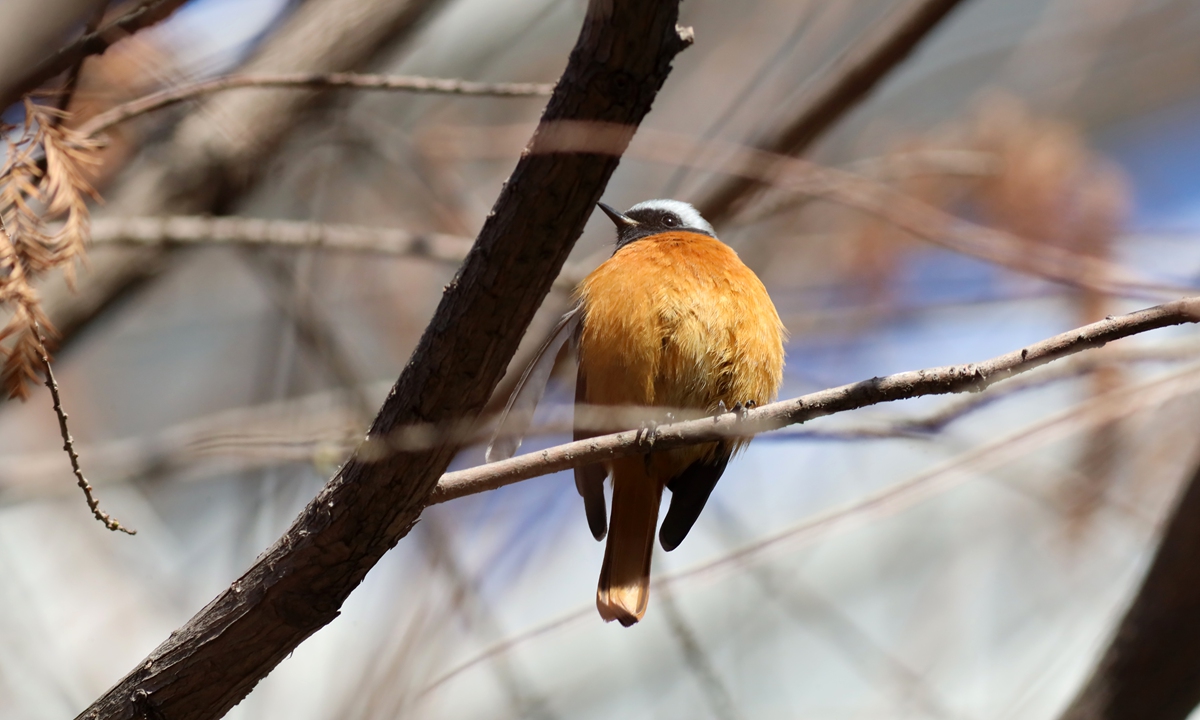
A Daurian redstart, a migratory bird passing through, appears in a residential grove in Shanghai. Photo: VCG
Saturday marks World Migratory Bird Day. With the migration season in full swing, wetlands across China are stepping up protection using smart monitoring, wetland restoration and volunteer patrols, building safer stopover and wintering grounds for birds heading south.
In Tianjin, the Bei DaGang Wetland nature reserve, a key stopover on the East Asian-Australasian Flyway, has already welcomed its first wave of southbound migrants, mainly small waterbirds such as coots and gadwalls. This year, the reserve has added smart cameras, infrared cameras and acoustic monitoring gear. Staff are on duty daily, and water levels are adjusted by zone based on bird behavior. Daily bird counts have topped 50,000, with over 300,000 expected by late October, according to CCTV News.
A similar shift is underway further south. At the Sihaiping monitoring station in Yongzhou, Central China's Hunan Province, geography makes the site a natural wind tunnel and a must-pass corridor for birds heading south through Central China. For years, protection there relied on manual patrols, leaving serious gaps, according to Rednet, a local media outlet in Hunan.
That changed in September, when the station switched on an intelligent radar system that scans the airspace around the clock, automatically logging species, altitude, flock size and speed, and feeding it all into a live migration database. The result is that monitoring has moved from guesswork to precision.
Since the system went into operation, the station has recorded dozens of species, including herons, shorebirds, geese and ducks, as well as various forest birds. During peak migration, daily counts reach several thousand, said the report.
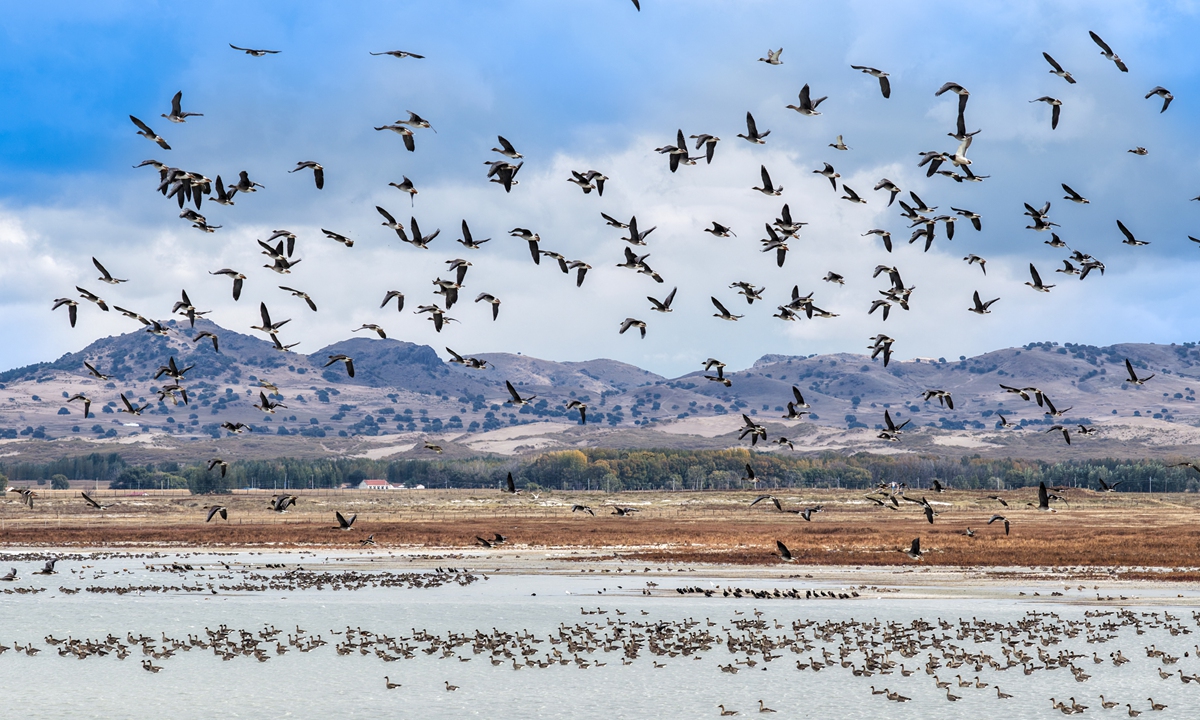
Flocks of wild geese gather and rest at a lake in Ongniud Banner, Chifeng City, North China's Inner Mongolia Autonomous Region, circling and flapping their wings as they begin their southward migration, on October 4, 2026. Photo: VCG
The same logic is playing out on a much larger scale in East China's Shandong Province. In the Yellow River Delta National Nature Reserve, authorities are using an integrated "sky-space-ground-sea" monitoring system, with AI handling ecological management. From field patrols to screen-based awareness, the technology has sharply cut the time required and reduced the blind spots involved in protecting birds, according to the Xinhua News Agency.
AI has greatly improved patrol efficiency, fire warnings, and ecological monitoring, filling gaps left by single-method approaches. This smart, precise model offers a replicable path for wetland and coastal ecological protection nationwide, Xinhua reported.
Technology is also changing how people engage with bird migration. Every October, birds arrive along the Yangtze River estuary, drawing crowds of birdwatchers. During the recent National Day holiday, six volunteer teams added ecological patrols to their usual crowd-control duties, according to local media reports from East China's Jiangsu Province.
Meanwhile, in East China's Anhui Province, more than a dozen white spoonbills, which are under the second-class protection in China and are a sensitive indicator of wetland health, recently appeared in the wetlands of Hefei, a sign that years of restoration work are paying off, according to CCTV.
A World Wide Fund for Nature staff member told the Global Times that around World Migratory Bird Day, the organization is holding a series of events in Shanghai, Northeast China's Heilongjiang Province, and other locations. These include creative birdwatching exhibitions, species-themed board games, and ecological construction workshops, aimed at encouraging more people to pay attention to and take part in protecting migratory birds and their habitats.
Global Times
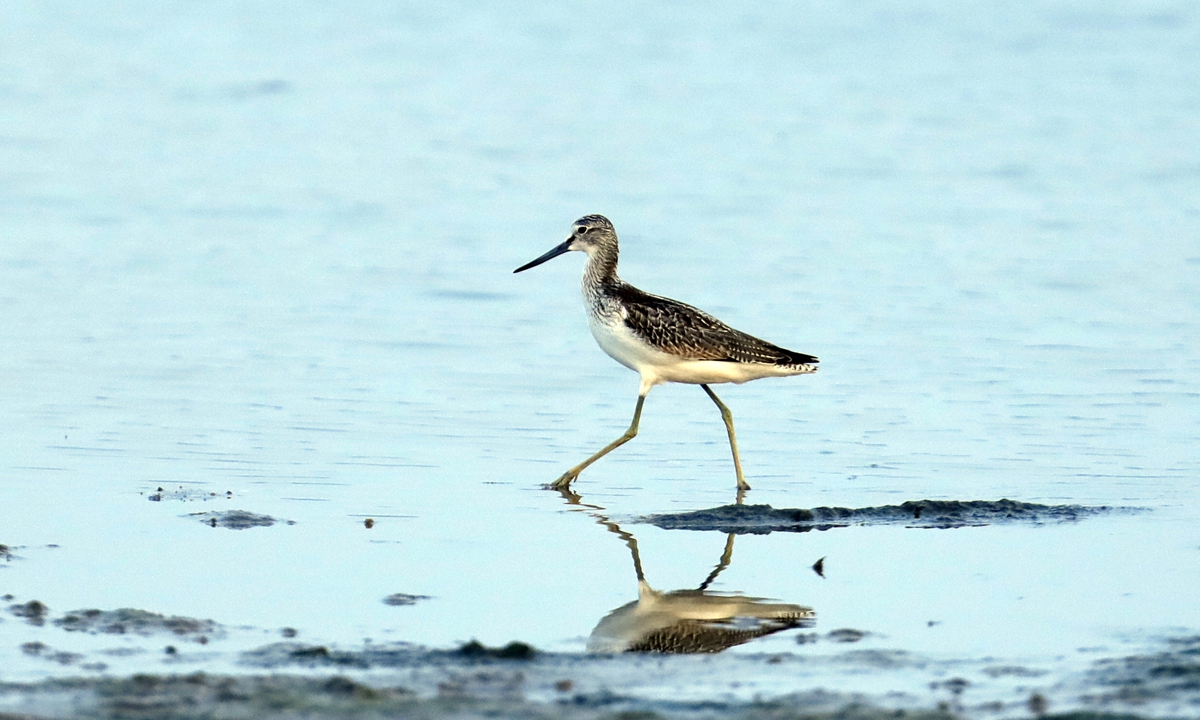
A migratory bird rests at a birdwatching wetland in Qinhuangdao, North China's Hebei Province, on September 16, 2026. Photo: VCG
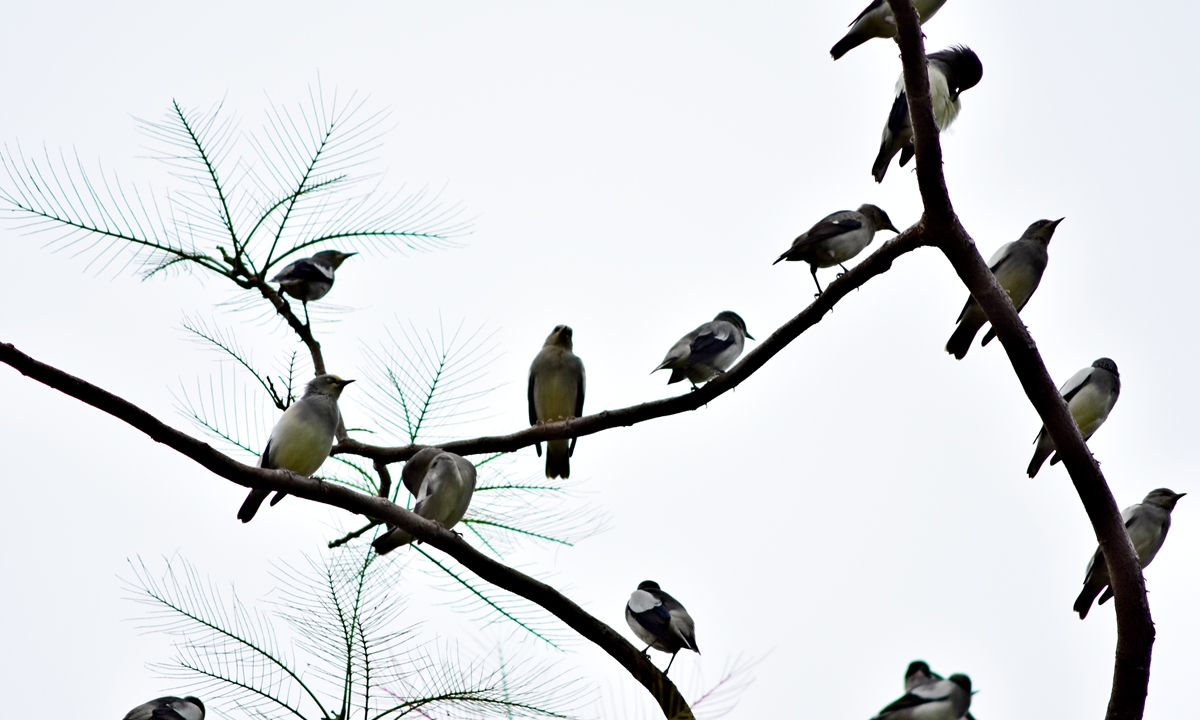
Flocks of grey-backed starlings rest in trees at a park in Sanya, South China's Hainan Province, on September 16, 2026. Photo: VCG
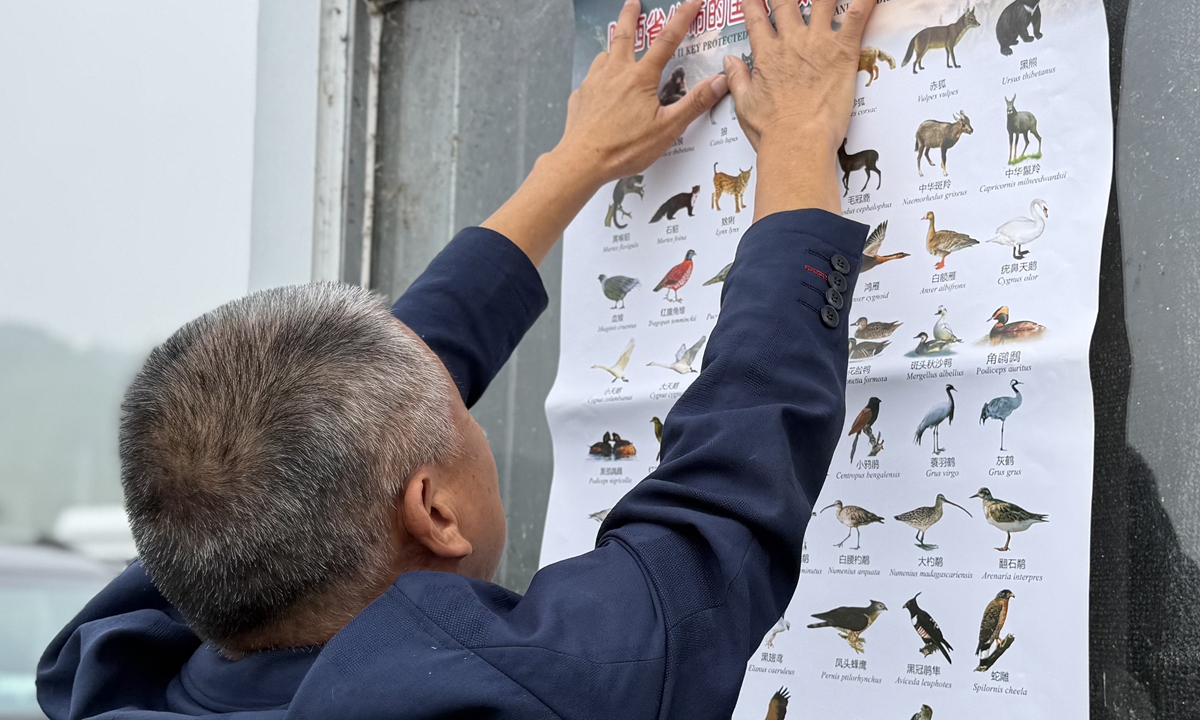
A staff member posts an illustrated guide to wildlife, including migratory birds, in Weinan, Northwest China's Shaanxi Province. Photo: VCG
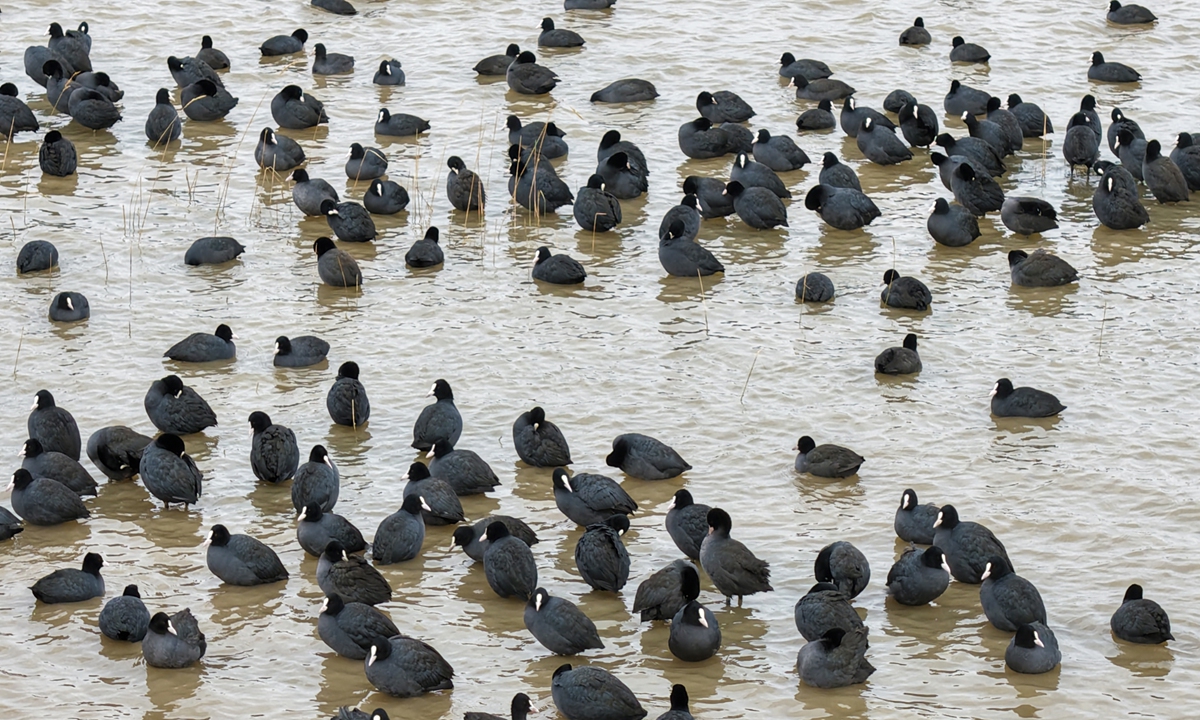
Large numbers of coots gather on the surface of a lake in Ongniud Banner, Inner Mongolia, resting and refueling during their southward migration, on October 4, 2026. Photo: VCG