Two Chinese porcelain objects reportedly damaged at British Museum, renewing calls for return of looted cultural relics
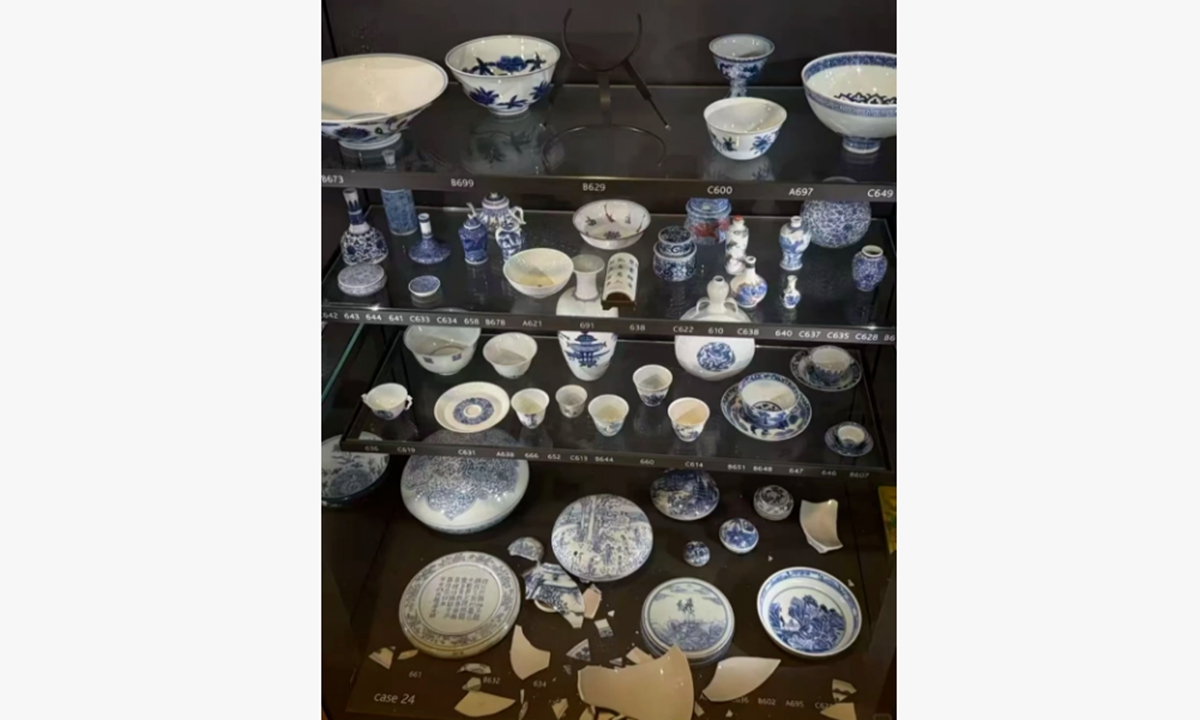
Broken porcelain fragments are seen scattered across the bottom of a display case in Room 95 of the British Museum, while the mounting position marked "B629" appears empty. Photo: Screenshot from media reports
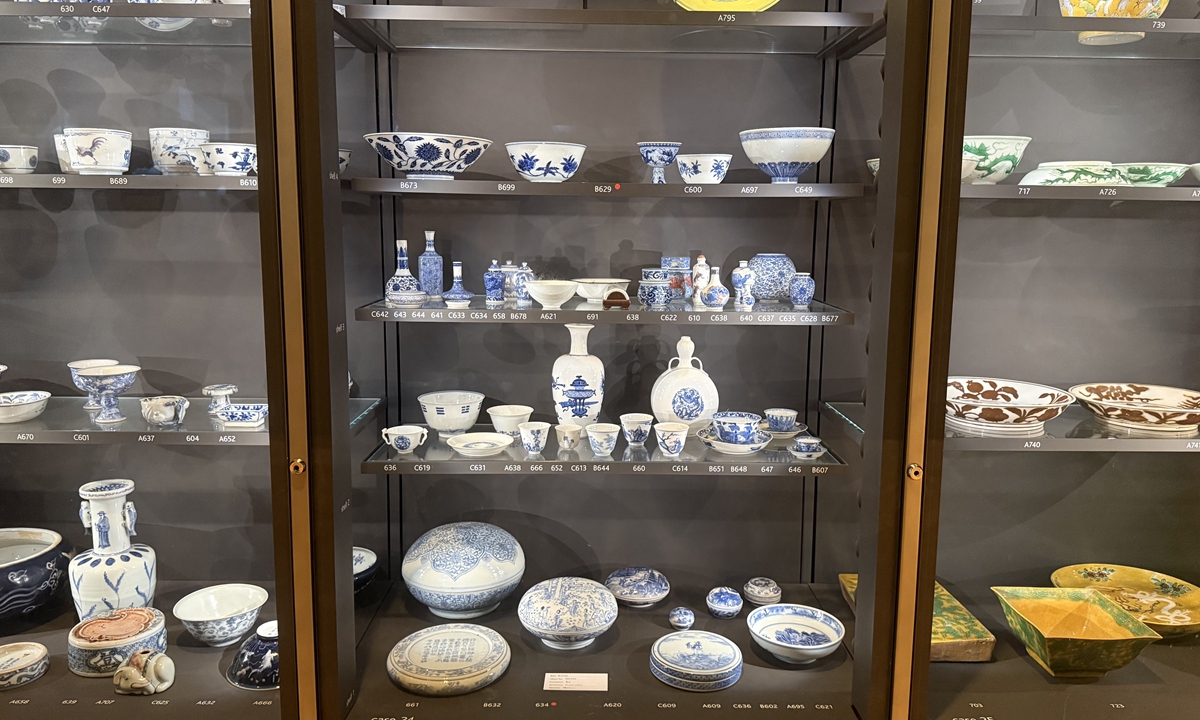
The display shelf where the damaged objects had been exhibited in Room 95 of the British Museum, on October 10, 2026. Photo: Courtesy of Pan Jinyu
Two Chinese porcelain objects dating to the Qing Dynasty (1644-1911) Kangxi period at the British Museum were allegedly damaged on Sunday after a bowl fell from its display shelf. The museum reportedly said in response that neither the shelf nor its mounting showed signs of failure and that an investigation into the incident was continuing, according to Red Star News.
According to the report, the two damaged objects, a bowl and a small box from the Sir Percival David collection, have now been handed over to the museum's conservation team for restoration.
News of the incident first drew attention after photographs showing broken porcelain pieces at the bottom of a display case circulated on Chinese social media.
Pan Jinyu, a self-described Chinese-language guide at the British Museum, told the Global Times on Friday that he returned to the gallery on October 7 and questioned museum staff after noticing that Room 95, where the objects had been displayed, was temporarily closed on October 4.
"They seemed surprised that we had seen photos of it, but confirmed to me that porcelain had indeed been broken," he said. At the time, the label at the display position read "object removed for study," Pan said.
By October 8, however, Pan said the labels had been changed, indicating that the two objects missing from their original display positions had been sent to "Destination: Conservation."
"The labels appeared to have been updated after the incident attracted wider public attention," Pan said.
Photos of the display case show a large number of Chinese porcelain objects arranged in close proximity on the shelves.
Pan said the bowl had been displayed upside down on a support, apparently to show its base to visitors. From photos taken after it fell, he felt the mounting did not appear particularly secure and there was enough open space for the bowl to drop. He noted that such displays were relatively uncommon and that most other porcelain objects appeared to be securely positioned.
The Global Times had contacted the British Museum for comment but had received no response as of press time. Notably, five days after the incident, the museum had yet to issue any public statement or explanation on the matter.
Under many social media posts about the incident, netizens expressed frustration over what they saw as the British Museum's failure to properly safeguard and preserve valuable cultural relics, while renewed calls emerged for the many Chinese artifacts in British Museum to be returned home.
"Still such a long road home," one netizen wrote. "Chinese cultural relics that were looted and scattered across the world embody the soul of Chinese culture. They must come home, and one day they will." Others put it more bluntly: "If you can't take proper care of them, give them back."
Huo Zhengxin, a professor at the China University of Political Science and Law, told the Global Times that in 2002, major museums in Europe and the US, including the British Museum, cited their role in preserving, studying and displaying world cultural heritage as part of the rationale for retaining overseas collections. However, repeated thefts and damage at institutions including the British Museum in recent years have increasingly called that argument into question.
For cultural relics taken overseas through illegal wartime plunder, colonial expansion or other improper means, the expert said that seeking their return is an inalienable sovereign right of the countries of origin and a necessary step toward restoring historical justice.
RELATED ARTICLES