Lai’s ‘Double Ten’ speech rebuked for stoking cross-Straits confrontation and pushing separatist agenda
By and Guo Yuandan Published: Oct 11, 2026 08:09 PM

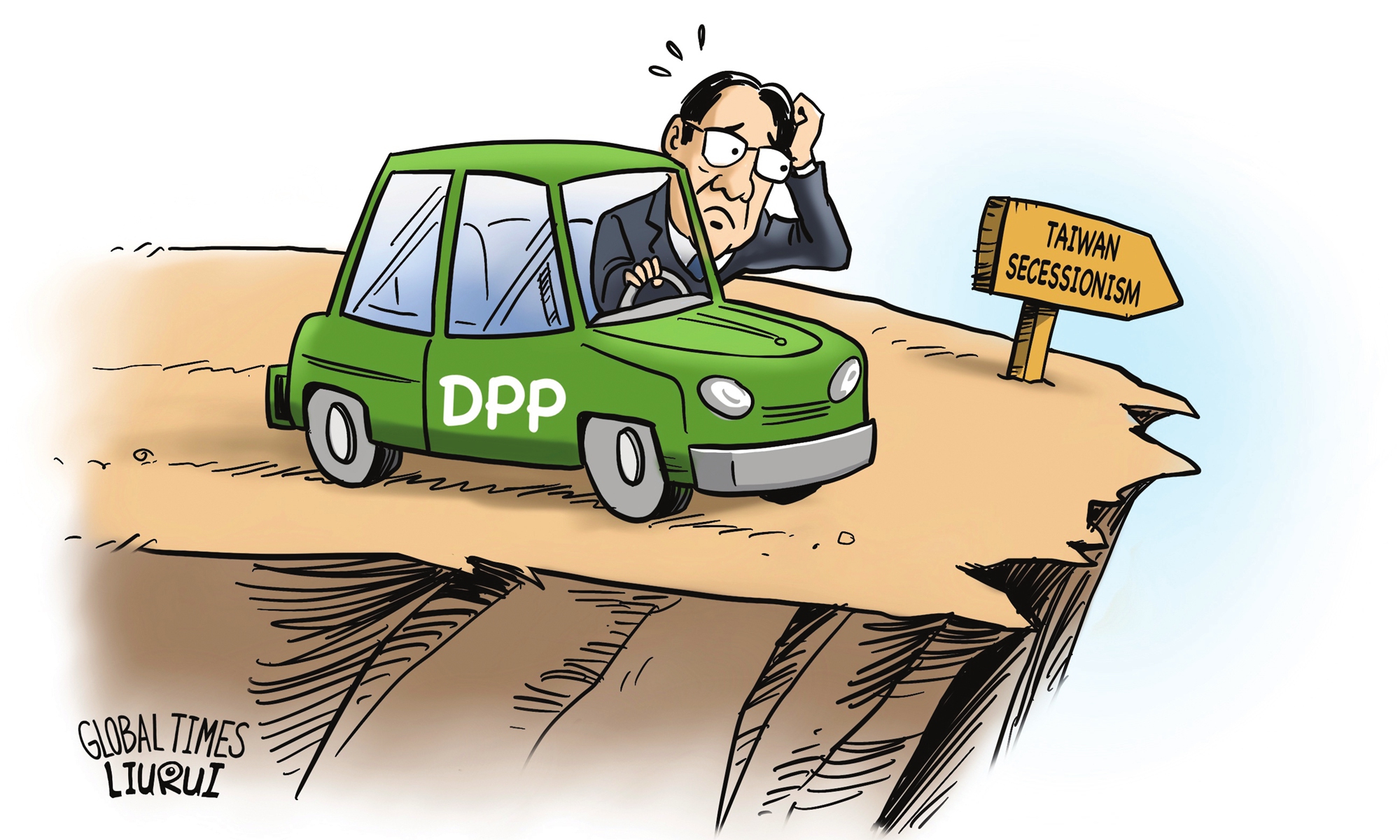
Taiwan DPP Illustration: Liu Rui/GT
China's Ministry of National Defense on Sunday strongly criticized Taiwan regional leader Lai Ching-te's so-called "Double Ten speech" for exaggerating the mainland military threat and inciting cross-Straits confrontation, warning against attempts to seek "Taiwan independence" through military buildup and reliance on external forces.
This latest response came a day after the State Council Taiwan Affairs Office condemned Lai's remarks, while opposition figures on the island also criticized the Democratic Progressive Party (DPP) authorities for rising cross-Straits tensions, political divisions and domestic governance issues.
Defense Ministry spokesperson Chen Xi slammed Lai's "Double Ten speech," stating that there is only one China in the world and that Taiwan is part of China, which constitutes the true status quo across the Taiwan Straits.
Chen noted that in recent years, the DPP authorities have pursued separatism and rejected reunification for their own party interests, undermining stability in the Taiwan Straits and sacrificing the island's future.
Chen accused Lai of stubbornly adhering to a separatist position, distorting facts and exaggerating the so-called mainland military threat to incite confrontation across the Straits, exposing Lai's nature as a source of trouble for Taiwan and a threat to peace.
The Chinese People's Liberation Army's regular drills and training activities around the island are carried out to deter separatist activities seeking "Taiwan independence" and plots of external interference, and to safeguard the security and well-being of Taiwan compatriots, the spokesperson said.
"We hope Taiwan compatriots will join the mainland in combating separatist forces, opposing external interference, safeguarding peace and sharing the fruits of national rejuvenation," Chen added.
Zheng Jian, a professor at the Taiwan Research Institute of Xiamen University and deputy director of the Study and Research Committee of the China Council for the Promotion of Peaceful National Reunification, told the Global Times on Sunday that Lai's latest remarks were merely "old wine in a new bottle," reflecting calculated political interests rather than substantive change.
Zheng attributed Lai's confrontational rhetoric to domestic political pressure, public dissatisfaction with DPP authorities over livelihood issues, and improving China-US relations, which he said had upset Lai and disrupted his attempts to rely on external forces to advance separatist objectives.
Zhen noted that Lai was exaggerating the so-called mainland threat to justify increased defense spending and pressure Taiwan residents to accept his military agenda, while his emphasis on asymmetric warfare and whole-of-society defense resilience obscured the risks of confrontation.
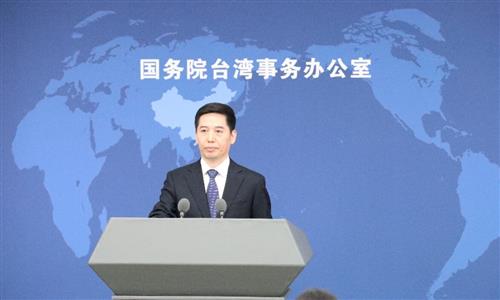
The defense ministry's statement followed a strong response from the State Council Taiwan Affairs Office on Saturday.
Spokesperson Zhang Han said Lai's speech disregarded facts, distorted right and wrong, and misled the public, describing it as a performance consistent with his self-proclaimed identity as a "pragmatic worker for Taiwan independence."
Zhang accused Lai of promoting the false narrative of "democracy versus authoritarianism," exaggerating the so-called mainland threat and attempting to seek independence through military buildup and external support.
Criticism of the DPP authorities has also come from opposition figures on the island.
Kuomintang (KMT) Chairperson Cheng Li-wun was reportedly absent from the official so-called Double Ten celebrations on Saturday, instead attending a separate flag-raising ceremony in Kaohsiung, where she criticized the DPP authorities for heightening cross-Straits tensions and undermining democracy.
Cheng warned that the island was facing an increasingly dangerous situation amid cross-Straits confrontation and an uncertain international environment.
She stressed that peace is essential to safeguarding Taiwan's democracy, freedom and prosperity, warning that everything could be lost in the event of war.
Taiwan People's Party (TPP) Chairman Huang Kuo-chang also expressed disappointment with Lai's so-called "Double Ten speech," accusing him of using political slogans and elaborate rhetoric to conceal the real problems facing Taiwan society, local media China Review News reported.
Huang criticized Lai for ignoring the TPP's six proposals on governance and public welfare while failing to address issues including widening wealth inequality and difficulties facing traditional industries. He accused Lai of displaying an "arrogance of power," arguing that the regional leader's repeated calls for unity contrast with the political divisions under the DPP authorities.
Meanwhile, the Taiwan region's "legislative speaker" Han Kuo-yu criticized the growing confrontation between the island's executive and legislative branches during Saturday's so-called Double Ten celebrations.
Han called on Lai to resolve the political deadlock, warning that "Taiwan must not be seen by the world as a 'fake democracy, real dictatorship.'"
Zhu Guilan, an assistant professor at the Institute for Taiwan Studies of Tsinghua University, told the Global Times that Lai's remarks served three purposes: projecting an image of peace to conceal his separatist intentions, seeking external backing by playing the "security card" amid interactions between Beijing and Washington, and falsely invoking World War II history to portray the Taiwan question as an international issue in an attempt to lend legitimacy to his "Taiwan independence" agenda.
"Improving China-US relations are supposed to be a valuable opportunity to safeguard peace and stability across the Taiwan Straits. Yet Lai is moving in the opposite direction by deliberately stoking confrontation," Zheng noted.
Such an approach would increase the risk of conflict across the Straits and run counter to Taiwan residents' aspirations for peace and development, he added.
RELATED ARTICLES