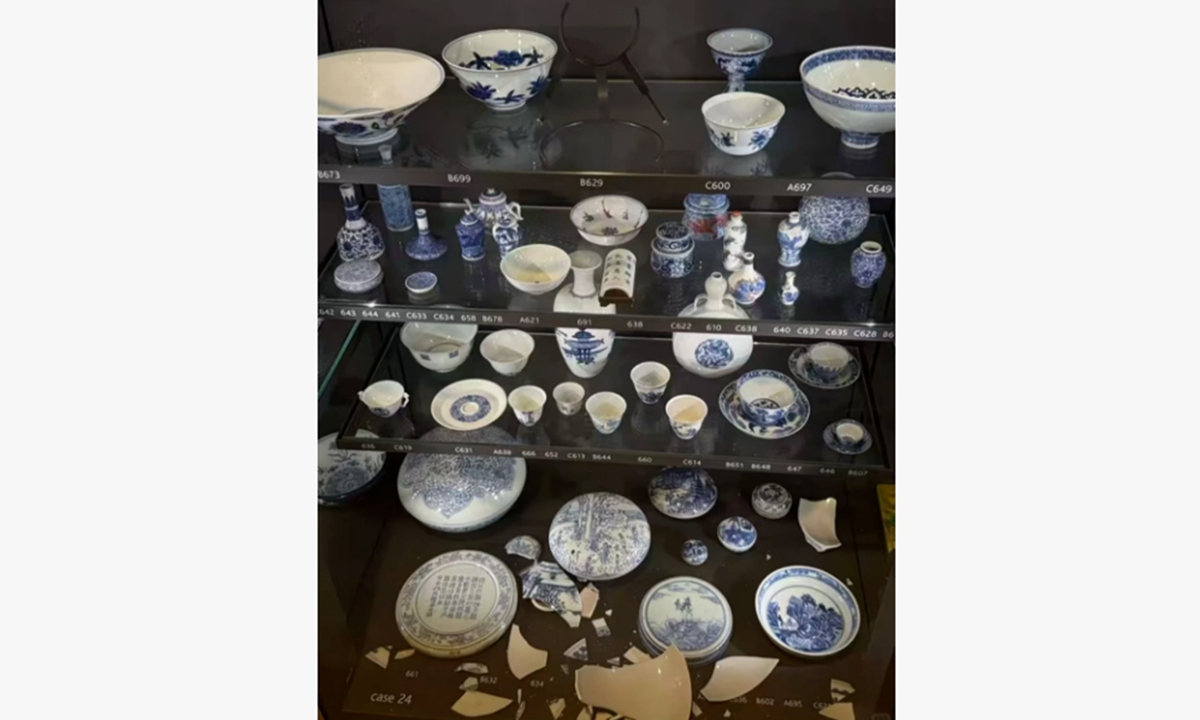
Broken porcelain fragments are seen scattered across the bottom of a display case in Room 95 of the British Museum, while the mounting position marked "B629" appears empty. Photo: Screenshot from media reports
The recent damage to Chinese cultural relics at the British Museum has drawn public attention. On October 4, the day the damage occurred, the museum abruptly closed the gallery housing the relics without warning, sparking speculation among tour guides and visitors present. Yet the institution did not release any public statement immediately.Several days later, netizens posted detailed accounts of the accident with photos on Chinese social media platforms. Chinese media then picked up the story. It was only on October 9 that the museum confirmed via email to Chinese media outlets that a porcelain bowl dating back to the Kangxi period of the Qing Dynasty (1644-1911) and a small box had been damaged. The museum added that an expert conservation team had been tasked with restoration and described the incident as "regrettable."
Throughout this episode, the British Museum evaded transparency and never issued a press release or statement on its own initiative.
After the Global Times conducted a follow-up interview with an independent docent at the British Museum, further discrepancies came to light. For example, on October 7 - three days after the artifacts were damaged - the exhibition label simply read "Removed for research." It was not until October 8, as the incident gained further attention, that the museum officially updated the label information, stating that the artifacts had been sent to the Conservation Department. So why did the museum lie?
According to the docent, the damaged blue-and-white bowl was displayed upside down to show visitors the craftsmanship on the bottom of the porcelain; however, the supporting brackets in the display case were insufficiently secure and had large gaps, posing a clear risk of the artifact falling out. To date, the museum has not provided any explanation regarding this concern.
In recent years, the British Museum has been embroiled in several controversies over the improper handling, theft, and damage of cultural artifacts. In addition, it remains unknown whether the approximately 23,000 Chinese artifacts in its collection have encountered any issues.
Following the incident, not only did the British Museum adopt a "low-key" approach throughout, but coverage by the British mainstream media, which is typically eager to get to the bottom of things, was also sparse. Such "tacit complicity" is disheartening, yet people are no strangers to this brand of Western double standard: turning a blind eye to their own misdeeds while nitpicking at others and looking for nails to hammer everywhere.
In recent years, British society has been embroiled in controversy over whether cultural relics should be returned. In response, the British Museum has consistently used the British Museum Act 1963 as a shield, with its director Nicholas Cullinan even explicitly ruling out any possibility of "return." The British government has also repeatedly cited this law, claiming that the decision to repatriate is "a matter for its trustees" of the British Museum and that the government "has no plans to change the law."
Against the backdrop of a growing global trend toward reflecting on the crimes of colonial aggression and repatriating illegally acquired cultural artifacts, Britain's refusal to return them reflects its lingering attachment to the old colonial dream.
The British Museum should end its silence and buck-passing, conduct an open and transparent investigation into this incident of cultural relic damage, and provide the public with a clear response. It should also use this as an opportunity to seriously address the legitimate demands from China and the international community regarding the return of cultural relics.
The lie that "Britain boasts better conservation conditions" has been debunked time and again. The British Museum cannot escape its responsibility to settle this debt by returning the illegally looted cultural relics.
RELATED ARTICLES