NHK documentary on notorious Yasukuni Shrine sparks backlash, exposing deep-rooted misconceptions among right-wing forces: Chinese expert
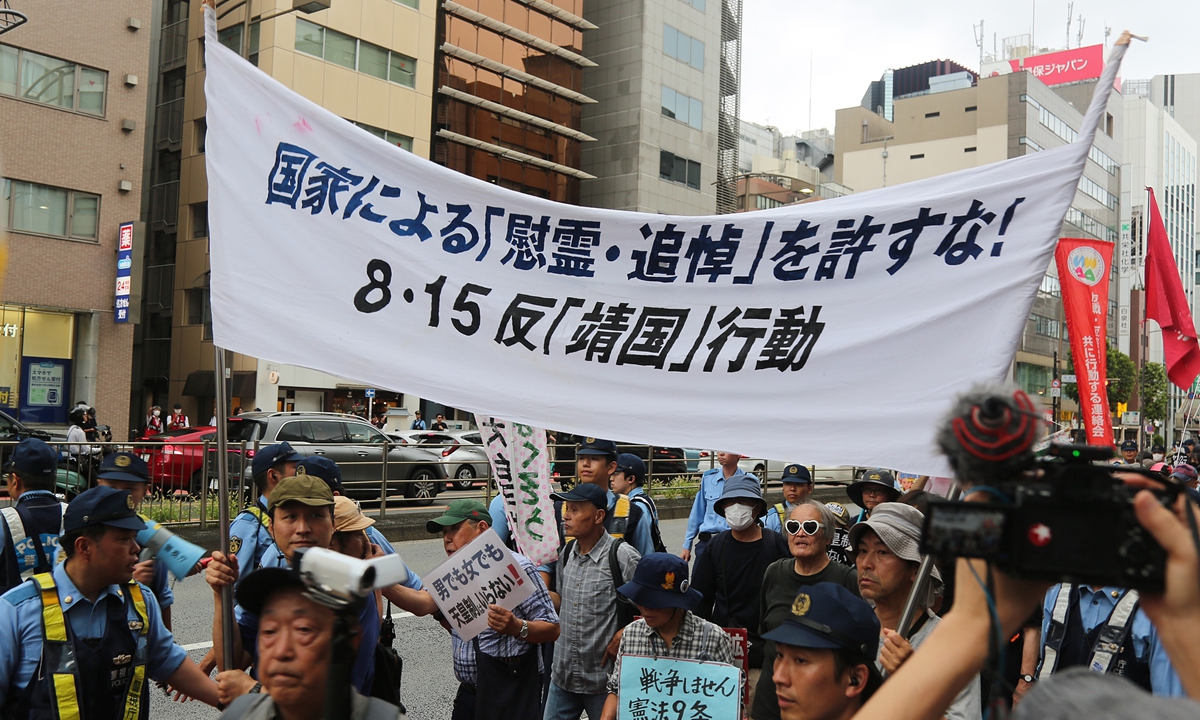
Japanese citizens hold a protest march near Awaji Park in Tokyo on August 15, 2026, opposing politicians offering ritual fees to or visiting the notorious Yasukuni Shrine, which enshrines Class-A war criminals from World War II. Photo: VCG
A new documentary on Japan's notorious Yasukuni Shrine aired by Japanese public broadcaster NHK has triggered controversy among Japanese viewers, with some critics saying the program downplayed the issue of the enshrinement of Class-A war criminals.Despite side-stepping deep discussions of the shrine's postwar role, the documentary still triggered a backlash from some right-wing groups in Japan, exposing the deep-rooted misconceptions and increasingly radical nature of Japan's right-wing forces, a Chinese expert said.
The special program "Yasukuni Shrine: Secret Records — The Blank Postwar History" was aired on Sunday. Before the broadcast, NHK published a preview saying "secret records" were disclosed for the first time in the documentary, containing details of the previously unknown "blank pages of history", including the behind-the-scenes process surrounding the enshrinement of Class-A war criminals.
Through analyzing internal documents and interviews with over 200 people connected to the issue, the program revealed the decision-making process including the agreement on enshrinement in 1969, later changes to the decision, and the enshrinement of the notorious Class-A war criminals in 1978.
Some Japanese observers said these documents show there was no immediate unanimous approval within Yasukuni Shrine for the enshrinement of Class-A war criminals. The way war criminals were handled is closely linked to the issue of Japan's war responsibility, making the release of these materials highly significant.
Others commented that the program serves as powerful education for the general public, and the internal audio recordings and video footage are particularly rare.
Since the enshrinement, Japanese politicians have continuously visited the Yasukuni Shrine or placed offerings there, provoking strong discontent among Asian countries including China and South Korea which were invaded by Japan during WWII.
Following the broadcast, the documentary drew heated discussions online. Some viewers criticized the program for treating the enshrinement of Class-A war criminals too lightly and failing to sufficiently discuss the Yasukuni Shrine's role beyond mourning the war dead.
A netizen @keishi_001 criticized the program for changing the shrine's rhetoric of "consolation of souls" and "honoring" to "how to mourn" and muddling the distinction between them. Such wording "doesn't at all highlight the danger of Yasukuni Shrine's role as a facility that glorifies the war dead, praises their virtues and passes them down", and the documentary didn't depict why China and South Korea react with opposition, or "the role of the shrine as the ideological pillar for war mobilization in the regions it invaded or colonized."
However, even this understatement in the program triggered opposing criticism from some viewers, including one X user who claimed "there is no duty to abandon the spirit of honoring the war dead and their families", adding that NHK is "desperate to smear Japan at any cost."
Zhou Yongsheng, a professor at China Foreign Affairs University, told the Global Times that the reactions surrounding the documentary reflected the extent to which some Japanese right-wing forces have moved in a direction of historical distortion.
Some people in Japan have portrayed war criminals as "heroes", Zhou said, citing a narrative advocated by people including former Japanese prime ministers Shinzo Abe and Junichiro Koizumi that the sacrifices of those who died in the war helped lay the foundation for peace.
This type of narrative completely distorts history. The invasion, which Japan initiated and has failed to sincerely reflect on to this day, did not lay the foundation for peace or Japan's development, but rather undermined Japan's capability of healthy and peaceful development and its postwar credibility among its neighbors, Zhou said.
Since the enshrinement of the Class-A war criminals, Japanese politicians have either visited or provided ritual offerings, which triggered strong backlashes from victim countries including China and South Korea.
This year marks the 80th anniversary of the opening of the Tokyo Trial. On August 15, although Japanese Prime Minister Takaichi Sanae has not personally set foot in the Yasukuni Shrine, she offered ritual fees in her capacity as president of the Liberal Democratic Party. Some cabinet members, including Defense Minister Shinjiro Koizumi, visited the shrine in person. Such moves have once again put the Yasukuni issue into the spotlight.
Amid this trend, Atsushi Koketsu, a professor emeritus at Yamaguchi University in Japan, told the Global Times that politicians had held back from visiting Yasukuni for a certain period of time. But since the Takaichi administration took office, Japan's drift toward militarism has become unmistakable.
The Japanese people should recognize that such behavior is wrong. "I personally define Yasukuni Shrine as a 'shrine of aggression'. Therefore, I believe that such visits carry the danger of reenacting the past wars of aggression," Atsushi said.
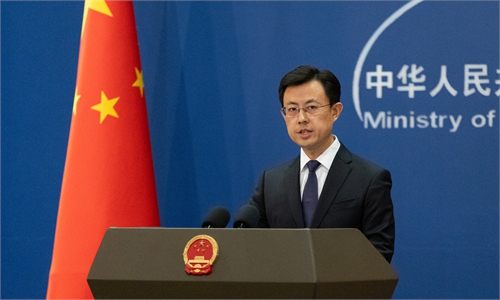
Responding to these visits, a Chinese Foreign Ministry spokesperson said earlier in August that during WWII, Japan launched the war of aggression and committed horrendous crimes. The Yasukuni war shrine is a spiritual tool and symbol of Japanese militarism. It is in fact a shrine for war criminals, as it honors 14 convicted Class-A war criminals responsible for the war of aggression.
"No pretext whatsoever can hide the Japanese politicians' true intention, which is to change the verdict on the war criminals, cover up Japan's war crimes, distort historical facts, and pave the way for accelerating remilitarization. This is an affront to historical justice, a challenge to the foundational norms of civilization, and a provocation against the postwar international order. Such behavior has been firmly rejected by the overwhelming majority of the international community," the spokesperson said.
China urged Japan to seriously reflect on its history of aggression, make a clean break with militarism, and regain the trust of Asian neighbors and the international community through concrete actions, said the spokesperson.
RELATED ARTICLES