China, South Korea reportedly restart joint patrols in Yellow Sea to curb illegal fishing, signaling improved maritime trust
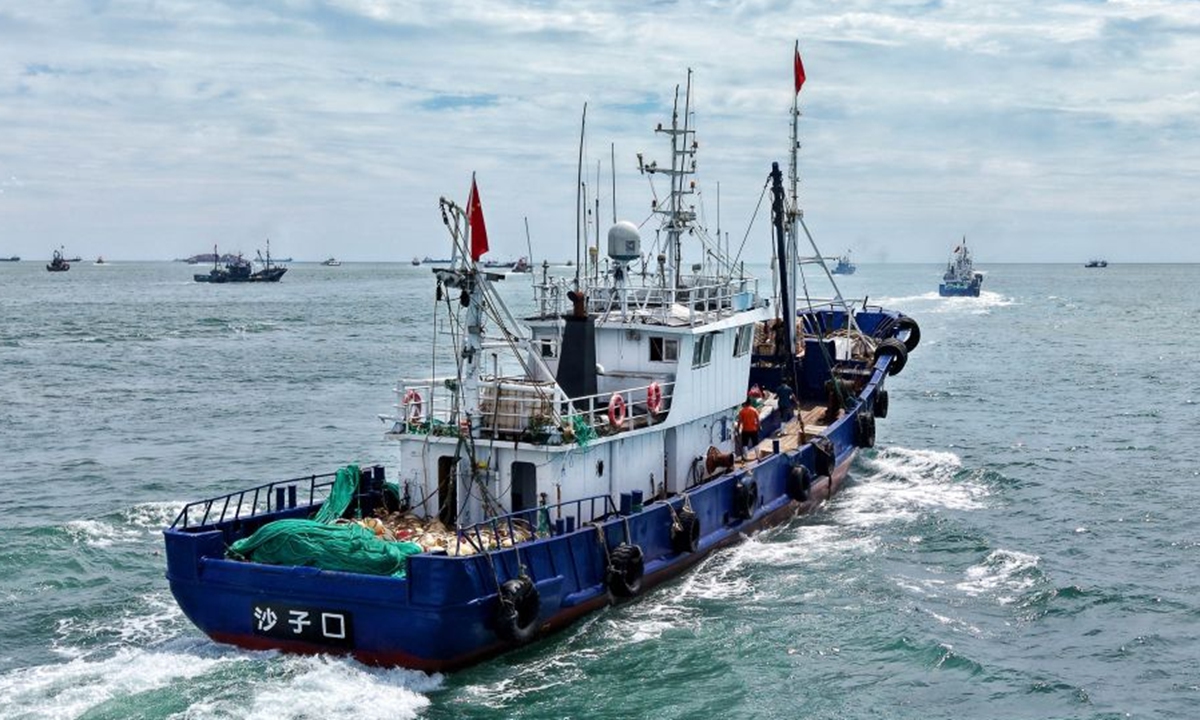
A drone photo taken on Sept. 1, 2026 shows a fishing boat sailing out of a fishing port in Qingdao, East China's Shandong Province. The new fishing season in the Yellow Sea and Bohai Sea kicked off on Tuesday after a four-month summer fishing moratorium. Photo: Xinhua
China and South Korea have reportedly resumed joint patrols in the provisional measures zone in the Yellow Sea after a four-year hiatus, with the move showing improved mutual trust and helping promote legal fishing and maritime cooperation, a Chinese expert said.
South Korea's Embassy in China said that China and South Korea have been conducting joint patrols starting October 8 to crack down on illegal fishing and other violations in the relevant areas. The patrols, which will continue until October 17, mark the resumption of joint operations after a four-year suspension since 2022, Yonhap News reported on Monday.
During the patrols, fisheries guidance and law enforcement officials from the two countries will board each other's vessels to exchange law enforcement methods and experience, while strengthening on-site coordination, according to the report.
"Restarting joint law enforcement after four years, with law enforcement personnel from the two sides boarding each other's vessels, is an uncommon practice and reflects to some extent the level of mutual trust between China and South Korea," Lü Chao, a research fellow at the Liaoning Academy of Social Sciences, told the Global Times on Tuesday.
The cooperation is beneficial to promoting legal fishing activities in the Yellow Sea, Lü said, noting that establishing joint law enforcement is "not an easy achievement" and represents a positive development after relations between the two countries improved.
A South Korean embassy official in China was also quoted as saying that "one of the areas where cooperation results have emerged since the South Korea-China summit is the crackdown on illegal fishing." The official added that "through this joint patrol, the two countries will further strengthen cooperation and communication between their law enforcement agencies," according to the Yonhap News report.
The joint patrols were carried out in accordance with an agreement reached by the two countries to enhance cooperation and eliminate illegal fishing activities.
"The Chinese government has always called on Chinese fishermen to conduct fishing activities in accordance with legal rules," Lü said, adding that joint law enforcement could help reduce fishing-related disputes, ensure lawful fishing operations in relevant waters and promote a more institutionalized approach to curbing illegal fishing.
Chinese authorities previously carried out a fishing moratorium law enforcement campaign from May 1 to September 16, launching intensive enforcement operations in multiple maritime areas, including waters near the eastern boundary line of the China-South Korea provisional measures zone. The campaign targeted serious violations such as organized illegal fishing, fishing vessels entering closed waters before the official opening of the fishing season, and illegal fishing activities involving high-powered speedboats.
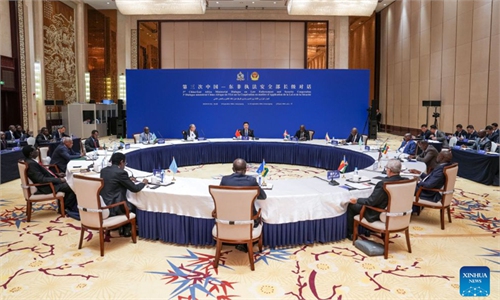
At the fourth China-South Korea meeting on maritime affairs dialogue and cooperation, held on September 21, the two sides agreed that maritime affairs are an important component of bilateral relations and pledged to continue working toward building the Yellow Sea into "a sea of peace, friendship and cooperation."
The two sides agreed to make better use of maritime dialogue mechanisms, strengthen communication, properly manage differences, advance maritime boundary negotiations, and enhance practical cooperation in areas including defense, law enforcement, fisheries, scientific research, environmental protection, shipping, search and rescue, as well as ocean and polar affairs.
Lü said that after South Korea's new administration adopted a more pragmatic approach, the two countries completed reciprocal visits within a few months, and the joint patrols were launched shortly after the maritime cooperation dialogue, which he described as a measure to enhance mutual trust between law enforcement agencies and promote bilateral relations.
"Dialogue is necessary. It can help resolve relevant issues and also serve as a precautionary measure to prevent disputes from escalating into serious incidents," Lü added.
RELATED ARTICLES