IN-DEPTH / IN-DEPTH
Chinese doctors help save a child’s kidneys and train local surgeons in growing medical partnership with PNG
Skills that stay
By Published: Oct 13, 2026 10:33 PM

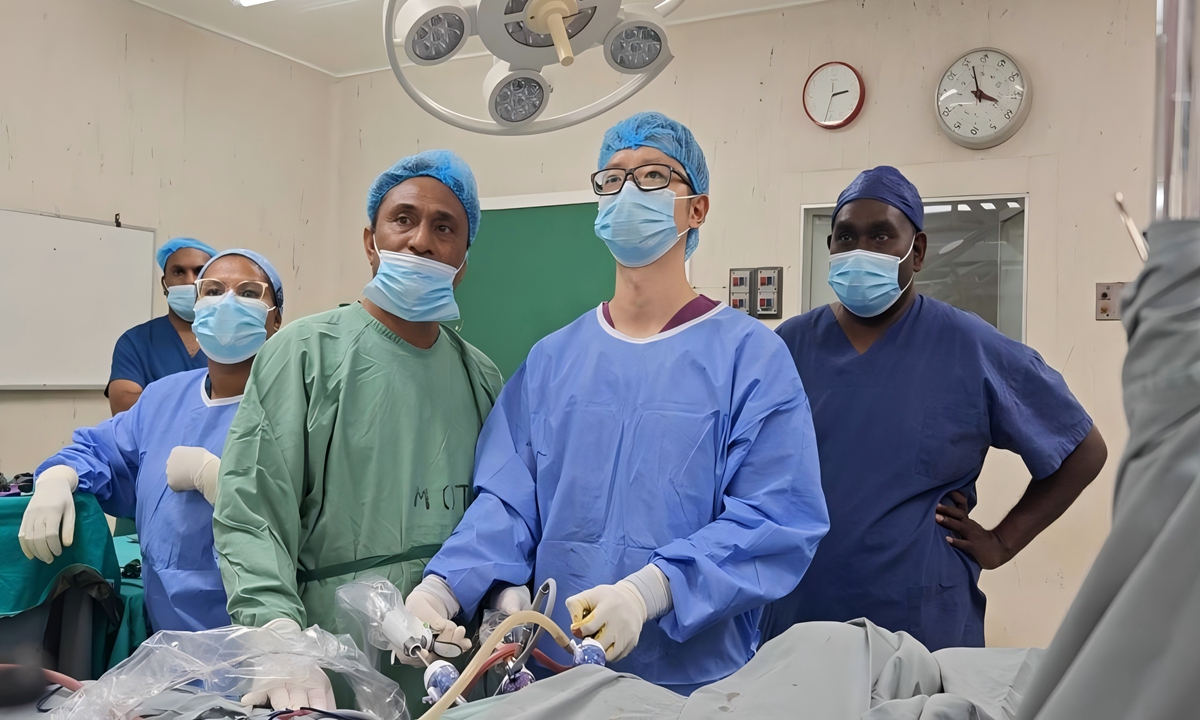
Chinese and Papua New Guinean doctors perform surgery to remove a tumor at Port Moresby General Hospital in Papua New Guinea on August 24, 2026. Photos on this page: Courtesy of Chinese medical team in PNG
"I won the 'China in My Eyes' competition, hosted by the Chinese Embassy!" Papua New Guinean doctor Mazel Kerry Ipakasa wrote in a recent post on his LinkedIn account.
His winning entry was a video documenting the medical partnership between China and Papua New Guinea (PNG), a collaboration he had experienced firsthand.
"As a residential dental surgeon at Port Moresby General Hospital, I have had the privilege of working alongside the 15th China Medical Team," he said.
Through footage of joint operations and everyday exchanges, Ipakasa shared how Chinese specialists treated patients and mentored local colleagues, including his own experience learning microvascular surgical techniques.
For Xu Wei, captain of the 15th Chinese medical team to PNG, the video came as both a surprise and a gift.
"The local doctors came up with the idea to make the video. We were deeply moved when we saw it," Xu told the Global Times. Receiving recognition from the people they worked with and served meant a great deal to the team, he said.
The partnership captured in the video is part of China's broader efforts to strengthen international medical cooperation. At a national meeting on health held in Beijing on Monday and Tuesday, China called for efforts to be made to actively promote the building of a global community of health for all, according to the Xinhua News Agency.
China has sent medical aid teams to 59 countries and regions since late 2012. Beyond treating patients, Chinese medical teams have also worked with local counterparts to share expertise and improve healthcare services.
In PNG, such cooperation has continued for more than two decades.
Ipakasa's video also comes as the two countries mark the 50th anniversary of diplomatic relations this year. China began dispatching medical teams to PNG in 2002, with the latest team working alongside local doctors at Port Moresby General Hospital.
Behind the partnership captured on camera lies an ongoing task: adapting medical technology to local conditions and helping PNG doctors acquire the skills to use it themselves.
Making technology work
Seven-year-old Grace arrived at Port Moresby General Hospital with pain and fever in late March. She would undergo the last of three operations in August.
Stones had formed in both her kidneys, blocking the flow of urine and causing a serious infection. Without effective treatment, both kidneys risked lasting damage, according to a case report provided by the Chinese medical team.
Chinese urologist Zhang Teng and his local colleagues planned to treat her in stages. They needed to remove the stones while bringing the infection under control.
But controlling the infection proved difficult. Even after weeks of treatment, the infection persisted. A drainage tube accidentally came out, adding another setback.
Then the laser equipment that was needed to break up the stones stopped working.
Zhang contacted an engineer in China. Through a video connection, they worked together to identify the fault and repair the equipment.
One more difficulty remained: the hospital lacked a child-sized instrument needed to reach the remaining stone in her ureter, the tube carrying urine from the kidney to the bladder.
Zhang combined the instruments available, reaching the stone through a small opening into the kidney. According to the team's case report, the approach helped preserve her kidney function and avoid injury to the ureter.
On August 19, he completed the last of three operations. Nearly five months after treatment began, the team reported that Grace was recovering well and both her kidneys had been preserved.
The medical challenges had been complex. The goal throughout was something any family could understand: helping a 7-year-old child recover while protecting her health for the years ahead.
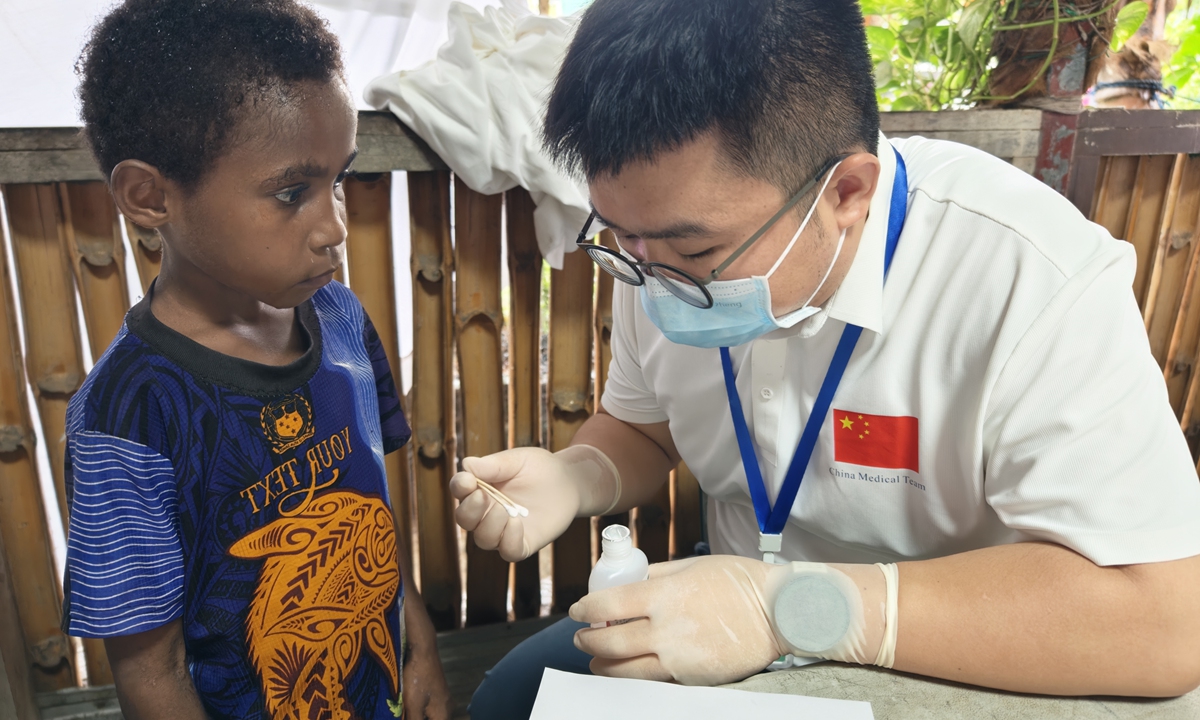
A Chinese doctor talks to a child in Papua New Guinea.
Such cases demand adjustments that go beyond choosing a surgical technique. Xu told the Global Times that treatment plans that are familiar and routine in China cannot always be carried out as expected in PNG. Complex cases sometimes require remote consultations with specialists at the hospitals supporting the mission, the Global Times learned from the medic team.
The current team comprises 10 members: eight medical specialists, an interpreter and a cook. Organized by Chongqing University Cancer Hospital, it draws doctors from several hospitals across Southwest China's Chongqing Municipality.
The specialists work as consultants alongside local colleagues in fields including cardiology, surgery, newborn medicine, gynecology and traditional Chinese medicine. By August 31, the team had participated in or led 588 operations and introduced more than 80 new techniques and projects, according to the team's work summary.
More than 100 medical professionals applied for the eight specialist positions, Xu told the Global Times. The roughly year-long assignment began in October 2025. Members completed individual handovers with their predecessors from the 14th team, helping maintain continuity in clinical work and training between successive postings.
At first, Xu's decision to take the assignment began with a sense of responsibility. "Representing our country on a medical aid mission is a great honor," he told the Global Times.
Working in PNG gave that responsibility a direct, personal meaning. Through treatment, he said, doctors could help local people experience the benefits of cooperation in their own lives.
The experience also deepened his appreciation for the stable environment and healthcare support available at home. That backing extends into the team's daily work abroad, through specialist advice, equipment and supplies from China.
"I am grateful to our country, which is always quietly supporting us," Xu said.
Let local doctors take the lead
An operation becomes a teaching opportunity when a local colleague takes the lead and the visiting specialist guides each step - Xu describes this as a central responsibility of the medical team.
"What matters more than performing the operations ourselves is teaching local doctors how to perform them," he told the Global Times. Teaching continues during surgery, as Chinese specialists explain procedures and help colleagues develop the skills to carry them out.
At Port Moresby General Hospital, that process is changing how pacemaker procedures are performed.
Before the current team's arrival, the hospital conducted approximately three to four pacemaker implantations a year, with electrodes placed at the tip of the right ventricle, the Global Times learned from the team.
Chinese cardiologist Zhang Xiaoliang introduced additional implantation techniques, including left bundle branch area pacing. This approach places an electrode near the heart's natural electrical conduction system, helping coordinate the contractions that pump blood.
Introducing the procedure required preparation across several stages of care. The team reviewed the steps from preoperative assessment to electrode placement and postoperative adjustments, while providing training and surgical demonstrations, according to its account of the procedure.
During one operation documented by the team, a local lead surgeon carried out the vein puncture, guided the wire and implanted the electrode under the Chinese specialist's guidance. Imaging helped locate the target area, and subsequent testing confirmed that the pacing parameters met the required standards.
Local doctors Wesong Boko and Noah Tapaua completed structured training in the technique. Of five left bundle branch area pacing procedures reported by the team, Tapaua led three. The other two were conducted as teaching cases.
Those procedures formed part of 20 pacemaker implantations completed during the current team's posting, according to its work summary.
The collaboration also produced a jointly developed operating manual and a care pathway covering patient screening, surgery and follow-up. These give the local team a shared reference for decisions before and after implantation.
Training extended to the staff supporting the procedures. On August 7, Zhang held a practical course on cardiac anatomy and pacing, bringing together cardiologists, catheterization laboratory nurses and other medical personnel.
Participants identified structures in anatomical specimens, practiced locating implantation sites and reviewed clinical cases. The course connected the anatomy underlying the technique with the decisions required during an actual operation.
A similar progression is taking place in chest surgery. Xu, a thoracic surgeon, said he teaches local colleagues while performing minimally invasive procedures. His aim is to help them develop the ability to carry out the surgery without needing him at the operating table.
Xu acknowledged that participation varies. Some colleagues actively seek new knowledge and pursue further training in China; others are more inclined to leave complex procedures to the Chinese specialists while they remain available.
By August 31, the Chinese team had conducted 152 teaching and training sessions, according to its work summary.
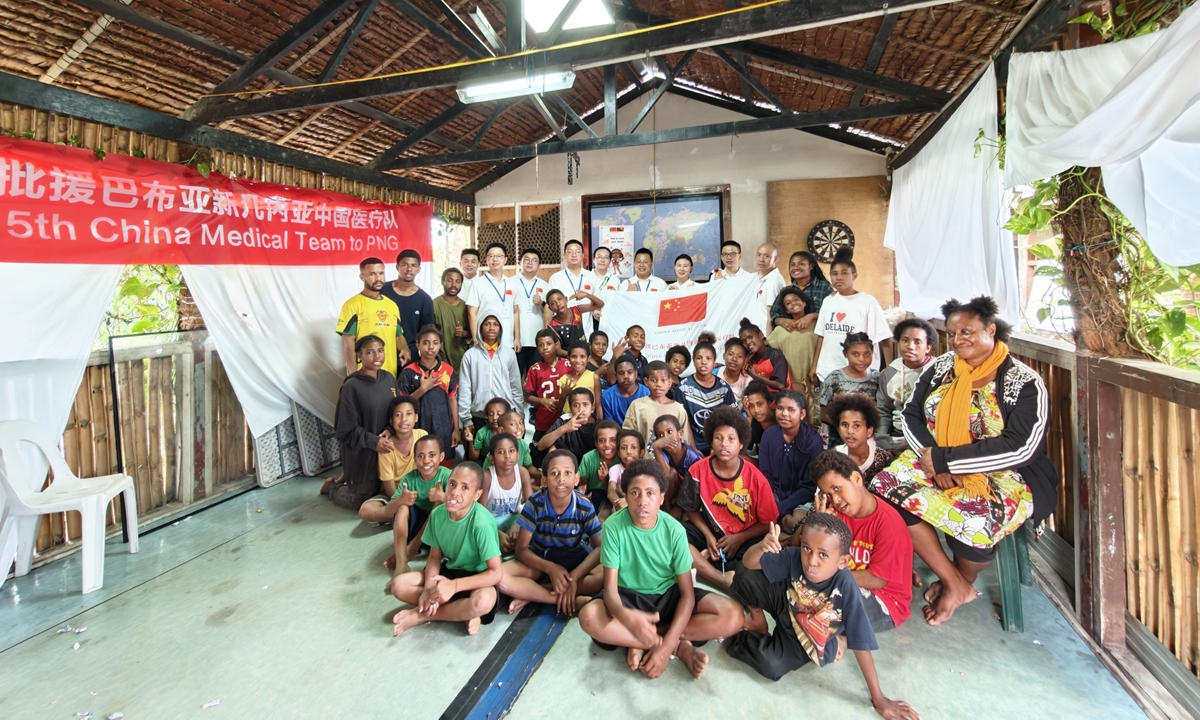
Members of the Chinese medical team provide health checks, hygiene education and donate supplies for 45 children at the Life PNG Care center in Port Moresby, Papua New Guinea, on November 17, 2025.
Lasting and sustainable efforts
Over the past 50 years, the friendship between China and PNG, transcending mountains and seas, has withstood the test of time and become a cherished asset for both peoples.
Medical cooperation also features in celebrations marking 50 years of China-PNG diplomatic relations. In an anniversary article published on October 12, Chinese Ambassador to PNG Yang Xiaoguang noted that China had sent medical teams to PNG for 24 consecutive years and arranged three hospital ship visits.
By December 2025, China had dispatched 15 teams involving 149 medical personnel to PNG, Xinhua reported.
Meanwhile, Xu and his colleagues are exploring broader ways to make this medical partnership more sustainable and ensure its benefits last.
The team has been visiting schools and workplaces. At Butuka Academy in February, doctors provided free consultations and taught students about oral health. At Goodman Fielder International in May, 101 employees received health checks and practical training in cardiopulmonary resuscitation. Most had never previously had a comprehensive health check, according to the team's records.
Medical knowledge reaches newspaper readers, too. In November 2025, the team launched a regular health column in the Post-Courier, a leading local newspaper. Its first installment, written by urologist Zhang Teng, explained prostate problems in everyday language, including warning signs, screening and when to seek help, the Chongqing News reported.
Designed as a monthly series drawing on different specialists' expertise, the column extends health education to people the doctors may never meet.
Training brings colleagues together in more organized settings. More than 30 local health workers attended an August 6 workshop at Port Moresby General Hospital, which also hosted a surgical skills competition. At the University of Papua New Guinea's School of Medicine and Health Sciences, the team delivered clinical courses across eight specialties. Teaching materials and a collection of clinical cases were handed over for continued use by local teachers, the Global Times learned from the team.
The cooperation has also extended to hospital construction outside the capital. In June 2022, a Chinese-supported provincial hospital in Enga was handed over to the PNG government. At the ceremony in Engan capital of Wabag, Prime Minister James Marape thanked China for supporting the project and expressed interest in deepening cooperation between the two countries, Xinhua reported.
Back in Port Moresby, exchanges also extend to the Chinese-language classroom. More than 130 hospital employees and university students completed 24 weeks of lessons taught by the team's interpreter, Niu Tengfei, with songs and paper cutting accompanying everyday conversation, according to the team's work summary.
Recognition from the people they worked with and served mattered deeply to the team, Xu said. Ipakasa's video offered one such response.
"It is a legacy we will pass down to the next generation of doctors," Ipakasa said in the video.
RELATED ARTICLES