China UAE
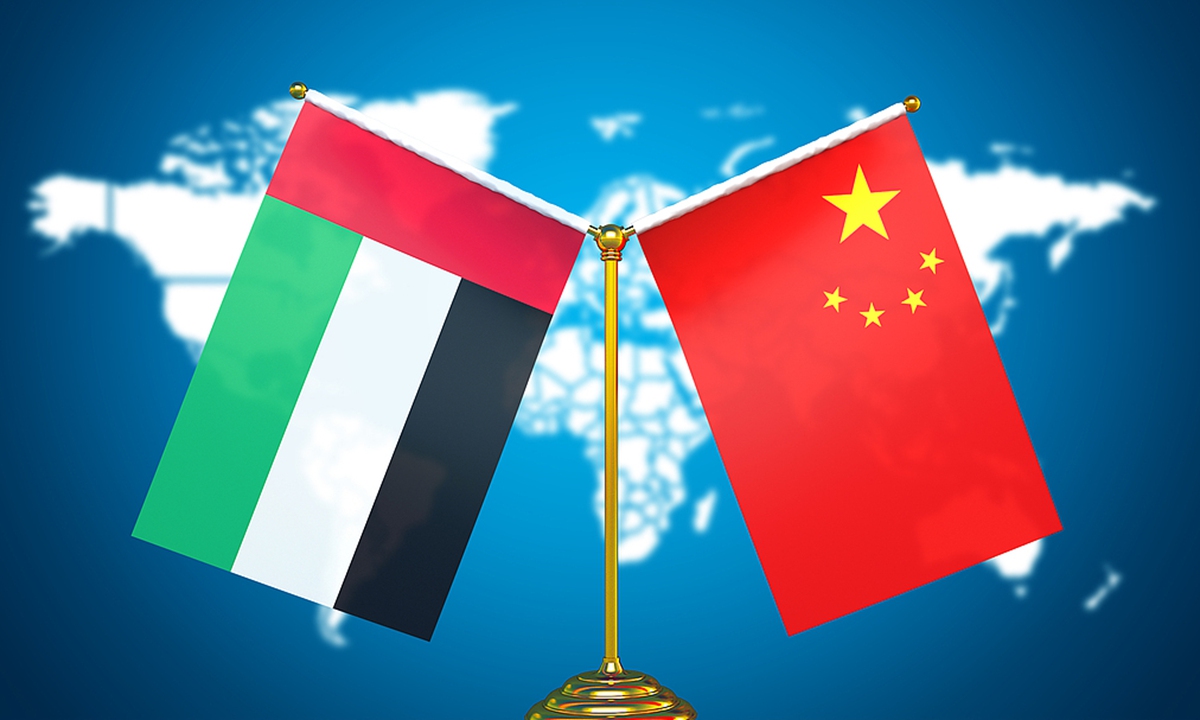
Chinese top diplomat Wang Yi met with Khaldoon Khalifa Al Mubarak, special envoy of the UAE president for China affairs, in Beijing on Tuesday, with the two sides discussing bilateral ties and the evolving situation in the Middle East, as experts said the visit reflects the UAE's expectations for China to play a greater role in promoting regional de-escalation and advancing practical cooperation.
Wang, a member of the Political Bureau of the Communist Party of China (CPC) Central Committee and director of the Office of the Central Commission for Foreign Affairs, said China and the UAE enjoy strong political mutual trust and have achieved substantive results in cooperation. Their relationship has gone beyond the bilateral scope and become a model of cooperation among Global South countries in pursuing development and revitalization, Wang said.
Regardless of changes in the international and regional situation, China is ready to work with the UAE under the guidance of the two countries' heads of state to take bilateral relations to new heights, Wang said.
Peace cannot be achieved easily, and efforts to promote reconciliation and end conflicts require collective action, Wang said, expressing China's belief that a brighter future for the region can be achieved if all parties remain committed to peace.
China will continue to contribute to regional peace and stability by promoting a comprehensive ceasefire, advancing political solutions, facilitating the early resumption of negotiations and working toward lasting peace, Wang said.
Khaldoon congratulated China on the 77th anniversary of the founding of the People's Republic of China. He also thanked China for its warm reception of UAE Crown Prince Khaled during his visit to China and expressed expectations for a meeting between the two countries' leaders within the year.
Khaldoon briefed Wang on the situation in the Gulf and the broader Middle East, as well as the UAE's efforts, and said his country is willing to strengthen communication and coordination with China to jointly promote regional peace and stability. China is a trusted and reliable partner of the UAE, Khaldoon said, expressing the hope that bilateral comprehensive strategic partnership would reach new heights.
Against the backdrop of declining US willingness to resolve Middle East issues, the UAE as a major regional shipping hub has greater reason to seek diplomatic coordination with China, Sun Degang, director of the Center for Middle Eastern Studies at Fudan University, said. The visit signals higher expectations for Beijing's role in addressing regional issues, easing tensions and helping stabilize the situation, he noted.
The frequent high-level exchanges between China and Arab countries this year reflect the importance regional states attach to China's role, Sun said. A potential visit by the UAE president to China would further strengthen cooperation among Global South countries, particularly given the UAE's leading position in high technology in the Arab world, he added.
Sun said there is potential room for China and the UAE to expand cooperation in energy, new energy, artificial intelligence and other high-tech sectors.
Such a shift would allow China to better combine its technological strengths with the UAE's capital advantages, creating new opportunities for mutually beneficial cooperation, Sun noted.
Ding Long, a professor at the Middle East Studies Institute of Shanghai International Studies University, said the envoy's visit serves three main purposes: laying the groundwork for a potential visit by the UAE president and preparing the agenda for high-level talks, exchanging views on the increasingly complex and escalating Middle East situation, and advancing the implementation of bilateral cooperation projects.
The UAE president has made few overseas visits since the outbreak of the latest round in the regional conflict, making a potential trip to China particularly significant in demonstrating the importance Abu Dhabi attaches to bilateral ties, Ding said.
The substantial results and frequent communication between the two sides demonstrate that practical cooperation and diplomatic coordination can continue even amid a complex international environment, he added.
RELATED ARTICLES